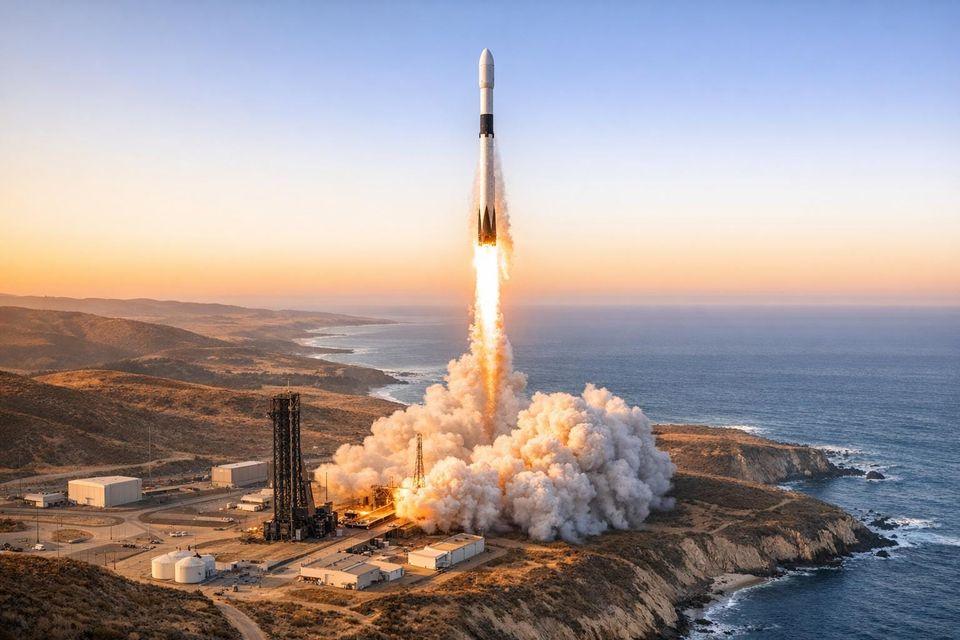
SpaceX stock is giving investors a very different message in August than it did during the excitement surrounding its historic public-market debut. After initially soaring following its June IPO, shares have experienced extreme volatility as Wall Street weighs the company’s enormous AI ambitions against rising capital spending, future share unlocks and a valuation that still assumes extraordinary growth.
The latest numbers make the debate even more important. SpaceX generated about $7.8 billion in second-quarter revenue, nearly double the year-earlier level, while its AI business produced approximately $2.6 billion in revenue, according to data reported by Reuters and S&P Global. Yet the company also spent approximately $18.4 billion on capital expenditures during the quarter, including about $15.8 billion on AI infrastructure.
Meanwhile, the stock has been moving through a series of lockup expirations. Roughly 911.5 million shares became eligible to trade on August 6, followed by another approximately 319 million shares on August 20. The result is a rapidly changing supply-and-demand picture for a stock that only recently entered public markets.
For investors, therefore, the central question is no longer simply whether SpaceX is an extraordinary company. The bigger question is whether the company’s future growth can justify the price investors are paying today.
SpaceX Stock Has Entered a New Phase After Its Historic IPO
SpaceX began public trading in June at $135 per share, with an initial valuation of roughly $1.77 trillion. The stock then experienced extraordinary swings, at one point trading above $225 before falling sharply and reaching an intraday low around $104.83 in early August.
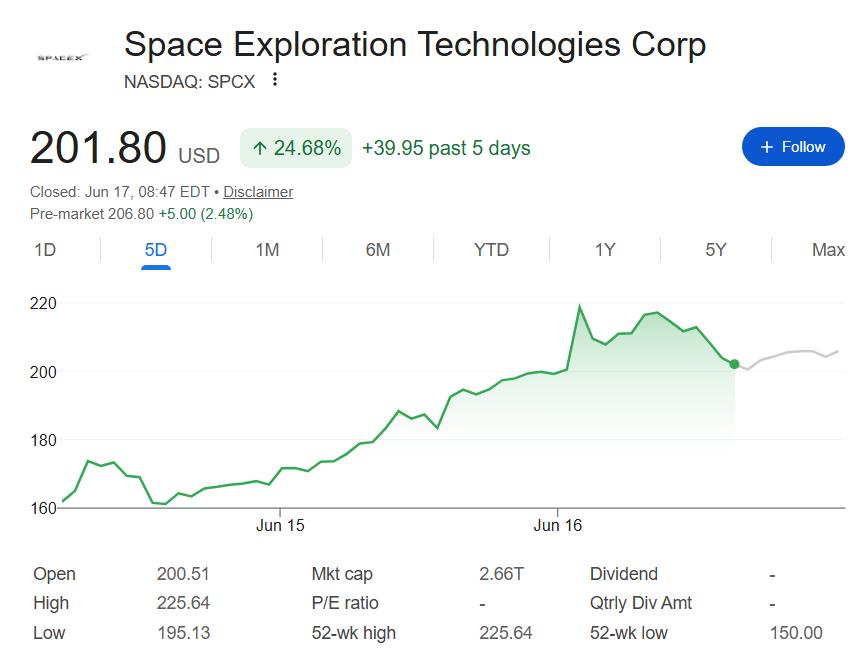
By August 21, SPCX closed around $136.20, according to historical market data, putting it close to its original IPO price despite the enormous amount of attention surrounding the company. The stock’s recent trading history illustrates just how quickly sentiment has changed: it closed at $108.27 on August 5, climbed above $146 on August 12, and then fell back toward the mid-$130s by August 21.
That volatility matters because SpaceX entered the public market with an unusually small initial public float. A limited supply of publicly traded shares can magnify both buying and selling pressure. As more previously restricted shares become eligible for trading, investors are getting a clearer picture of what SpaceX might look like when the stock has a much larger freely tradable supply.
This is one reason the share unlock story deserves as much attention as the company’s impressive technological ambitions.
Share Unlocks Could Create a Continuing Supply Overhang
One of the biggest near-term issues for SpaceX stock is the company’s staggered lockup schedule. The first major release occurred on August 6, when approximately 911.5 million shares became eligible for trading. A second tranche of roughly 319 million shares became eligible on August 20.
The important distinction is that an unlock does not mean every newly eligible shareholder immediately sells. It simply means those shares are no longer restricted by the relevant lockup provisions. Some employees, early investors and institutions may continue holding their shares because they believe SpaceX’s long-term value is substantially higher.
The market nevertheless has to price in the possibility of additional supply. Barron’s reported that SpaceX could have around 4.9 billion shares outside Elon Musk’s holdings become tradable by year-end, depending on the applicable lockup schedule. That means the stock’s supply dynamics could remain an important trading factor for months.
Interestingly, the first major unlock did not produce the catastrophic selling event some investors feared. Instead, SpaceX shares subsequently recovered strongly. That is an important lesson: share unlocks create potential selling pressure, not guaranteed selling pressure.
For investors, the better question is whether new supply is being absorbed by enough buyers who believe the company’s earnings and cash-generation potential will grow rapidly.
AI Spending Is the Biggest Fundamental Question
SpaceX’s transformation into an AI and computing company is perhaps the most important part of its investment story. The company’s Q2 results showed AI revenue rising roughly 247% year over year to about $2.6 billion, according to S&P Global. At the same time, AI-related capital expenditures reached approximately $15.8 billion.
That creates an unusual investment equation. SpaceX is demonstrating that customers are willing to pay for its computing capacity, but the company is also spending enormous sums to build that capacity. The debate is therefore not whether AI demand exists. The debate is whether SpaceX can generate sufficiently high returns on the billions of dollars being invested.
Management has argued that AI compute investments can have a payback period of less than one year. SpaceX also reported about $14.1 billion of contracted AI cloud-services sales, while CFO Bret Johnsen said another $6.7 billion of cloud-services revenue had been contracted over a six-month period beginning in October.
Those contracts give the bullish thesis more substance than a simple AI narrative. But investors should still distinguish between contracted revenue, accounting revenue, operating profit and free cash flow. A rapidly growing revenue stream does not automatically mean a rapidly growing shareholder return.
The concern becomes even more obvious when considering that SpaceX reported a $541 million net loss for the quarter despite its strong revenue growth. S&P Global noted that AI revenue growth came alongside dramatically higher investment requirements.
SpaceX Valuation Depends on How Much AI Investors Are Willing to Believe
Valuation is where the SpaceX debate becomes particularly difficult. Investors are effectively trying to price several businesses at once: rocket launches, Starlink connectivity, government and defense contracts, AI computing, software and future space-based infrastructure.
That makes conventional valuation comparisons difficult. A company generating roughly $8 billion of quarterly revenue can look expensive if investors value it primarily as an aerospace company. The same valuation can look more defensible if SpaceX successfully develops a high-growth AI infrastructure business capable of producing tens or eventually hundreds of billions of dollars in annual revenue.
Wall Street itself is divided. Morgan Stanley analyst Adam Jonas has argued that SpaceX could ultimately justify much higher prices and has assigned substantial value to the company’s AI opportunity. His research discussed a $300 price target, with more than half of that valuation attributed to AI.
Other analysts and market commentators have been far more skeptical. Scott Galloway recently argued that SpaceX’s stock could be worth dramatically less than its current market price, highlighting the limited public float, enormous valuation and aggressive AI spending.
These opposing views reveal the real issue: SpaceX’s valuation is heavily dependent on future expectations. Investors are not simply paying for today’s Starlink subscribers and rocket launches. They are paying for what SpaceX might become.
That can create enormous upside if management executes—but equally significant downside if the AI economics disappoint.
What This Means for You, Investor Takeaway and Future Outlook
What this means for you: SpaceX stock should probably be viewed as a high-volatility growth investment rather than a conventional aerospace stock. The company has multiple powerful growth engines, but investors are also exposed to unusually high capital requirements, valuation risk and changing share supply.
The recent numbers show both sides of the story. Connectivity revenue reached approximately $4.3 billion in Q2, up about 66% year over year, while AI revenue reached approximately $2.6 billion. SpaceX also reported strong growth in its space business, with space revenue around $962 million.
Starlink remains particularly important because it provides an established recurring-revenue foundation for the company’s more speculative projects. Reuters reported that Starlink’s subscriber base had reached about 12 million, roughly double the year-earlier level.
Investor takeaway: the most important metrics to watch are not simply the SpaceX share price or the next headline about Elon Musk. Investors should watch AI revenue growth, AI operating losses, total capital expenditure, free cash flow, Starlink subscriber growth, customer concentration, new cloud contracts and the pace at which locked-up shares become tradable.
The market also needs evidence that AI spending can translate into durable returns. SpaceX says its compute deployments can pay back in less than a year, but investors will ultimately judge that claim through reported financial results rather than management projections.
Future outlook: SpaceX has set extremely ambitious targets. Management expects to reach a $100 billion annualized revenue run rate by December 2026, while Elon Musk has moved the company’s internal target for $1 trillion of annual revenue forward to around 2030, with management acknowledging that an earlier result is possible.
Musk has also said AI revenue could overtake the company’s other revenue streams as soon as September. That would represent a remarkable transformation for a business historically identified with rockets and satellite internet.
But ambitious forecasts are not guarantees. SpaceX still has to build enormous computing capacity, manage billions of dollars in capital expenditure, execute Starship development, expand Starlink, compete in AI and maintain access to sufficient financing and customers.
The next several months could therefore be unusually important for SpaceX shareholders. Additional share unlocks could increase the public float, while quarterly results will begin showing whether AI investment is producing the returns management expects. If revenue accelerates faster than spending and margins improve, today’s valuation could become easier to defend. If spending continues rising without comparable cash-flow growth, investors may demand a much lower valuation.
For now, the SpaceX stock warning is not necessarily that the company is failing. It is that expectations are extremely high.
A great company can still produce disappointing investment returns when investors pay too much for future growth. Conversely, a sharp stock decline can create opportunity if the underlying business continues improving faster than the market expects.
That tension is likely to define SpaceX stock through the rest of 2026: AI growth versus AI spending, future opportunity versus present valuation, and rising revenue versus rising share supply.
Investors should therefore focus less on whether they are bullish or bearish on Elon Musk and more on the numbers that will determine whether SpaceX’s extraordinary ambitions eventually become extraordinary shareholder returns.
Subscribe to trusted news sites like USnewsSphere.com for continuous updates.