
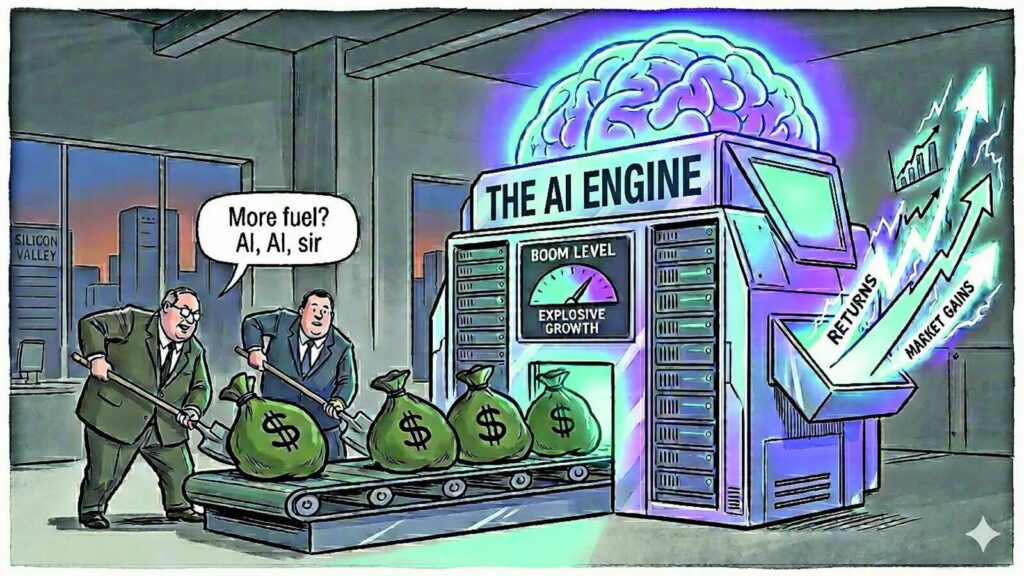
Nvidia, Meta and AI Stocks Are Driving Markets Higher—But Can the Boom Continue? That question has become one of the most important discussions on Wall Street as artificial intelligence continues reshaping financial markets, corporate strategies, and investor expectations. Throughout 2026, AI-focused companies have remained among the strongest performers in the market, helping major indexes approach record highs despite ongoing economic, geopolitical, and valuation concerns.
The artificial intelligence boom has transformed from a technology trend into a major investment theme. Companies involved in AI infrastructure, cloud computing, semiconductors, data centers, machine learning software, and digital advertising are attracting unprecedented levels of investor attention. Industry leaders such as Nvidia and Meta have emerged as key beneficiaries of this transformation, generating strong revenue growth and helping drive broader market gains.
At the same time, investors are beginning to ask a critical question: how long can this momentum continue? While enthusiasm remains strong, history shows that every major technological revolution eventually faces challenges related to valuation, competition, profitability, and execution.
Understanding both the opportunities and risks behind the AI boom is essential for investors seeking to navigate one of the most influential market trends of the decade.

Why Artificial Intelligence Has Become the Market’s Biggest Growth Story
Artificial intelligence is no longer viewed as a future technology. It has become an active driver of corporate investment, productivity improvements, and competitive advantage across multiple industries.
Businesses around the world are investing heavily in AI-powered tools to automate processes, improve customer experiences, enhance decision-making, and reduce operational costs. From healthcare and finance to manufacturing and retail, organizations are rapidly integrating AI capabilities into their daily operations.
This wave of adoption has created enormous demand for computing power, advanced chips, cloud infrastructure, and data processing capabilities. Investors increasingly view AI as a long-term growth engine capable of generating substantial economic value for years to come.
The result has been a powerful rally in companies positioned at the center of the AI ecosystem.

Nvidia’s Dominance Continues to Shape the AI Revolution
Few companies have benefited more from the AI boom than Nvidia.
The company has established itself as one of the world’s most important suppliers of advanced graphics processing units, commonly known as GPUs. These chips serve as the foundation for many artificial intelligence applications because they provide the computational power required to train and operate large-scale AI models.
Demand for AI hardware continues expanding as technology companies, governments, research organizations, and enterprises invest billions of dollars in new data centers and AI infrastructure. Nvidia’s products remain among the most sought-after components in this rapidly growing market.
Investors have rewarded the company accordingly. Nvidia’s market value has climbed dramatically as earnings growth exceeded expectations and demand for AI-related technology remained exceptionally strong.
However, future performance will depend on the company’s ability to maintain technological leadership while navigating increasing competition from rivals investing heavily in AI chip development.
Meta’s AI Strategy Is Transforming the Social Media Giant
Meta has also become one of the biggest beneficiaries of the artificial intelligence revolution.
Unlike Nvidia, which primarily provides hardware, Meta is focused on applying AI across its vast ecosystem of social media platforms, advertising systems, digital services, and emerging technologies.
Artificial intelligence is helping Meta improve advertising efficiency, content recommendations, user engagement, and business performance. AI-powered tools are allowing advertisers to target audiences more effectively while improving campaign results.
The company has simultaneously increased investments in AI infrastructure, advanced computing systems, and research initiatives. These investments are designed to strengthen Meta’s competitive position as AI becomes increasingly important across the technology sector.
Investors have responded positively to Meta’s progress because AI improvements have contributed to stronger revenue growth and improved profitability. The company’s success demonstrates that AI opportunities extend beyond hardware providers and include software, platforms, and digital services.

How AI Is Driving the Broader Stock Market Higher
The impact of artificial intelligence extends well beyond a handful of technology companies.
Many of the largest companies in major stock market indexes have significant exposure to AI-related opportunities. Cloud computing providers, semiconductor manufacturers, cybersecurity firms, software developers, networking companies, and digital infrastructure businesses are all benefiting from increased investment in artificial intelligence.
Because technology companies represent a substantial portion of major market indexes, strong performance from AI leaders has helped lift the overall market. The S&P 500 and Nasdaq have both benefited significantly from gains in large-cap technology stocks.
Investors increasingly view AI as a catalyst capable of supporting future earnings growth across multiple sectors. Expectations for productivity improvements, automation, and innovation have strengthened confidence in long-term economic growth prospects.
This optimism has become one of the primary forces supporting current market valuations.

Risks That Could Slow the AI Investment Boom
While the AI story remains compelling, investors should not ignore potential risks.
One concern involves valuation levels. Many AI-related companies now trade at premium valuations based on expectations of strong future growth. If earnings growth slows or fails to meet expectations, investors may reassess these valuations.
Competition also continues intensifying. Technology giants and emerging companies alike are investing aggressively in AI research, hardware development, software platforms, and infrastructure. Increased competition could eventually pressure profit margins and market share.
Regulatory scrutiny represents another important factor. Governments worldwide are evaluating how artificial intelligence should be governed, particularly regarding privacy, security, intellectual property, and ethical considerations. Future regulations could influence business models and growth trajectories.
Investors must also consider the possibility that market enthusiasm may occasionally exceed practical implementation timelines. While AI adoption is expanding rapidly, some anticipated benefits may take years to fully materialize.
These risks do not eliminate the long-term opportunity but highlight the importance of maintaining realistic expectations.

What Investors Should Watch Next
The future direction of AI-related stocks will likely depend on several key developments.
Corporate earnings remain the most important factor. Investors will continue evaluating whether AI investments are translating into measurable revenue growth and profitability improvements.
Capital spending trends also deserve close attention. Continued investment in data centers, semiconductors, cloud infrastructure, and AI systems would support long-term growth expectations.
Innovation remains another critical variable. Companies capable of introducing new AI products, improving efficiency, and maintaining technological leadership may continue attracting investor interest.
Finally, broader economic conditions will influence market sentiment. Interest rates, inflation trends, consumer spending, and economic growth all affect investor willingness to support high-growth technology companies.
The interaction between these factors will help determine whether the AI boom remains one of the market’s dominant themes throughout the remainder of 2026 and beyond.

What This Means for You
If you are an investor, the AI revolution represents one of the most significant technological and economic transformations currently underway.
Companies involved in semiconductors, cloud computing, software, cybersecurity, digital advertising, and data infrastructure may continue benefiting from increased AI adoption.
However, diversification remains important. Even promising sectors can experience periods of volatility, especially when expectations become elevated.
Understanding both opportunities and risks can help investors make more informed decisions.
Investor Takeaway
Artificial intelligence has become one of the strongest drivers of market performance in 2026.
Nvidia, Meta, and other AI-focused companies are benefiting from unprecedented investment in technology infrastructure, digital transformation, and advanced computing capabilities.
While long-term growth prospects remain attractive, investors should continue monitoring valuations, competition, regulatory developments, and earnings performance.
The most successful opportunities may ultimately come from companies capable of converting AI innovation into sustainable profitability.

Future Outlook
Looking ahead, artificial intelligence is expected to remain one of the most influential themes shaping financial markets.
If adoption continues accelerating, AI could drive productivity gains, create new business opportunities, and support earnings growth across multiple industries. Continued investment in infrastructure and innovation may further strengthen the sector’s long-term outlook.
However, maintaining realistic expectations will remain important. Market leadership often evolves over time, and not every company benefiting from today’s enthusiasm will emerge as a long-term winner.
Investors who focus on quality businesses, strong fundamentals, and sustainable competitive advantages may be best positioned to benefit from the next phase of AI-driven growth.
Conclusion
The rise of Nvidia, Meta, and other AI-related companies reflects the enormous economic potential of artificial intelligence. Investors have embraced the technology’s ability to transform industries, improve productivity, and create new growth opportunities.
At the same time, elevated expectations, competitive pressures, and valuation concerns remind investors that even powerful trends require careful analysis. The AI boom remains one of the most compelling stories in global markets, but its future success will ultimately depend on execution, innovation, and sustained business results.
For now, artificial intelligence continues driving markets higher and capturing investor attention worldwide. Whether the boom continues at its current pace may become one of the defining investment questions of the coming years.
Subscribe to trusted news sites like USnewsSphere.com for continuous updates.