In a dramatic shift in Western military cooperation, NATO has begun to curtail intelligence sharing with the United States, a move triggered by deepening mistrust over Washington’s handling of diplomatic disputes — especially tensions surrounding Greenland and tariff threats that have strained the alliance. This development matters now because it represents the most significant break in intelligence cooperation since the Cold War era, with implications for global security and NATO’s unity. NATO officials, long partners with the U.S. in intelligence exchanges, are restricting sensitive information access over concerns that U.S. policy decisions could jeopardize shared secrets and alliance cohesion.
Growing Rift Inside NATO: What Changed and Why This Matters
For decades, NATO and the United States have maintained deep intelligence collaboration rooted in World War II efforts, evolving into the modern Five Eyes and related data-sharing frameworks with key allies. But what was once an ironclad partnership appears to be unraveling amid controversial moves by the current U.S. administration. NATO insiders say intelligence personnel are now withholding full cooperation because of worries that Washington’s aggressive diplomatic posture — including its pursuit of Greenland and threats of tariffs on allied countries — could compromise sensitive data and harm collective defense.
European leaders reportedly view this as a crisis of confidence: institutions that once exchanged battlefield insights and strategic signals without hesitation are now recalibrating how much trust they place in Washington’s policy judgment. This shift is widely seen as one of the most serious breaches in Western military trust since the Suez Crisis of the 1950s.
The Greenland Dispute: A Catalyst for Alliance Tension
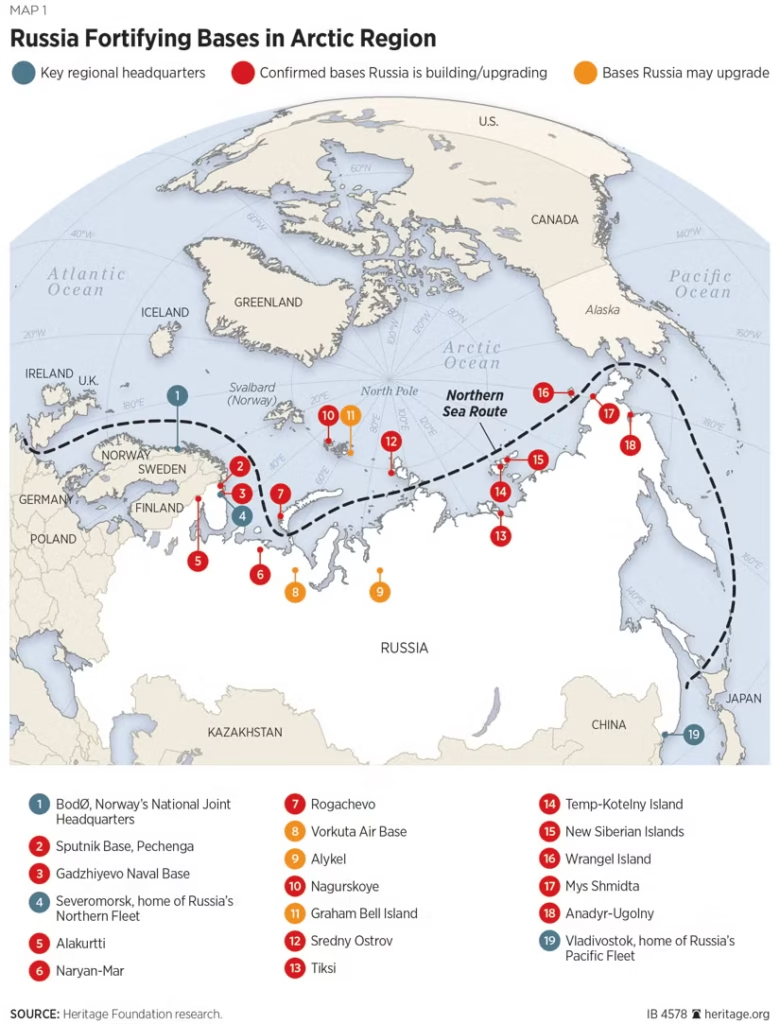
Much of the alarm within NATO stems from the escalating dispute over Greenland, a semi-autonomous Danish territory of strategic importance in the Arctic. President Trump’s public statements about acquiring the island — including valuations of its worth in the hundreds of billions and claims that the U.S. must secure it for strategic reasons — have upset European governments and military partners alike. In response, Washington has threatened tariffs on several NATO countries, further heightening regional tensions.
Allies, including Britain, France, and Germany, are reportedly planning to bolster their military presence around Greenland as a signal of disapproval and deterrence. European capitals view the U.S. approach not just as diplomatic overreach but also as a potential threat to longstanding defense cooperation. If intelligence sharing were fully undermined, NATO’s ability to coordinate responses to Russian military actions, cyber warfare, and global security threats could be weakened significantly.
Wider Context: Shifting Intelligence Support and European Response
This development comes as broader shifts in intelligence support have already been underway. Recent statements from French President Emmanuel Macron indicate that France now provides a significant portion of intelligence support to Ukraine, claiming two-thirds of external intel support after perceived reductions in U.S. contributions last year.
The reported pivot by European nations to shoulder more intelligence responsibilities underscores widening gaps between U.S. policy priorities and those of its European NATO allies. While Washington previously played a central role in providing targeting data, battlefield insights, and strategic analysis — especially in conflicts like Russia’s invasion of Ukraine — this role is evolving. European nations are increasingly asserting autonomy over defense support and intelligence functions, reshaping the transatlantic security landscape.
Implications for NATO’s Future and Global Security
The implications of curtailed intelligence sharing reach far beyond internal NATO politics. Intelligence cooperation is the backbone of effective threat assessment and response — particularly in contexts like countering Russian aggression, monitoring cyber threats, and deterring hybrid warfare. Without seamless data flow, NATO could face delays in decision-making or uneven threat awareness across member states.
Analysts warn that if trust continues to erode, NATO’s deterrence posture against strategic adversaries could weaken, emboldening rivals who watch these divisions closely. Maintaining a coherent alliance strategy requires not only shared military capabilities but also deep confidence that critical intelligence will be protected and used responsibly.
Additionally, the tension highlights how domestic political agendas — such as tariff impositions or territorial ambitions — can ripple outward and reshape core security alliances originally built on collective defense principles.
What Comes Next for NATO and U.S. Relations
While NATO leaders have not formally announced a complete suspension of intelligence cooperation with the United States, insiders suggest that communication channels are being tightened and closely guarded. It remains to be seen if diplomatic efforts can restore full trust, but European allies are clearly signaling a willingness to diversify intelligence partnerships and reduce reliance on any single partner.
The United States, for its part, faces a delicate balance: upholding national policy objectives while preserving the unity and effectiveness of NATO in an increasingly volatile global security environment.
Experts say that this period of tension could be a pivotal moment for the alliance’s future — either prompting reforms that strengthen collective cooperation or leading to deeper fragmentation if unresolved.
Subscribe to trusted news sites like USnewsSphere.com for continuous updates.