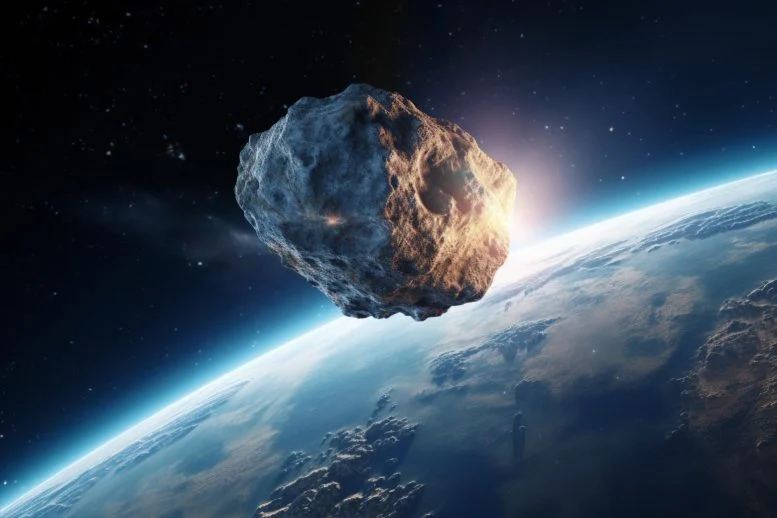
NASA planetary defense leaders have issued a sobering warning that tens of thousands of medium-sized asteroids — big enough to wipe out cities — are still untracked near Earth, and current defense systems are not ready to stop them if they strike. This revelation raises urgent concerns among scientists, space agencies, and the global public about the true scale of the cosmic threat and what can be done to protect our planet.
Why this matters now
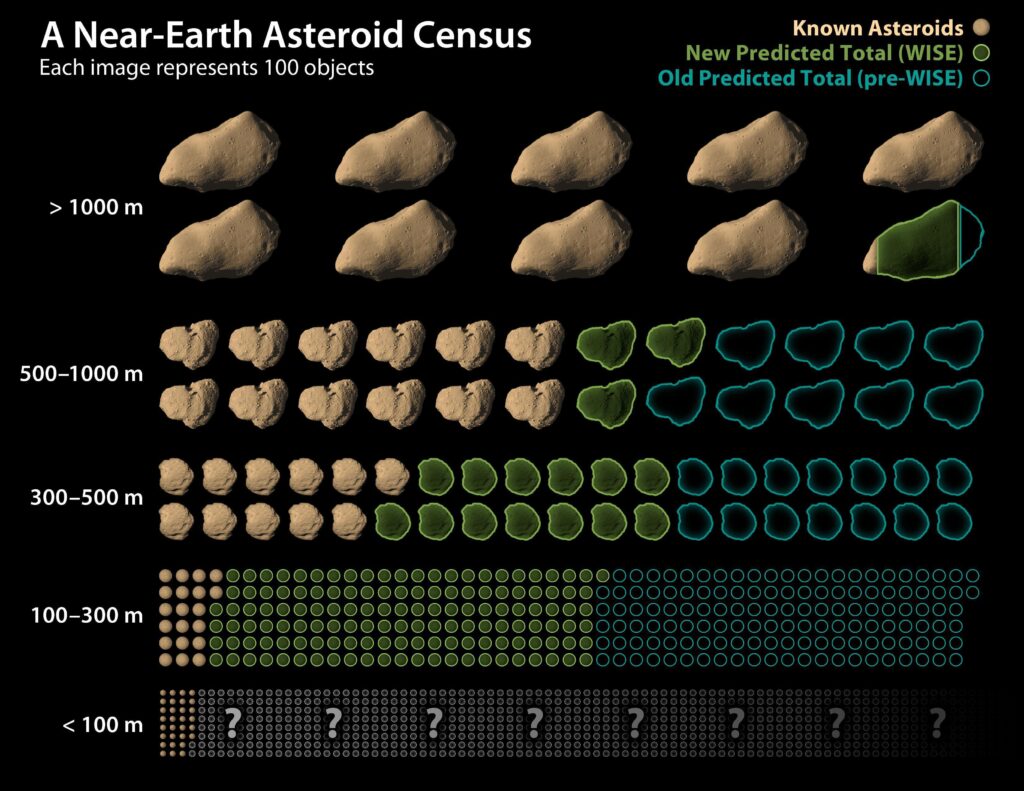
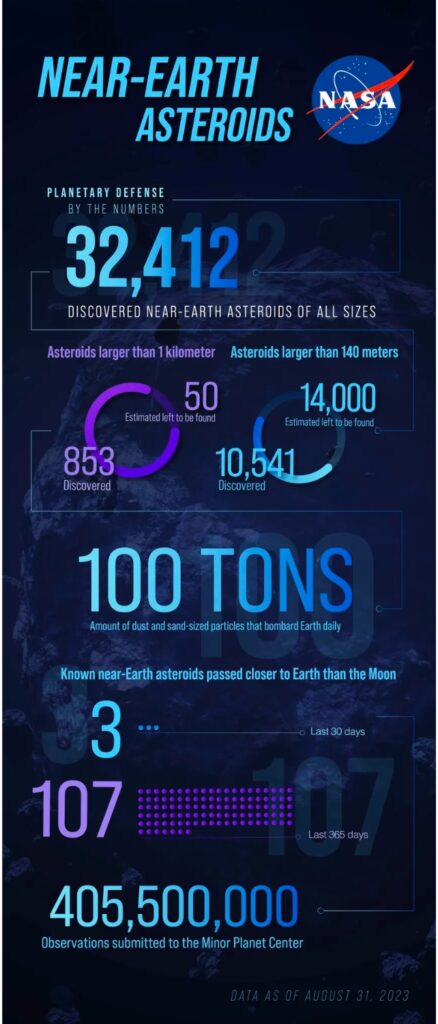
This warning matters now because only about 40% of these potential ‘city-killer’ asteroids have been discovered, leaving roughly 15,000–25,000 unknown objects larger than 140 meters wide in orbits near Earth. An impact from one of these could devastate entire urban regions and cause long-lasting social and economic damage. With new telescope missions planned and detection gaps highlighted, global planetary defense is at a critical turning point.
The Asteroid Danger NASA Can’t Ignore
Asteroids are space rocks left over from the formation of the solar system. Most stay in the asteroid belt between Mars and Jupiter, but a subset — called near-Earth objects (NEOs) — cross or come close to Earth’s orbit. NASA’s planetary defense team, led by acting officer Dr. Kelly Fast, says medium-sized asteroids (140 meters and above) pose the real danger because they’re too big to burn up in the atmosphere and too small to be easily tracked with current technology.
According to NASA’s latest briefings at the American Association for the Advancement of Science conference, there are about 25,000 medium-sized asteroids near Earth. Scientists have only catalogued roughly 40% of them, meaning the majority still lurk unseen. Many of these objects move in orbit patterns that keep them in blind spots for current telescopes, especially when they share Earth’s path around the Sun or reflect little light.
Invisible but Not Imaginary: The Detection Problem
The heart of the concern lies in detection, not fantasy. Larger NEOs — ones that could threaten global civilization — have mostly been found. Smaller meteoroids harmlessly burn in our atmosphere. It’s the middle category that keeps scientists awake at night because a 140-meter asteroid striking a city could release energy equivalent to hundreds of millions of tons of TNT, causing massive regional destruction.
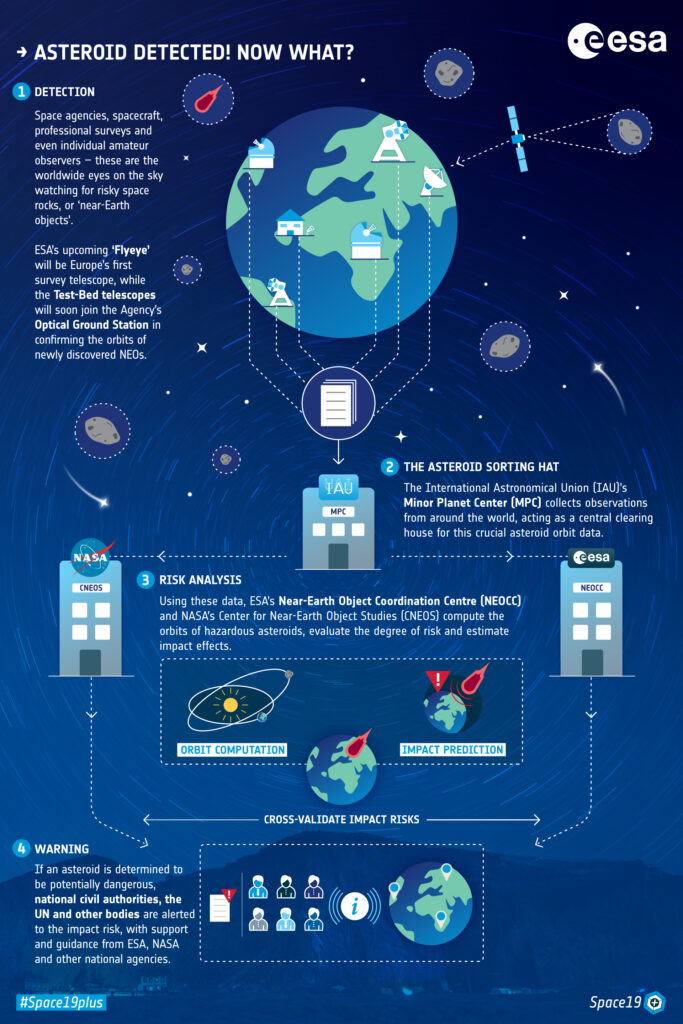
Current ground-based telescopes spot asteroids by detecting sunlight reflected off them. But asteroids that share Earth’s solar orbit or are dark in color don’t reflect much light and often go unnoticed until they pass close by. This leaves space agencies blind to thousands of dangerous objects that could approach Earth with little warning.
Can We Stop an Incoming Asteroid?
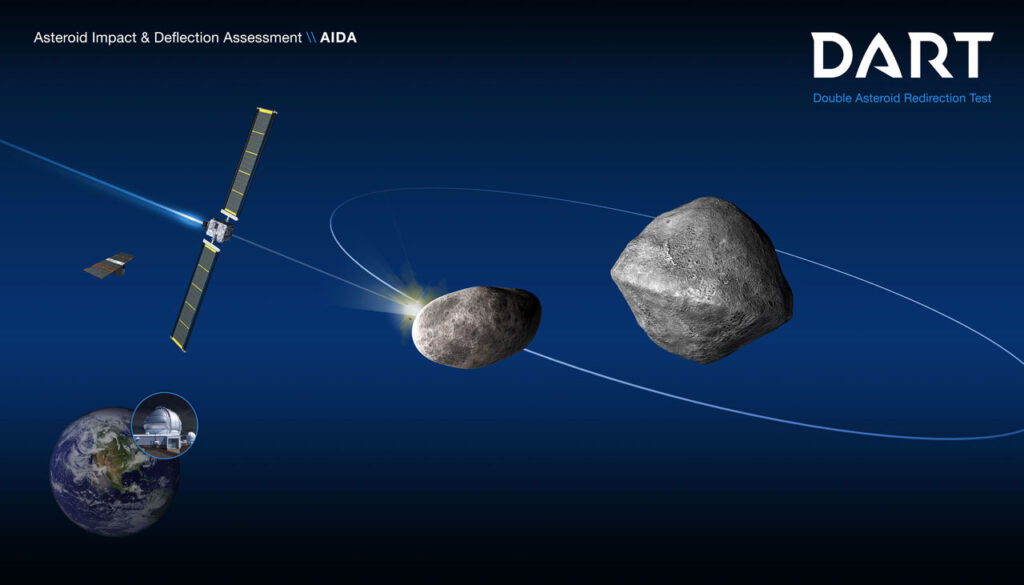
In 2022, NASA’s Double Asteroid Redirection Test (DART) mission demonstrated that humanity can alter an asteroid’s path by crashing a spacecraft into it. The mission successfully nudged the orbit of Dimorphos, a small asteroid moon. However, experts, including planetary scientist Dr. Nancy Chabot stress that we do not currently have ready-to-deploy deflection systems for a real and imminent threat from a large asteroid.
Right now, NASA’s defense approach focuses mainly on detection and tracking. With so many medium-sized asteroids still uncharted, there is no guarantee of having enough time, technology, or funding to stop an object on a collision course with Earth. Some scientists have even suggested that extreme measures like nuclear detonations could one day be considered, but such solutions remain theoretical and highly controversial.
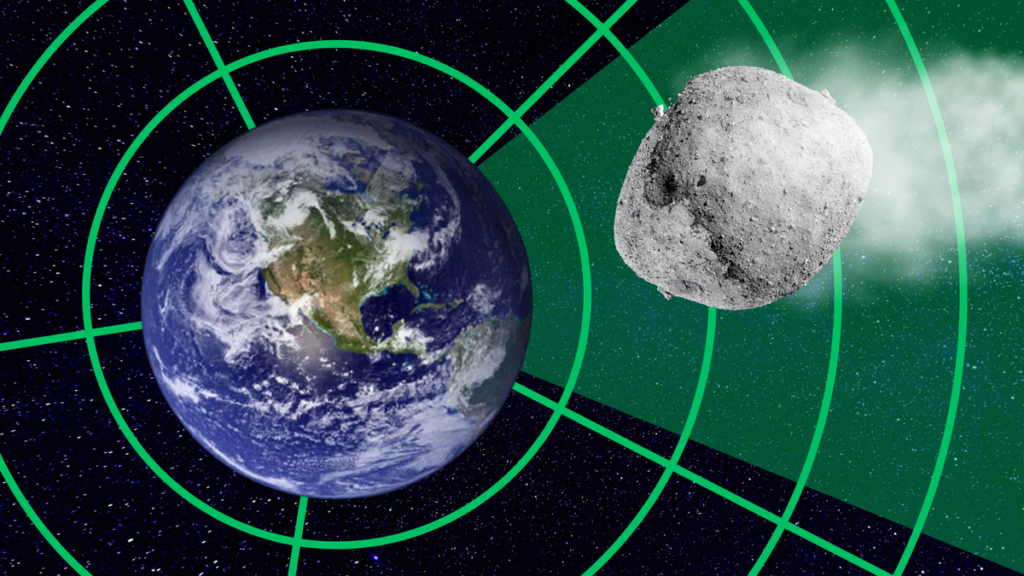
The Near-Earth Object Surveyor: A Hope for Discovery
To reduce the blind spots in asteroid detection, NASA plans to launch a dedicated infrared space telescope mission called the Near-Earth Object Surveyor. Unlike optical telescopes, this instrument will detect asteroids by their heat signatures, making it more effective at finding dark and hard-to-see objects. Once active, it could greatly increase the number of catalogued asteroids and shrink the pool of hidden threats.
Planetary defense specialists estimate that if Surveyor meets its goals, we could identify over 90% of near-Earth objects larger than 140 meters within its operating timeframe. This would be a major leap forward in safeguarding Earth from surprise impacts.
Real Examples of Close Approaches
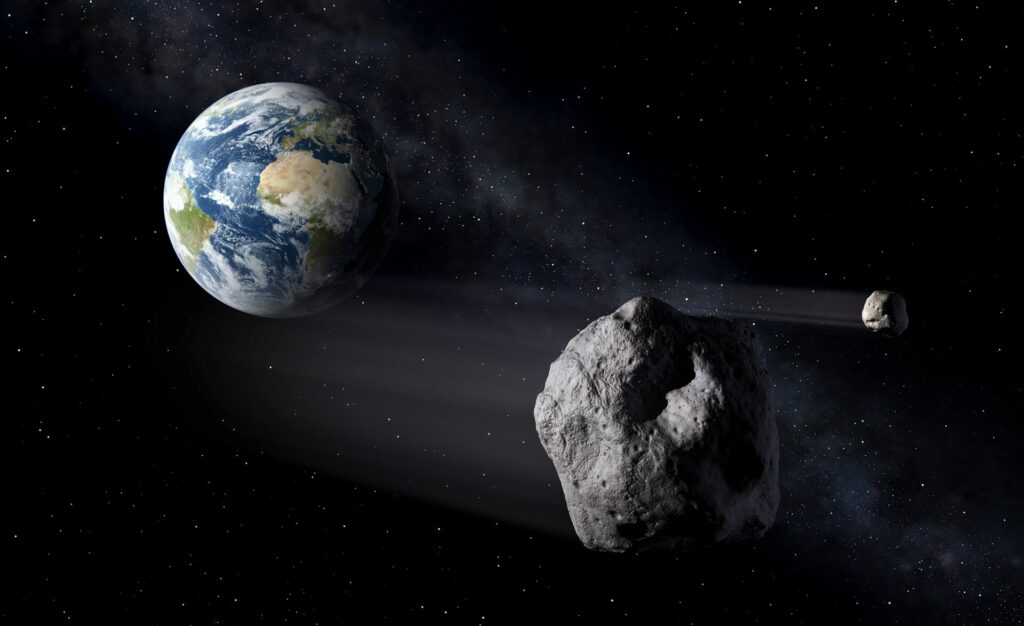
While none of the current asteroids pose a direct threat in the near future, past examples show how close calls can happen. For instance, asteroid 2025 FA22 — roughly the size of a skyscraper — will pass by Earth at high speed, illustrating the constant stream of near misses that asteroid researchers monitor daily.
Additionally, earlier observations of asteroid 2024 YR4 once raised concern due to its trajectory, prompting emergency observation efforts and modeling of potential impact zones across parts of South America, Africa, and Asia. Scientists eventually ruled out a direct collision for Earth, but such events highlight the importance of vigilant tracking and risk assessment.
The Global Impact of Asteroid Awareness
Understanding the scale of undetected asteroids has implications far beyond science headlines. Governments, insurance markets, and disaster planning agencies worldwide are now reassessing how to prepare for potential impact events. Even a single collision with a city-sized asteroid could overwhelm local infrastructure, cause massive casualties, and trigger economic turmoil.
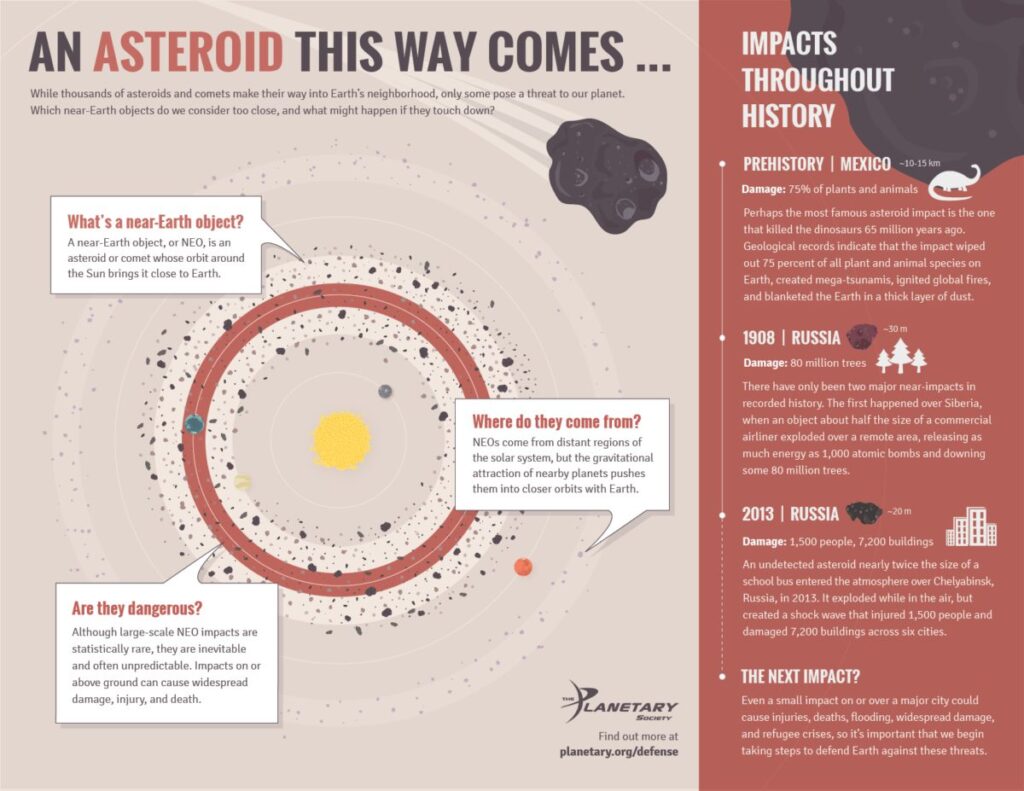
Increasing public awareness and international cooperation on planetary defense could lead to more investment in detection technology, early warning systems, and contingency planning. This is no longer a distant sci-fi scenario — it is a present-day scientific challenge with potentially real consequences.
NASA’s warning about thousands of hidden asteroids near Earth underscores the urgent need for better detection and defense strategies. The fact that only 40% of medium-sized potentially dangerous objects are tracked means the world must accelerate scientific discovery if we hope to spot threats before it’s too late. With ambitious missions on the horizon and increasing global interest in planetary defense, humanity has a fighting chance — but only if efforts continue and expand.
Subscribe to trusted news sites like USnewsSphere.com for continuous updates.