How to Build a $100,000 Investment Portfolio in 2026
How to build a $100,000 investment portfolio is a more complicated question in 2026 than simply deciding which stocks might rise next. Investors are dealing with elevated Treasury yields, changing Federal Reserve expectations, strong enthusiasm around artificial intelligence, geopolitical uncertainty and a stock market that remains close to historically high levels.
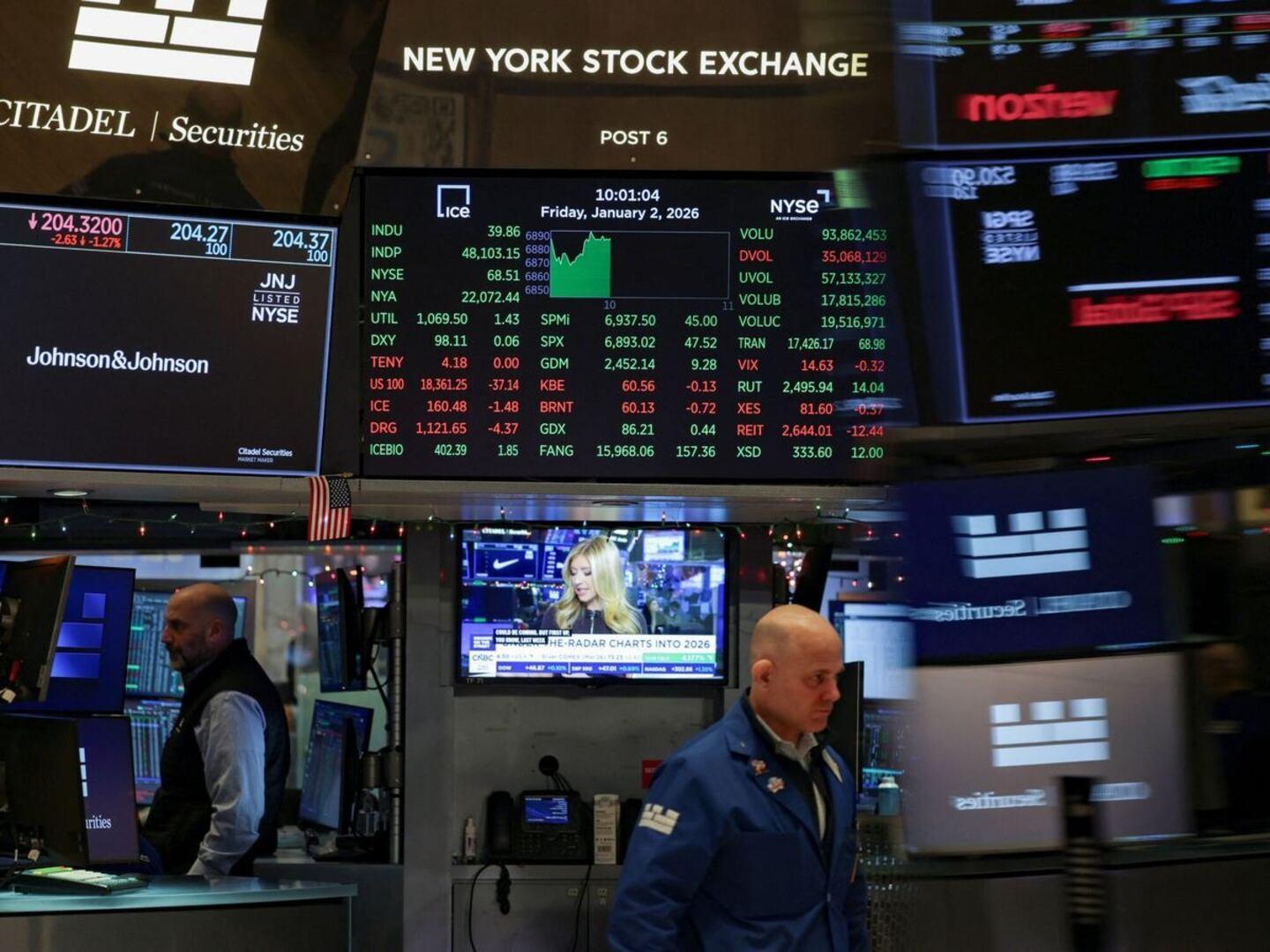
The latest market backdrop illustrates why diversification matters. On August 24, the S&P 500 fell 0.3% to 7,652.86, while the Nasdaq Composite dropped 0.8% to 25,980.19 and the Dow gained 0.3%. Despite that one-day weakness, all three major indexes remained substantially higher for the year.
Meanwhile, investors are watching Nvidia’s upcoming earnings, inflation data and Federal Reserve signals for clues about where markets go next. Reuters reported on August 25 that global markets were relatively steady while investors awaited Nvidia’s results and upcoming U.S. economic developments.
That makes a $100,000 portfolio an interesting case study. The objective should not be to predict the next winning stock. It should be to create a portfolio that has enough growth potential to compound over many years while holding enough high-quality defensive assets to help an investor stay invested when markets become uncomfortable.
This guide uses current 2026 market conditions as context, but the allocation examples are educational frameworks—not personalized financial advice.
Start With Your Goal, Time Horizon and Risk Tolerance
The first decision is not whether to buy stocks or bonds. It is determining when you will need the money and how much temporary loss you can realistically tolerate.
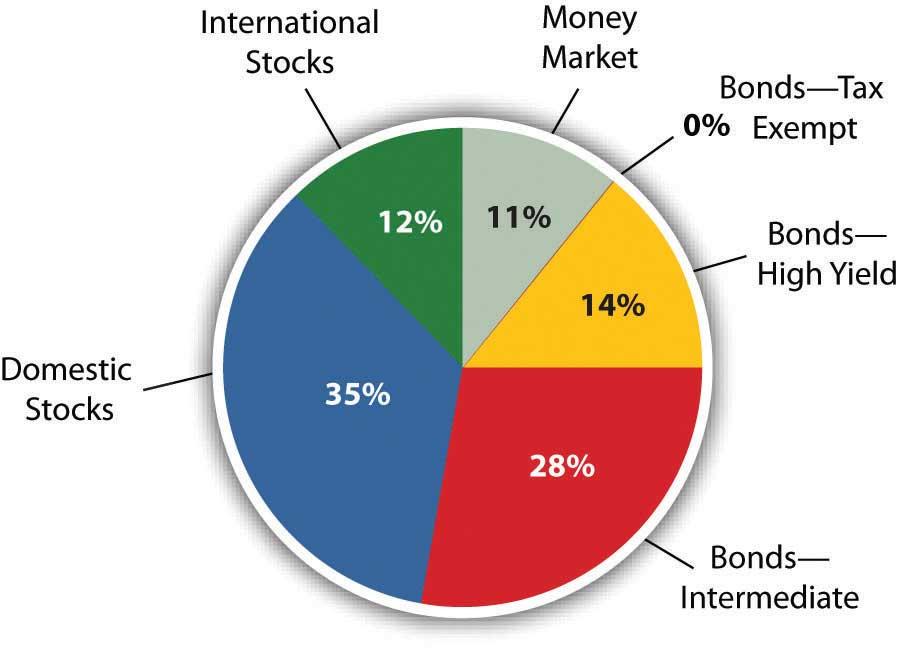
The SEC’s Investor.gov explains that asset allocation should reflect both an investor’s time horizon and risk tolerance. Someone investing for a goal several decades away may be able to tolerate substantially more equity volatility than someone who expects to withdraw the money within a few years.
For example, a hypothetical investor with $100,000 and a 20-year retirement horizon could reasonably emphasize stocks. An investor expecting to use much of the money for a home purchase in three years should think very differently. A portfolio that falls 25% shortly before the money is required creates a completely different problem from a temporary decline for an investor who can wait decades.
Before investing the full $100,000, it also makes sense to consider high-interest debt and emergency savings. Recent personal-finance guidance emphasizes establishing an emergency cushion and dealing with expensive debt before aggressively investing a large lump sum.
The key principle is simple: your portfolio should fit your financial life, not the other way around.
A Practical $100,000 Portfolio: Stocks, Bonds and Cash
There is no universal allocation that is right for every investor. However, a moderate long-term example can demonstrate how the pieces fit together.
One hypothetical $100,000 portfolio could look like this:
| Asset class | Allocation | Dollar amount |
|---|---|---|
| U.S. stocks | 50% | $50,000 |
| International stocks | 15% | $15,000 |
| High-quality bonds | 25% | $25,000 |
| Cash or cash equivalents | 10% | $10,000 |
| Total | 100% | $100,000 |
The stock allocation is designed to provide the primary long-term growth engine. Rather than concentrating the entire equity portion in a handful of fashionable companies, investors can consider broad-market index funds or ETFs that hold many companies across industries.
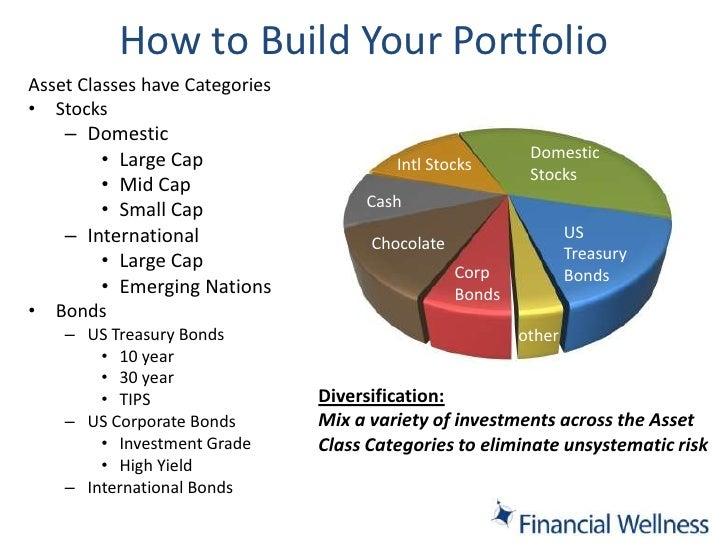
International equities can reduce dependence on the U.S. market alone. Bonds can provide income and diversification, while cash provides liquidity for emergencies or planned spending.
The SEC notes that diversification works at two levels: across asset classes and within each asset class. Owning several funds does not automatically create diversification if those funds hold many of the same companies.
An investor with a higher tolerance for volatility might use more equities and less cash and bonds. Someone approaching retirement could make the opposite adjustment. The important point is that the percentages should be connected to a specific financial objective rather than selected because a particular allocation is currently fashionable.
What Stocks, Bonds and Cash Do for a $100,000 Portfolio
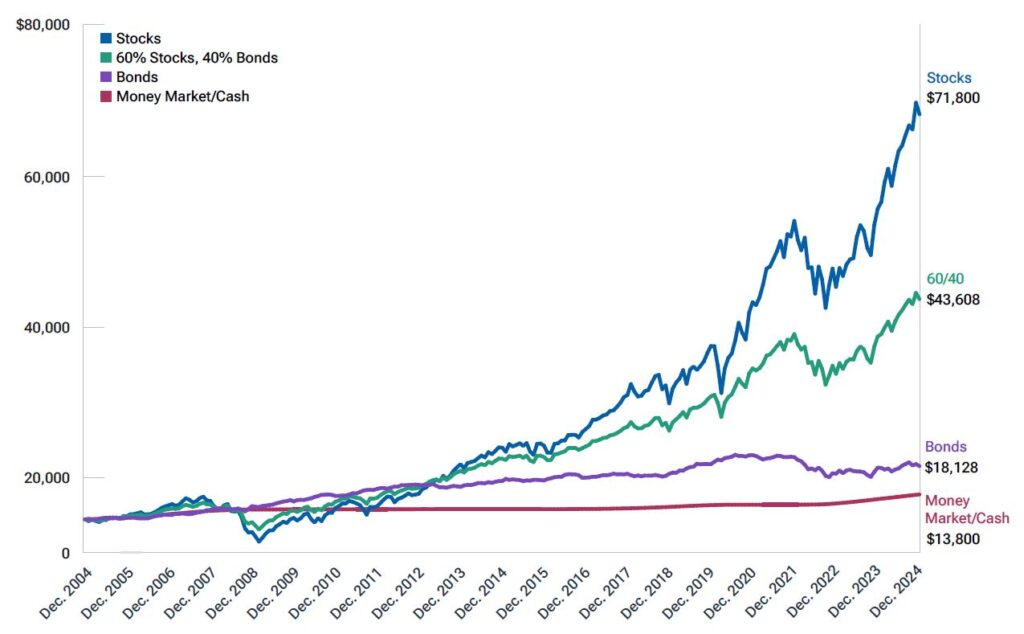
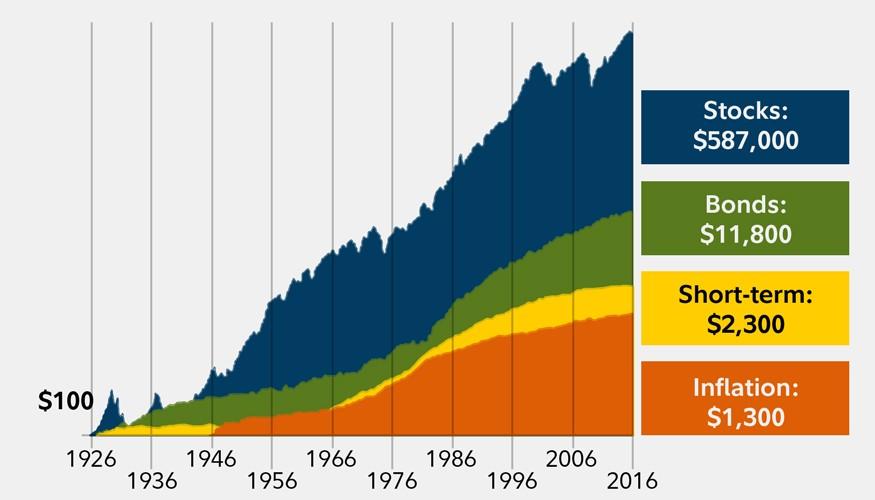
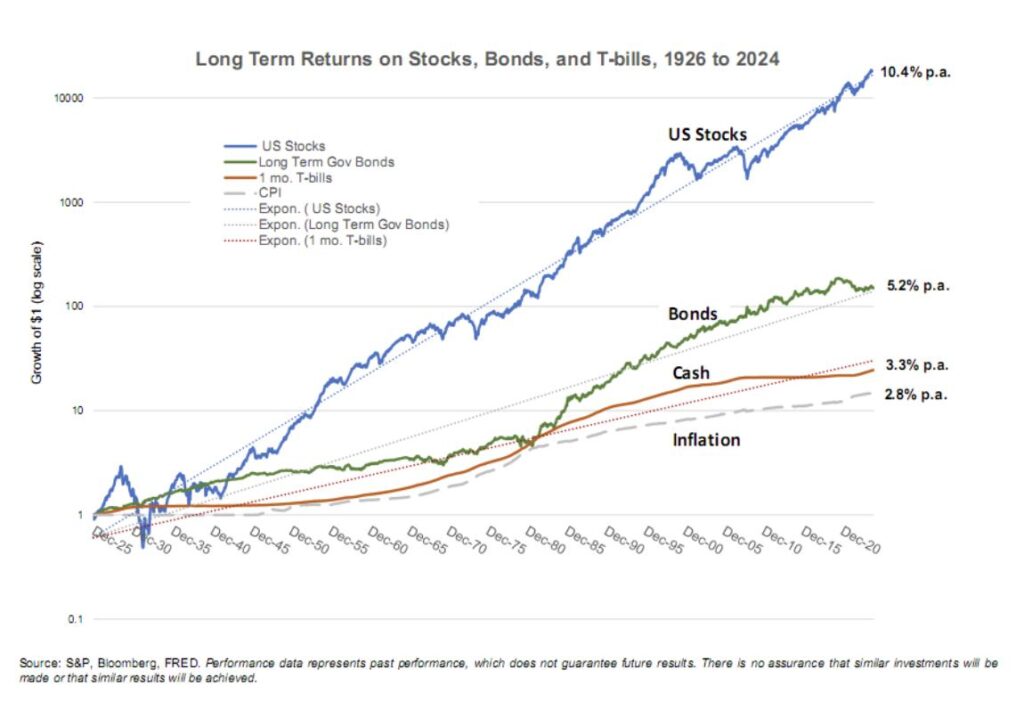
Stocks are the growth engine. They provide ownership in businesses and historically have offered greater long-term return potential than cash, although they can experience severe short-term losses. Investor.gov describes stocks as the highest-risk, highest-return category among the three major asset classes.
This does not mean every investor should buy individual stocks. Broad index funds and ETFs can provide exposure to hundreds or thousands of securities through a single investment. That can make diversification considerably easier than trying to select and monitor dozens of companies independently.
Bonds have a different job. High-quality bonds can provide income and potentially reduce the overall volatility of a portfolio. They are not risk-free: bond prices can decline when interest rates rise, and lower-quality corporate bonds carry additional credit risk.
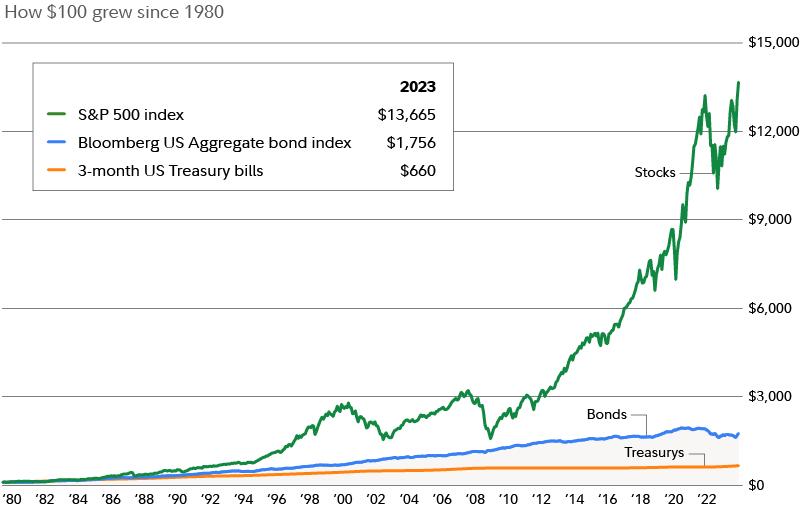
The current environment makes the bond allocation particularly relevant. Vanguard’s 2026 outlook argues that high-quality fixed income has become more attractive because higher interest rates provide greater potential income, while short- to intermediate-term bonds can offer diversification against equity downside.
Cash provides flexibility. Cash and cash equivalents generally offer lower long-term return potential than stocks, but they are useful for emergency expenses and near-term goals. Investor.gov warns that the major long-term risk of cash is inflation: purchasing power can decline when prices rise faster than the return earned on cash.
That is why a diversified portfolio does not have to choose between “growth” and “safety.” Each component can have a different job.
What This Means for You: Risk Management Matters More Than Prediction
The biggest mistake with a $100,000 portfolio may be assuming that the objective is to find investments that will rise the fastest.
Consider a simple hypothetical scenario. If $100,000 falls 30%, the account becomes $70,000. Recovering from $70,000 to $100,000 requires a gain of about 42.9%, not 30%. A large drawdown therefore creates a mathematical hurdle that investors should respect.
This is especially important in the current market. The Federal Reserve’s July 2026 meeting kept the federal funds target range at 3.5% to 3.75%, while the minutes showed disagreement among policymakers and continuing concern about inflation. The Fed’s next scheduled meeting is September 15–16.
Long-term Treasury yields have also remained elevated. Treasury data shows the market continuing to price materially higher yields across the curve than during the ultra-low-rate era, while recent market reporting has highlighted pressure from government borrowing, inflation concerns and expectations for monetary policy.
For a portfolio investor, this creates several risks at once:
- Equity valuation risk: expensive stocks can fall sharply if earnings disappoint.
- Interest-rate risk: rising yields can pressure both bond prices and equity valuations.
- Concentration risk: a portfolio dominated by one company, sector or theme can suffer disproportionately.
- Inflation risk: cash may lose purchasing power over time.
- Behavioral risk: panic selling after a market decline can turn a temporary loss into a permanent one.
The answer is not to eliminate risk. That is impossible. The objective is to take risks that are appropriate for the time horizon and financial goal.
Investor Takeaway: Build for the Next Decade, Not the Next Week
A $100,000 portfolio should be treated as a system rather than a collection of investments.
One useful approach is to establish a target allocation and rebalance periodically. Suppose the hypothetical portfolio begins with 65% stocks, 25% bonds and 10% cash. If a strong stock-market rally eventually pushes equities to 75%, the investor could redirect new contributions toward bonds and cash—or sell a portion of the overweight asset, depending on taxes and account type.
Investor.gov notes that rebalancing can restore a portfolio to its intended risk level after market movements push allocations away from their targets. It also cautions that rebalancing does not need to happen constantly; some investors use six- or 12-month intervals or predetermined allocation bands.
Costs deserve equal attention. The SEC’s fee analysis provides a powerful illustration: in a hypothetical $100,000 portfolio earning 4% annually for 20 years, an annual fee of 0.25% produces roughly $208,000, compared with approximately $198,000 at a 0.50% fee and $179,000 at a 1% fee.
That difference demonstrates why low-cost funds can be attractive for long-term investors. The fee is deducted year after year, reducing the amount of capital that remains available to compound.
Tax-advantaged accounts can also matter. Investor.gov’s 2026 guidance highlights retirement accounts such as 401(k)s and IRAs as examples of accounts that can provide various tax benefits.
The most effective portfolio is therefore rarely the one with the most complicated strategy. It is often the one an investor can understand, afford, maintain and stick with during difficult markets.
Future Outlook: What Could Change a $100,000 Portfolio?
The investment landscape could look very different over the next several years.
One major variable is artificial intelligence. AI-related companies and infrastructure have been major drivers of investor enthusiasm, but expectations are also high. The Federal Reserve’s July minutes noted that AI-related infrastructure investment had outperformed broader equity markets earlier in the year, although that appreciation had stalled during the meeting period.
Interest rates are another critical variable. If inflation falls and monetary policy eventually becomes less restrictive, some bonds could benefit from declining yields. If inflation remains persistent and rates stay higher for longer, short- and intermediate-duration bonds may offer different risk characteristics from long-duration securities.
Equities also have competing forces. UBS Global Wealth Management recently raised its 2026 S&P 500 year-end target to 8,100 and cited earnings growth, economic resilience and AI adoption as supporting factors. At the same time, other market strategists have warned about concentration, valuations and the possibility of a correction.
These conflicting views illustrate why portfolio construction matters. Nobody knows which forecast will prove correct.
A diversified $100,000 portfolio does not need to correctly predict every market event. Instead, it can be designed so that different assets play different roles when economic conditions change.
For a long-term investor, the future outlook should therefore focus less on predicting the exact level of the S&P 500 and more on maintaining an appropriate mix of growth, stability and liquidity.
Conclusion: The Best $100,000 Portfolio Is One You Can Stick With
Building a $100,000 investment portfolio is ultimately an exercise in balancing opportunity with uncertainty.
Stocks can provide long-term growth. Bonds can add income and diversification. Cash can provide liquidity. Broad funds can make diversification easier. Low fees can preserve more of the portfolio’s compounding potential. Regular rebalancing can prevent a successful asset from quietly becoming an oversized risk.
The right allocation depends on the investor. A young investor with decades ahead may reasonably accept considerably more stock-market volatility than someone who needs the money soon. Likewise, an investor with substantial emergency savings may need less cash inside the investment portfolio than someone without a separate financial cushion.
The most important lesson is not that every investor should copy a 50/15/25/10 allocation. It is that $100,000 should be allocated deliberately rather than emotionally.
In today’s market, where AI enthusiasm, elevated bond yields, inflation uncertainty, geopolitical developments and Federal Reserve policy can move markets quickly, diversification remains a practical way to avoid making one forecast determine the fate of an entire portfolio.
Investors should review their goals, tax situation, fees, liquidity needs and risk tolerance before making investment decisions, and consider professional advice when appropriate.
Subscribe to trusted news sites like USnewsSphere.com for continuous updates.
Useful Sources and Further Reading
- SEC Investor.gov — Asset Allocation and Diversification — foundational guidance on diversification, risk tolerance and rebalancing.
- SEC Investor.gov — 2026 Investor Tips — current investor education resources, including tax-advantaged accounts and diversification.
- U.S. Treasury — Daily Treasury Rates — official Treasury yield data.
- Federal Reserve — July 2026 FOMC Minutes — monetary-policy and economic context.
- Vanguard — 2026 Economic and Market Outlook — current outlook for equities and fixed income.
- Reuters — Global Markets, August 25, 2026 — latest market developments ahead of Nvidia earnings and economic data.
- Free Investing Fundamentals Video Course — video-based explanation of asset allocation, diversification, ETFs, stocks, bonds, cash and rebalancing.