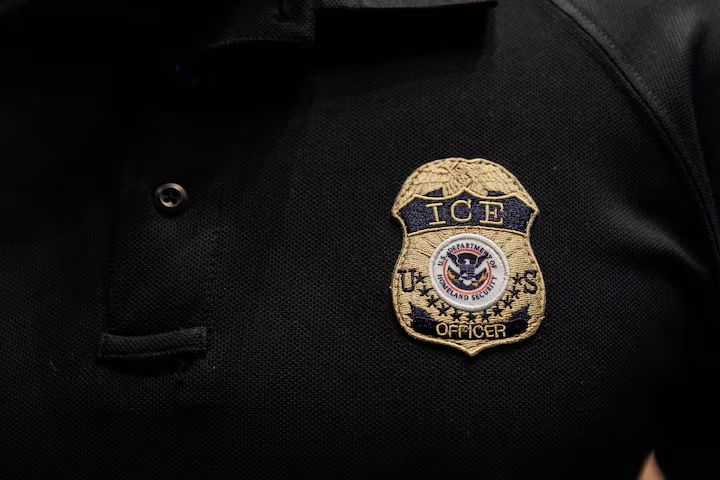
In a rare and serious diplomatic dispute, Ecuador’s government has accused a U.S. Immigration and Customs Enforcement (ICE) agent of attempting to enter its consulate in Minneapolis without permission, a move that violated international law and triggered a formal protest to the United States Embassy in Quito. The incident unfolded amid an intense nationwide immigration enforcement operation that has already sparked protests and deadly confrontations, making this a flashpoint in U.S.–Latin America relations and underscoring growing global concerns over U.S. immigration tactics.
International law and customary diplomatic protocols strictly forbid law enforcement personnel from entering foreign diplomatic missions like consulates without explicit consent from the host country’s diplomatic representatives. Ecuador’s ministry emphasized that its staff actively blocked the ICE agent, invoked emergency protocols, and protected Ecuadorian nationals inside the building, describing the action as an “attempted incursion.”
The clash comes at a time when the Trump administration’s massive immigration enforcement operation — dubbed Operation Metro Surge — has drawn intense criticism for its aggressive tactics and tragic outcomes, including the shooting of U.S. citizens during immigration raids. Ecuador’s protest highlights how U.S. domestic policies are having international diplomatic repercussions.
ICE and Ecuador Clash Over Consulate Access
Diplomatic immunity is a foundational principle of international relations, designed to ensure that foreign consulates and embassies operate free from coercion by host-country law enforcement. On January 27, Ecuador’s Foreign Ministry publicly denounced the attempted entry by an ICE agent into its Minneapolis consulate, even though consulate officials prevented access. The ministry immediately lodged a formal diplomatic protest with the U.S. Embassy in Quito, demanding assurance that such actions will not happen again.
Accompanying social media videos showed a consulate staff member firmly telling the ICE agent, “This is the Ecuadorian consulate. You’re not allowed to enter,” a verbal defense that law experts say reflects the strict protocols that govern diplomatic zones. Despite frictions, the situation did not escalate into violence inside the consulate’s grounds, but it has inflamed political and public debate on both sides of the border.
The Context of Operation Metro Surge
The attempted consulate entry did not occur in isolation. It was part of Operation Metro Surge, an unprecedented surge of more than 3,000 federal immigration agents deployed to Minneapolis and the wider Minnesota area. The U.S. Department of Homeland Security (DHS) says the sweep is aimed at rounding up undocumented immigrants, but critics argue the tactics are heavy-handed and urban-militia-like in nature.
The operation has already been tied to at least two fatal shootings of civilians, including cases where federal agents were involved in deadly confrontations with local community members. These deaths have sparked sustained protests across Minneapolis and in other U.S. cities, where critics accuse federal law enforcement of operating without transparency, accountability, or respect for civil liberties.
Ecuador’s diplomatic protest amplifies these concerns on the global stage, turning what might have been seen as a domestic enforcement issue into an international one. The protection of sovereign consular spaces is considered non-negotiable under treaties like the Vienna Convention on Consular Relations, which the U.S. has ratified.
U.S.–Ecuador Relations and Diplomatic Reactions
Ecuador’s President Daniel Noboa, traditionally an ally of the United States in Latin America, signaled that the incident could strain bilateral cooperation if not resolved. Quito demanded “assurances” that federal enforcement personnel will respect diplomatic spaces in the future and uphold international norms.
U.S. officials from DHS and the State Department have not yet released a full public statement on the matter, but sources within Washington tell press outlets that the incident is being reviewed internally. Analysts say the U.S. may seek to de-escalate diplomatically to avoid further damage to broader strategic interests in the region.
Broader Impact and Global Reactions
Experts in international law warn that unauthorized attempts to enter diplomatic buildings — even if well-meaning — can set dangerous precedents. If left unaddressed, such actions might encourage other nations to reinterpret diplomatic protections, which could erode global norms that have helped secure peaceful international relations for decades.
Activists and human rights groups have also seized on the event, linking it with broader criticisms of the Trump administration’s immigration policies. They argue that heavy-handed strategies risk not only community trust but also diplomatic credibility on a world stage. Meanwhile, officials in Minneapolis and Minnesota have called for renewed dialogue between federal, state, and local leaders to ensure that enforcement strategies are fair, transparent, and respectful of civil and international law.
What Happens Next
Diplomats in Quito are awaiting a formal reply from Washington. Ecuador’s protest may lead to higher-level negotiations between foreign ministers. Analysts say that how the U.S. responds could influence not only immigration relations with Ecuador but also how Latin American capitals view U.S. enforcement policies more broadly.
On the ground in Minneapolis, community leaders are calling for de-escalation and reforms to federal immigration operations, while legal advocates prepare to challenge what they call questionable incursions into protected diplomatic spaces. The reverberations of this incident may influence policy debates in Congress and beyond for months to come.
Subscribe to trusted news sites like USnewsSphere.com for continuous updates.