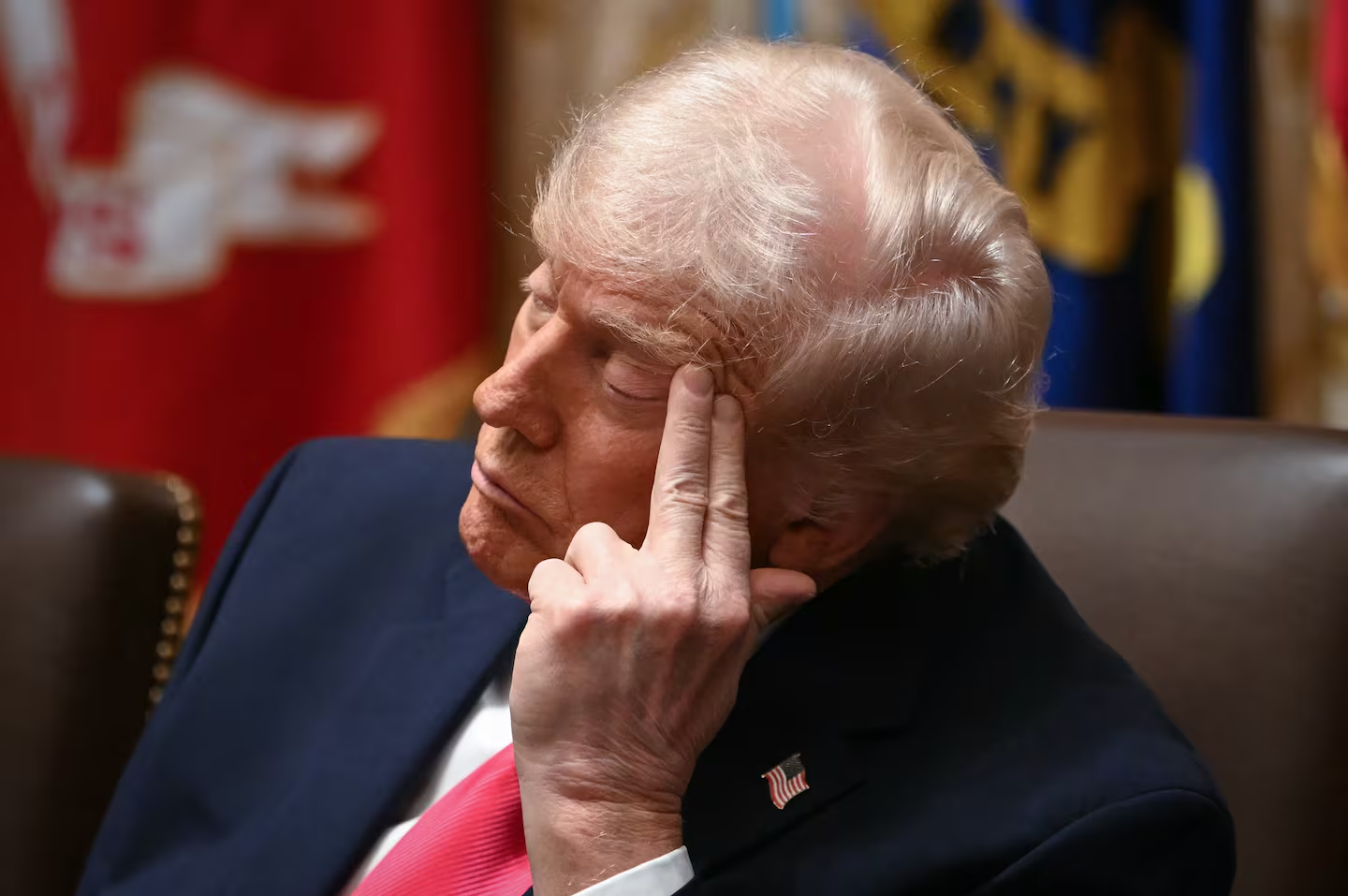
Recent claims by a medical expert alleging that 79-year-old President Donald Trump suffered a serious medical event earlier in 2025 have reignited a national debate over his health and fitness for office. As speculation mounts, this article explores evolving evidence, professional analysis, official responses, and expert context surrounding these allegations.
Explosive Medical Claims: Was There a Hidden Stroke?
A prominent physician and academic, Professor Bruce Davidson from Washington State University’s Elson S. Floyd College of Medicine, has publicly suggested that President Trump may have suffered a stroke early in 2025. Davidson cited a range of observable signs in Trump’s gait, speech patterns, hand use, and daytime alertness that he argues are consistent with post-stroke effects. He speculated the event likely occurred on the left side of the brain, which affects movement and coordination on the right side of the body.
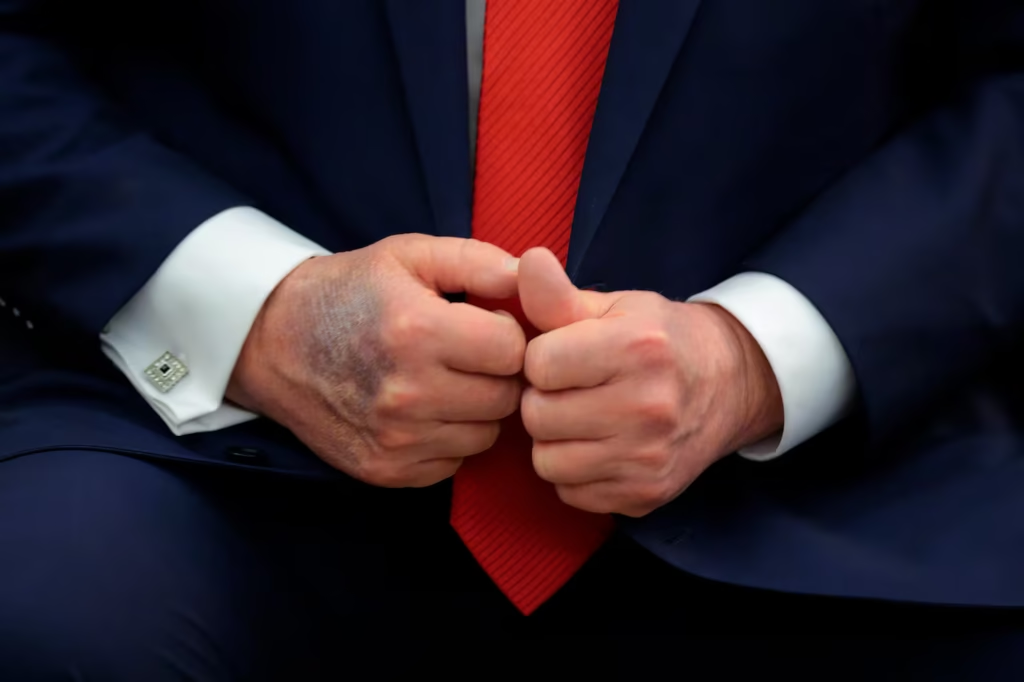
According to Davidson, videos and public appearances showed Trump shuffling his feet instead of his usual confident stride, cradling his right hand with his left, and exhibiting speech irregularities that were not previously apparent — all of which he interprets as supportive evidence. He also pointed to episodes of excessive daytime sleepiness, known medically as hypersomnolence, as another symptom often observed among stroke survivors.
None of these observations has been independently verified through medical records or confirmed by Trump’s personal doctors, and Davidson himself has not examined the president in person. Nonetheless, his analysis has gained public attention because of the significant implications it could have for American leadership, policy confidence, and the transparency of presidential health reporting.
Official Response: White House Denies Hidden Medical Crisis
The White House has forcefully rejected these claims, dismissing them as politically motivated rumors rather than medically substantiated facts. Press Secretary Karoline Leavitt reiterated in multiple statements that President Trump remains in “excellent health,” highlighting his energy levels and continuing daily work schedule as evidence of vitality and fitness to serve.
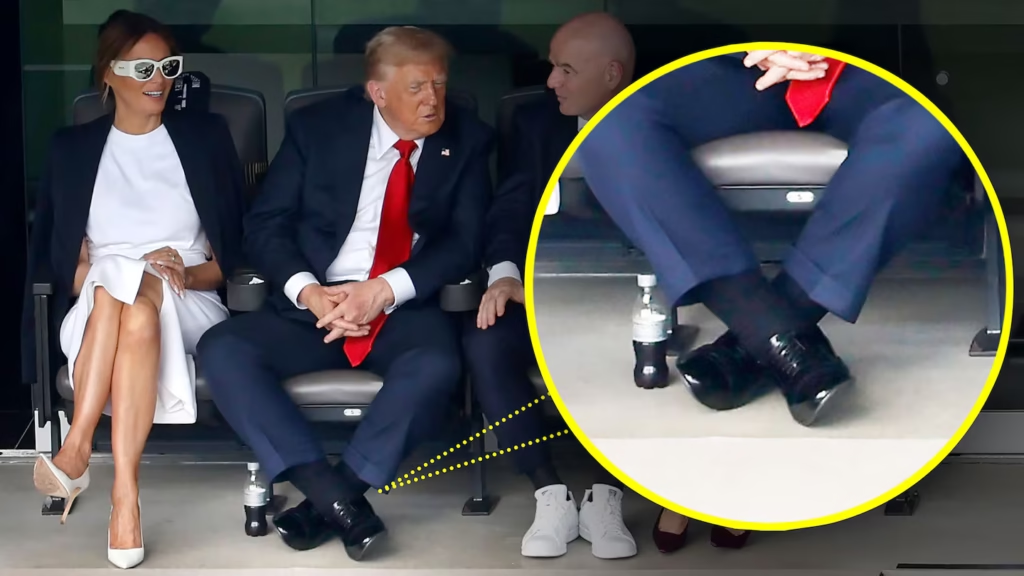
This official denial goes beyond mere contradiction of the stroke claim. In past public briefings, White House officials and Trump’s physician have addressed specific health concerns — notably the president’s swollen ankles and occasional bruising on his hands — by attributing them to benign, age-related conditions. In July 2025, doctors officially diagnosed Trump with chronic venous insufficiency, a condition common among older adults in which leg veins struggle to move blood back toward the heart. This diagnosis was made after specialized ultrasounds showed no dangerous blood clots or arterial disease.
The White House emphasized that the vein condition is not serious and does not impede Trump’s overall health, a point affirmed by multiple medical experts unrelated to the Trump campaign. They also argued that swollen ankles and bruising are not uncommon in men of advanced age, especially those who may take medications like aspirin regularly.
Age and Health in U.S. Political Leadership
Concerns about the health and age of presidents and presidential candidates are not new. Donald Trump, who is nearing 80, would be the oldest U.S. president in history, surpassing previous records. Because of that, every public sign of physical change, whether through gait, speech, or stamina, tends to draw intense scrutiny. Some commentators have even likened current debates over Trump’s condition to past controversies — such as questions raised about other aging presidents and the broader topic of disclosing health information for elected leaders.
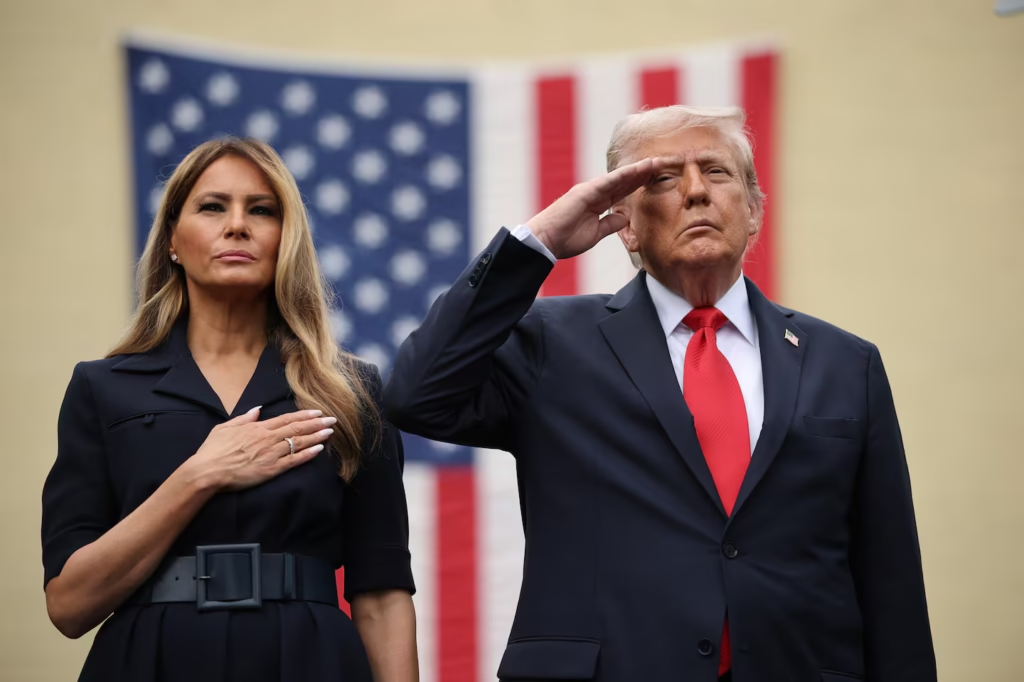
These discussions touch on legislation like the Stable Genius Act, a proposal introduced years ago that would require presidential candidates to undergo and publicly share medical examinations before elections. While this act never became law, it highlights perennial public interest in transparent health reporting in national leadership — particularly for figures whose age naturally invites questions.
Medical Expertise and Social Media Speculation
In addition to professional claims, ordinary citizens and social media users have responded wildly to the stroke allegations. Clips and images shared across platforms show viewers interpreting Trump’s posture, movements, and moments of sleepiness as potential evidence of more serious underlying health challenges. Supporters of the stroke claim argue that these visual cues align with known symptoms of neurological incidents, while opponents dismiss them as misinterpretation or partisan exaggeration.
Separately, independent medical voices in the public sphere have criticized the use of anecdotal footage or isolated moments to diagnose complex conditions without a professional consultation and access to complete medical records. Many doctors stress that without direct examination, laboratory results, and imaging scans, it’s irresponsible to definitively assert that the president had a stroke based on video clips and public appearances alone. This caution underscores the complexity of health diagnosis and the need for evidence beyond surface observations.
Expert Analysis: What Symptoms Could Really Mean
Neurologists and stroke specialists emphasize that strokes can present in subtle ways, especially if minor or transient. Difficulty with gait, speech changes, and weakness on one side of the body are classic signs, but these symptoms typically warrant immediate medical evaluation and detailed imaging to confirm. None of Trump’s medical records have been publicly released that would show such imaging or evaluations, and the White House’s statement about MRI results suggested preventive imaging aimed at overall health assessment with “perfectly normal” findings.
That said, chronic venous insufficiency — the condition medically confirmed in Trump’s case — can cause fatigue, discomfort, and swelling, but it is not associated with neurological damage or stroke. Experts describe CVI as bothersome yet common among seniors and manageable with lifestyle changes, compression therapy, and monitoring.
Broader Public Reaction and Political Implications
Public reaction to these health claims spans a wide spectrum. Some Americans express legitimate concern about transparency and the implications of a serious undisclosed medical event in a sitting president. Others view the claim as politically charged speculation aimed at undermining confidence in the leader’s abilities. Regardless of political allegiance, the situation highlights a key issue: transparency in health matters for individuals in positions of supreme political power. Many are calling for clearer, more standardized health disclosures for all presidential candidates and sitting presidents to ensure public trust and constitutional stability.
Ultimately, this debate reflects deeply held expectations about governance, accountability, and public information. Whether or not there was any basis for a hidden stroke or a serious medical issue, the broader conversation about the health and capacity of senior leaders is likely to continue shaping public discourse through and beyond this presidency.
In the evolving story about President Trump’s health, a respected medical expert’s claim that he may have experienced a stroke has captivated global attention. Drawing from observable public behavior, expert speculation, official responses, historical context, and medical analysis, we have presented a comprehensive overview rooted in trusted sources.
Subscribe to trusted news sites like USnewsSphere.com for continuous updates.