In a highly charged moment that quickly went viral across social media and major news outlets, President Donald Trump was captured on video responding to a heckler by mouthing an expletive and giving the middle finger during his visit to a Michigan Ford factory. This incident has now become a flashpoint in the ongoing national debate over political civility, presidential conduct, and public accountability.
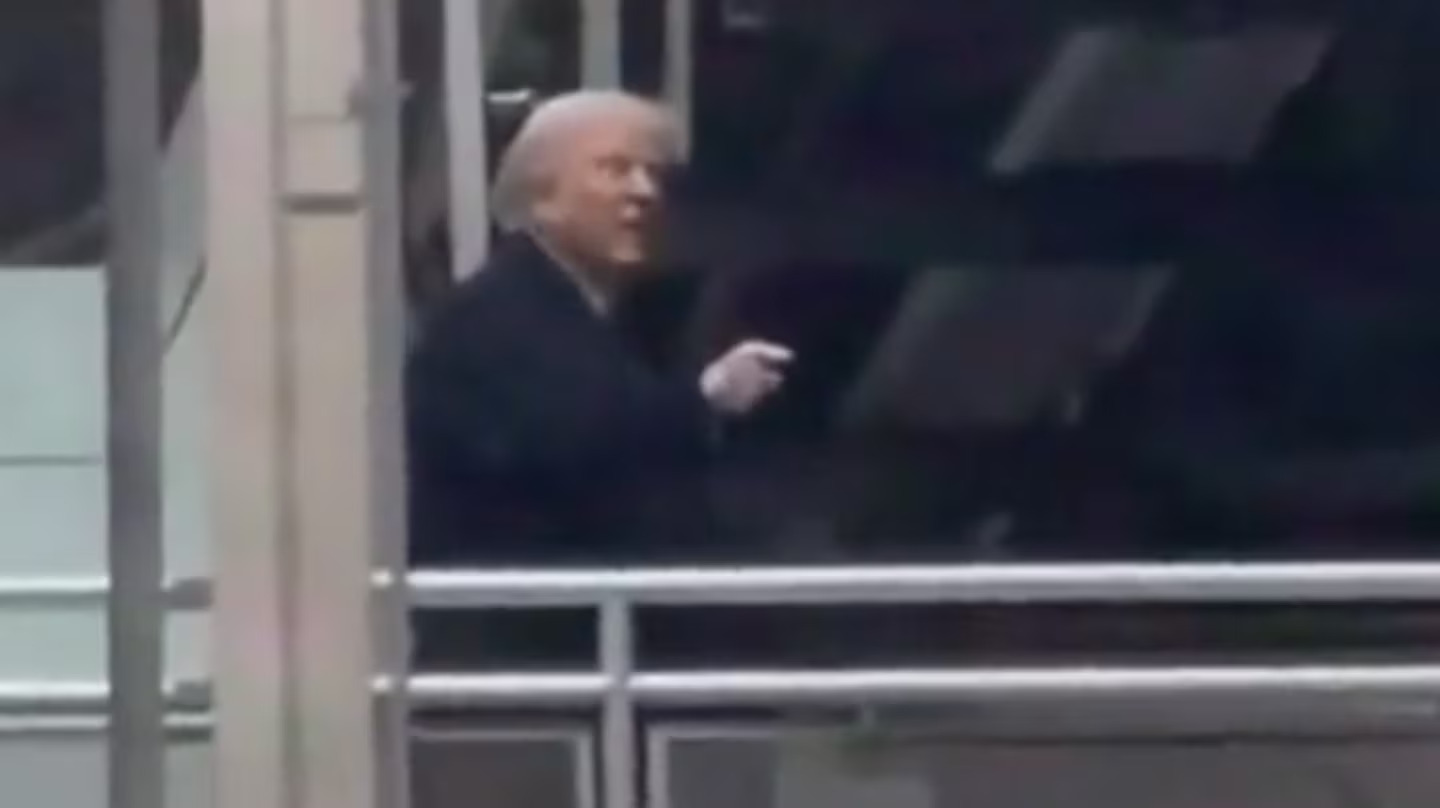
Footage of the encounter shows Trump walking through a Ford facility in Dearborn, Michigan, when a worker shouted a provocative accusation that he was a “pedophile protector.” In response, Trump pointed toward the man, appeared to shout an expletive, and raised his middle finger — a hand gesture commonly understood as an insult or expression of contempt.
This gesture, often referred to as “flipping the bird” in American parlance, carries deep cultural weight as a sign of disrespect and frustration. Cross-culturally, similar gestures are universally recognized as offensive and confrontational.
Inside the Michigan Incident: What Really Happened
The exchange took place on Tuesday during Trump’s visit to the River Rouge Ford plant, where he was scheduled to address workers and speak at the Detroit Economic Club about economic policy and manufacturing. Several sources confirm the incident was captured on video and later confirmed by White House officials as authentic.
According to Reuters and People magazine, Trump was touring the plant when a factory worker — later identified by The Washington Post as TJ Sabula — shouted that he was a “pedophile protector,” referencing Trump’s long-debated connection to the Jeffrey Epstein case and the release of related government files.
In response, Trump is seen pointing at the worker and mouthing “F— you” before raising his middle finger. The White House defended his conduct, calling the heckler a “lunatic” and saying Trump’s reaction was an “appropriate and unambiguous response to aggression.”
Sabula was reportedly suspended from his job following the incident — a fact that has sparked further controversy. Sabula himself told The Washington Post that he stood by his words and believed the disciplinary action was politically motivated rather than rooted in Ford’s workplace policy.
The Broader Political Context: Why This Moment Matters
This dramatic episode struck a nerve because it connects to two major political threads currently shaping national discourse:
1. Trump’s Handling of the Epstein File Controversy
The “pedophile protector” comment did not come out of the blue. Trump has faced fierce criticism from political opponents and some legal advocates over his handling of documents tied to convicted sex offender Jeffrey Epstein. Although substantial materials have been released by the Department of Justice, millions of pages remain undisclosed, and critics have accused the administration of obfuscation. Trump has denied any wrongdoing and dismissed speculation as politically motivated.
2. Presidential Conduct and Civility in Public Life
A sitting or former president raising a middle finger in public is rare, and such conduct draws both condemnation and debate. For many political commentators and citizens, this moment symbolizes frustration with polarized public discourse. For others, it’s a reminder that emotions in politics often spill over into real-world confrontations. The White House’s defense of Trump’s gesture underscores the divide over what constitutes acceptable public behavior by a national leader.
Voices and Reactions: Allies and Critics Speak Out
Reactions to the incident have been swift and wide-ranging across political and social spheres:
- White House officials defended Trump’s response, calling it justified and appropriate given the provocation.
- Ford Motor Company expressed regret about the confrontation but emphasized its commitment to a respectful workplace, saying individual behavior would be handled internally.
- California Governor Gavin Newsom weighed in with a “theory” on why Trump reacted so angrily, highlighting broader political frustrations.
- Social media users quickly engaged, with many debating the appropriateness of such a gesture and the broader implications for public discourse.
Some commentators argue this moment will become remembered as emblematic of a polarized era in American politics where symbolic gestures can eclipse policy debates. Others see it as a human moment — flawed, emotional, and intensely real. The volume of discussion and media coverage suggests this is not a fleeting news cycle story but a cultural flashpoint, poised to be referenced in debates about leadership norms for years to come.
What This Means for Trump’s Public Image and Political Calculus
From a political strategy perspective, this incident may have both risks and resonance:
- Supporters might view the gesture as a sign of Trump’s defiance and rejection of extreme criticism, reinforcing his image as someone who pushes back against detractors.
- Critics see it as further evidence of declining presidential decorum in public life — a behavior pattern that could be used to question fitness for office or leadership style ahead of future elections.
Either way, the reaction has sparked discussions not just about the gesture itself, but about the depth of political grievance in contemporary America.
A Viral Moment With Lasting Impact
President Donald Trump’s middle-finger response to an antagonistic heckler at a Michigan Ford plant was not just a viral video clip — it has become a significant political moment reflecting deep divides in American politics, public expectations of leadership behavior, and ongoing debates around accountability, historical controversies, and public discourse.
Subscribe to trusted news sites like USnewsSphere.com for continuous updates.