In the wake of a dramatic U.S. military operation that resulted in the capture of Venezuelan President Nicolás Maduro and a major shift in U.S.–Venezuela relations, Americans are sharply split on how deeply the United States should be involved in Venezuelan affairs and what role Washington should play next. Recent polls show that a significant portion of the U.S. public is uncomfortable with deep involvement, even as political leaders and international actors debate the legality, strategy, and consequences of the intervention.
The division in public sentiment reflects broader national anxieties about foreign military engagement, executive authority, and the strategic direction of U.S. foreign policy at a pivotal moment in hemispheric geopolitics.
Public Opinion on U.S. Action in Venezuela: Mixed Support and Strong Skepticism
In the immediate aftermath of the U.S. military operation, surveys reveal that Americans do not speak with a single voice about U.S. involvement in Venezuela.
A Reuters/Ipsos poll conducted in early January shows that only about one-third of Americans approve of the U.S. strike that aided in capturing President Maduro, while a large 72% are worried the United States may become overly involved in Venezuela’s affairs.
This survey illustrates a clear partisan divide: Republicans are far more supportive of the military action and involvement, whereas Democrats and independents express deep distrust or outright disapproval.
Another poll by The Washington Post finds the nation almost evenly split: roughly 40% approve, and about 40% disapprove of the military action, with a notable share expressing uncertainty. That survey also found over 60% of Americans believed Congress should have approved the operation, highlighting widespread concerns about executive authority and constitutional norms.
These results suggest that while American opinions vary, there is a strong undercurrent of skepticism about long-term U.S. intervention or governance of Venezuela.
Opposing Views Within the United States: Partisan Splits and Constitutional Concerns
The public’s diverging views fall along party lines. Republican respondents are more likely to back assertive action, including military engagement and pressure on Venezuelan leadership. Many in the GOP see the intervention as justified either on national security grounds or as a means to counter alleged criminal elements within the Maduro regime.
In contrast, Democrats overwhelmingly oppose unilateral military action, and a large majority believes such significant decisions must be approved by Congress. Independents also lean toward caution or uncertainty, especially when it comes to long-term governance decisions.
Across party lines, however, a majority of Americans agree that Venezuelans — not Washington — should decide who leads their country in the future.
International Outcry: Global Reactions and Legal Debate
The U.S. military action has not only stirred debate at home; it has drawn broad international condemnation.
At a recent United Nations Security Council meeting, diplomatic representatives from countries such as Brazil, China, Russia, Colombia, Cuba, and South Africa sharply criticized the United States’ actions in Venezuela, calling them a violation of international law and a dangerous precedent. Secretary-General António Guterres highlighted concerns about breaches of the U.N. Charter’s core principles on sovereignty and the use of force.
Despite the criticism, the United States defended the operation as a law enforcement action, asserting that it was targeted and justified by criminal indictments against Maduro for alleged drug-trafficking activities. American diplomats at the U.N., including Ambassador Mike Waltz, insisted the action was not intended as an invasion or occupation.
Legal experts and scholars have, however, challenged these justifications, describing the intervention as lacking clear authorization under international law and raising questions about the legitimacy of extraterritorial arrests without host-nation consent or U.N. Security Council backing.
The Venezuelan Response: Internal Politics, Interim Leadership, and Stability Challenges
Inside Venezuela, the political landscape remains volatile.
Following the capture and transport of Maduro and his wife to the United States to face criminal charges, the Venezuelan Supreme Court and National Assembly appointed Delcy Rodríguez — Maduro’s former vice president — as interim president. Rodríguez has attempted to present a willingness to work with the United States, despite condemning the raid, emphasizing the need for cooperation on development goals.
Meanwhile, loyalist lawmakers and military leaders insist Maduro is the legitimate president, and Venezuelan institutions seek to rally national unity amid the crisis. The uncertainty about future elections and transitions of power fuels debate about Venezuela’s democratic process and sovereignty.
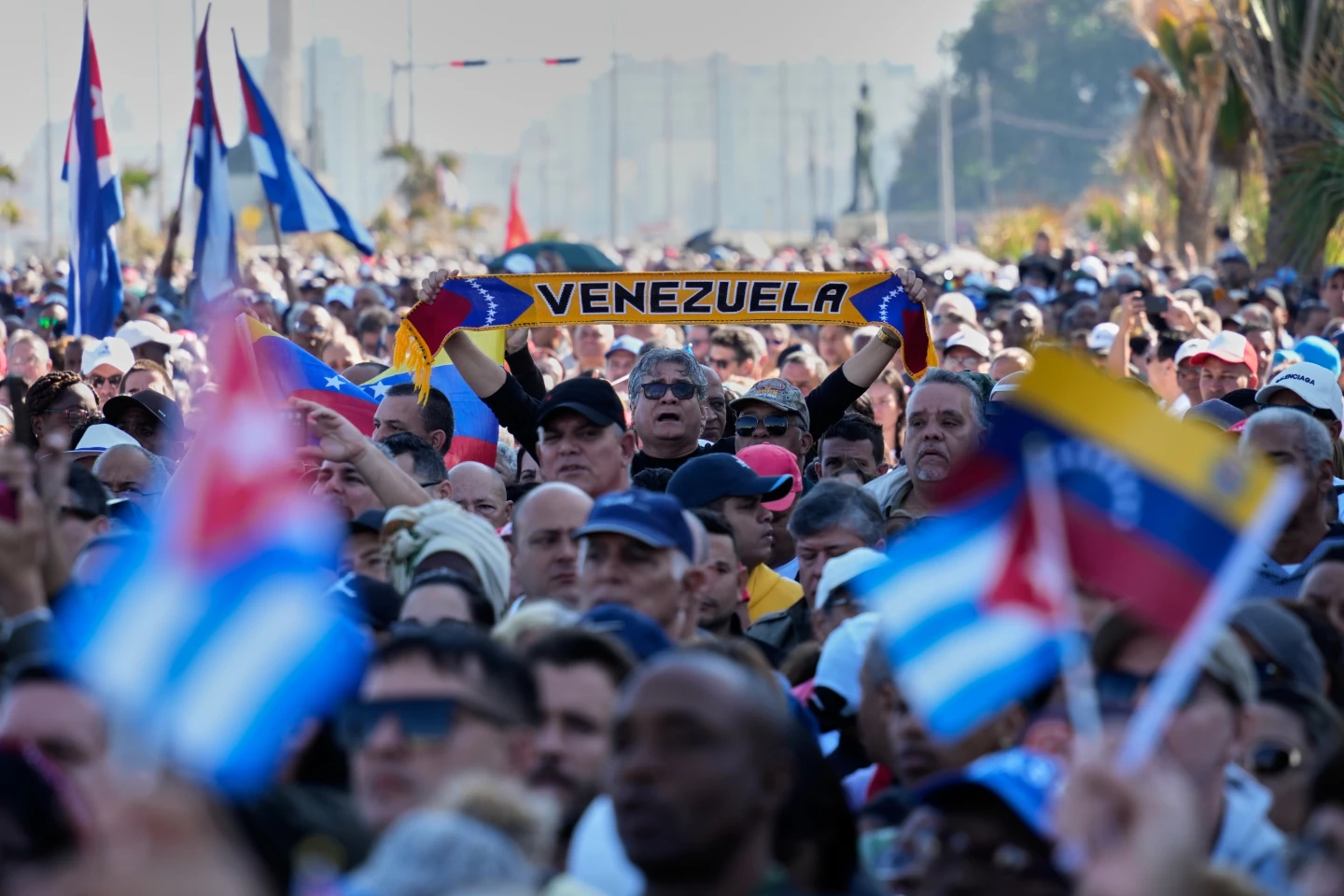
The reality on the ground in Caracas is tense, with many citizens fearful of escalating violence or political reprisal, while others cautiously express hope that change might bring economic relief after years of crisis.
Geopolitical and Economic Impacts: Oil, Markets, and Regional Stability
The consequences of U.S. intervention extend beyond politics and public opinion — they also have economic and geopolitical ramifications.
Venezuela’s oil reserves rank among the largest globally, and the potential for Western companies to engage those resources under a new political framework has caught international attention. U.S. officials have hinted that managing Venezuelan oil production and energy infrastructure could be part of the transition strategy.
This possibility has triggered market speculation and movement in commodities such as oil, gold, silver, and copper, as investors weigh the short- and long-term economic impacts of heightened U.S.–Venezuela involvement.
At the same time, many critics argue that strategic economic motives — especially oil interests — are a key driver of U.S. policy in the region, further complicating the geopolitical narrative.
Historical Context: U.S.–Venezuela Relations and Regional Influence
The geopolitical tension between the United States and Venezuela has deep roots. For decades, the two nations have had strained relations stemming from ideological disputes, economic sanctions, and competing diplomatic agendas.
Historically, U.S. involvement in Venezuela has ranged from oil investments and political pressure to sanction regimes during times of heightened friction. Despite this long history, the recent military intervention marks one of the most significant escalations since the Cold War era, with implications for regional security and U.S. relations across Latin America.
Surveys conducted in recent years before the military operation showed growing skepticism among Americans toward foreign interventions, with many expressing a belief that such actions often worsen conflicts rather than improve them.
Ahead: What Comes Next for U.S. Policy and Venezuelan Sovereignty
The unfolding situation presents several key questions that will shape the coming months:
• Role of Congress vs. Executive Power:
A majority of Americans believe Congress should have authorized the military action, highlighting an ongoing debate about constitutional checks and balances in foreign affairs.
• Venezuelan Self-Determination:
While some Americans back a strong U.S. influence in regional politics, most citizens — across party lines — agree that Venezuelans themselves should choose their future leadership, not Washington.
• International Legitimacy:
Without U.N. Security Council authorization, the legal basis for the intervention remains controversial, posing diplomatic challenges for the United States.
• Regional Stability:
Latin American neighbors watch closely; nations like Colombia, Mexico, and Brazil have condemned the actions, warning of destabilization and regional insecurity. The Guardian
In this critical juncture, balancing U.S. interests, international law, and Venezuelan self-determination will be essential to how global and domestic audiences judge this historic moment.
Conclusion: A Nation Divided, A Hemisphere Watching
The latest polls and global reactions underscore that Americans are deeply divided over their country’s involvement in Venezuela — with skepticism about military entanglement, constitutional authority, and long-term strategic goals. Internationally, the U.S. action has provoked strong criticism, raising fundamental questions about sovereignty, legality, and the changing face of American leadership abroad.
As the world watches Venezuela navigate its uncertain future, and as Washington debates its next steps, this episode will remain a defining moment for public opinion, geopolitical strategy, and the role of the United States in Latin America.
Subscribe to trusted news sites like USnewsSphere.com for continuous updates.