In a dramatic and fast-escalating incident on Wednesday morning, federal law enforcement was involved in a shooting in Minneapolis that left one woman dead and ignited widespread outrage, protests, and calls for accountability from local officials and community leaders.
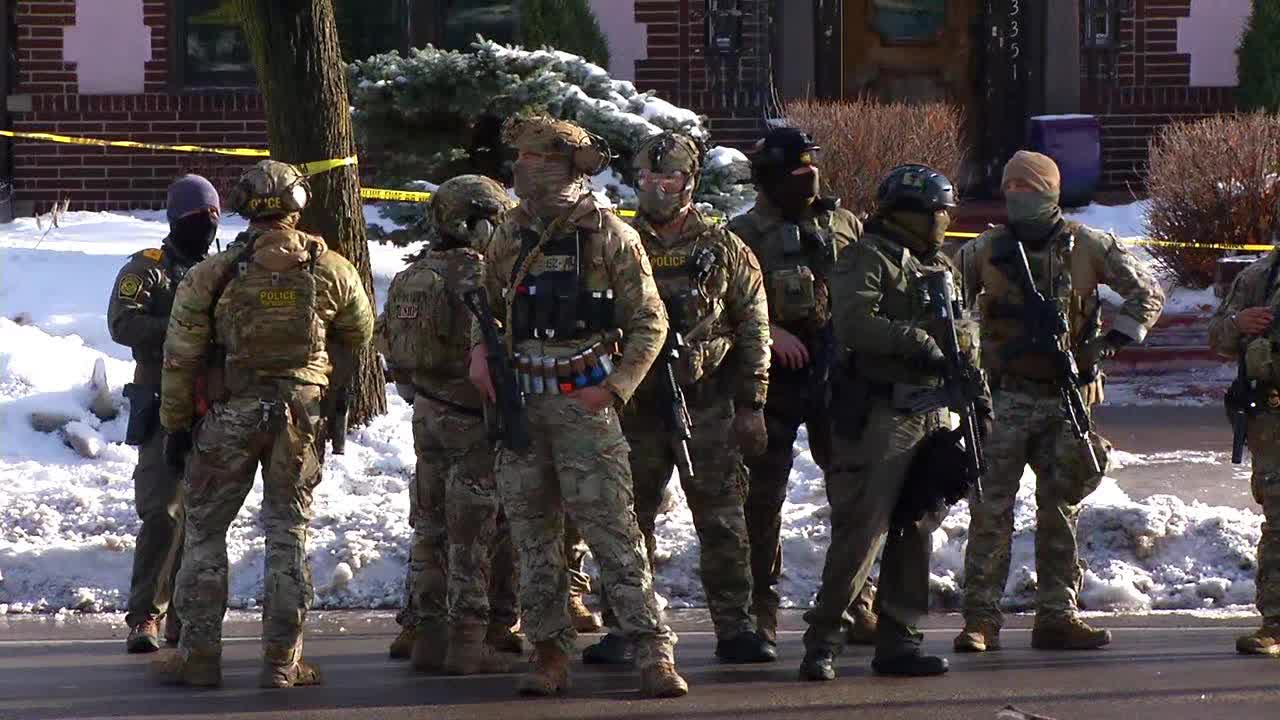
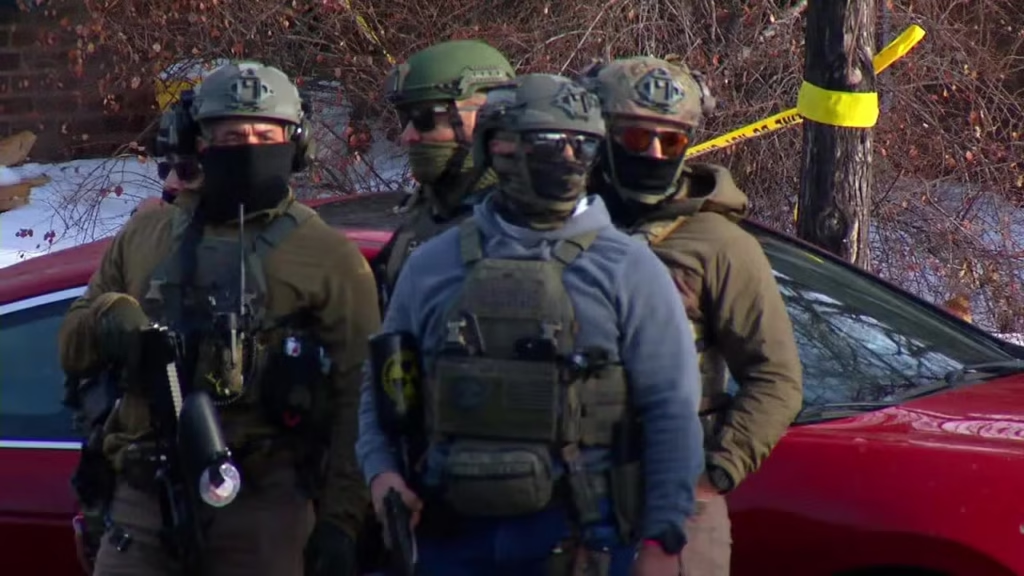
This critical event took place in south Minneapolis near East 34th Street and Portland Avenue amid a broader federal immigration enforcement operation that authorities describe as the largest of its kind in the state’s history. Targeted agents were conducting active operations when the deadly encounter occurred.
Federal law enforcement’s involvement in a civilian shooting always draws intense public scrutiny, and this incident has become one of the most talked-about developments in Minneapolis in years. Residents, activists, and elected officials are closely watching how the narrative unfolds as investigations continue to develop.
What Happened: Timeline of the Minneapolis Federal Law Enforcement Shooting
Early Wednesday, reports surfaced of a significant law enforcement presence in the residential streets of south Minneapolis. Federal agencies, including U.S. Immigration and Customs Enforcement (ICE), were operating as part of a broader immigration enforcement initiative when events turned violent.
According to official statements from the Department of Homeland Security (DHS), the shooting occurred when a vehicle allegedly tried to strike federal officers. DHS spokespeople characterized this as a case of self-defense, saying the agent fired because they feared for their safety and that of other officers.
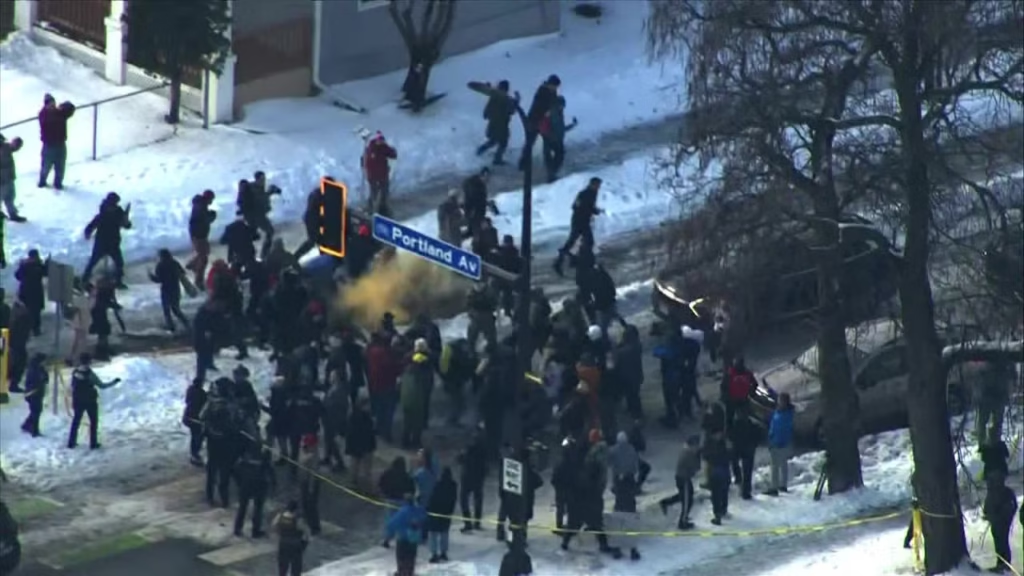
Local reports and eyewitness accounts depict a chaotic scene, with crowds of onlookers, chemical irritants deployed by agents, and protesters gathering around the cordoned-off area as news of the shooting spread.
Medical responders were eventually allowed to reach the scene, and the woman who was shot was pronounced dead. Local law enforcement agencies, including the Hennepin County Sheriff’s Office, indicated they were responding to assist and support investigations.
Federal Claims vs. Local Official Response
Federal authorities, in their official statements, described the shooting as a “defensive action” taken by an ICE agent after the suspect allegedly used her vehicle as a weapon and posed an imminent threat to federal personnel. DHS representatives characterized the encounter in stark terms, framing it as a necessary use of force.
In contrast, Minneapolis Mayor Jacob Frey and other local officials strongly rejected this portrayal. Mayor Frey called the federal justification “reckless” and dismissed claims of self-defense as unfounded after reviewing video footage and hearing from witnesses.
Frey also demanded that federal immigration agents leave Minneapolis immediately, arguing that their presence was creating chaos and fear, especially among immigrant and refugee communities wary of aggressive enforcement practices.
These sharply divergent narratives reflect the growing political and social tension surrounding federal operations in cities with Democratic leadership.
Inside the Federal Immigration Enforcement Operation
The federal action in Minneapolis isn’t isolated. According to multiple reports, the DHS has deployed approximately 2,000 officers and agents to the Twin Cities area as part of what officials are calling the largest immigration enforcement operation in the state’s history.
This unprecedented deployment includes agents from:
- U.S. Immigration and Customs Enforcement (ICE)
- Homeland Security Investigations (HSI)
- U.S. Customs and Border Protection (CBP)
The focus has been on immigration violations, alleged fraud cases, and criminal investigations tied to immigrant communities in Minneapolis and St. Paul. DHS leaders have emphasized the legal basis for the operation and defended its scope.
However, critics argue that the scale and intensity of this enforcement initiative — especially in residential neighborhoods — heighten tensions and risk unnecessary confrontations with civilians.
Community and Protest Reaction After the Federal Law Enforcement Shooting
Immediately following the shooting, crowds assembled near the scene, expressing outrage over the loss of life and the federal presence in their neighborhoods. Protesters chanted slogans, some reportedly threw snowballs at federal agents, and confrontations between demonstrators and law enforcement continued for hours.
Local immigrant rights groups have decried the aggressive nature of the operation, saying it instills fear in communities rather than promoting public safety. These groups are calling for independent investigations and greater oversight of federal activity in Minneapolis.
With the event rapidly unfolding, the public response — both supportive and critical — highlights the deep divisions in how Americans view immigration policy and federal enforcement practices.
Legal and Investigative Fallout
Following the incident, legal authorities at the county level have begun pushing for a thorough and transparent examination of the shooting. Hennepin County Attorney Mary Moriarty’s office stated it was actively seeking a local investigation into the use of force and would pursue all available legal avenues to ensure accountability.
Independent reviews of these kinds of shootings usually involve multiple agencies, including:
- Local law enforcement investigators
- State Bureau of Criminal Apprehension (BCA)
- Federal watchdogs (if drawn into civil rights hearings)
The goal of these steps is to confirm whether law enforcement actions met legal standards and ensure public trust is maintained — especially in cases involving federal agents acting in tandem with local police forces.
Broader Context: Federal Enforcement in U.S. Cities
This Minneapolis shooting comes amid a broader pattern of heightened immigration enforcement efforts in major U.S. cities across the country. The strategy mirrors actions previously seen in cities like Chicago and Los Angeles, where federal agents have been deployed to support local law enforcement.
While proponents argue that such operations disrupt criminal networks and enforce immigration laws more effectively, critics warn that the increased presence of armed federal agents in urban communities can erode trust, inflame tensions, and lead to tragic outcomes — as seen this week in Minneapolis.
Experts have noted that federal enforcement sweeps often bring mixed results in terms of community safety and public perception, a debate that is likely to intensify as this story unfolds.
What Residents and Viewers Should Know Now
Community members and observers are watching closely for official updates, body-camera footage, and clearer accounts of what precipitated the shooting. Authorities have promised further details as investigative reporters, local officials, and federal representatives continue to gather and release information.
At the moment, key questions remain:
- What precisely led to the fatal shooting?
- Will federal agents face local legal scrutiny?
- How will this incident impact enforcement operations nationwide?
Answers to these questions may continue to evolve throughout the coming days and weeks as more authoritative information becomes available. AP News
Conclusion
The federal law enforcement shooting in Minneapolis that resulted in the death of a woman has triggered a fierce debate over federal authority, immigration enforcement policies, and community safety. Divergent accounts from DHS and local city officials have sparked protests, political statements, and demands for accountability and transparency.
As investigations proceed and additional facts emerge, the conversation around federal law enforcement operations in urban America — and how they interact with local communities — is poised to remain at the forefront of national news.
Subscribe to trusted news sites like USnewsSphere.com for continuous updates.