
2027 Social Security COLA Could Rise, but the Final Number Is Still Months Away
2027 Social Security COLA estimates are currently pointing toward another increase in monthly benefits, but retirees should not treat any forecast as the official 2027 adjustment yet. The latest estimates following July inflation data generally put the potential increase somewhere in the mid-3% range, with recent forecasts including 3.4%, 3.5% and 3.6%. Some broader estimates have placed the possible range around 3.2% to 3.6%. The official number will not be known until the Social Security Administration has the complete third-quarter inflation data.
The reason the forecast remains unsettled is simple: only one of the three inflation readings used in the calculation has been released. July’s Consumer Price Index showed the CPI-W rising 3.4% over the previous year, while the index was unchanged on a non-seasonally-adjusted monthly basis. August and September data will still determine where the final calculation lands. The Bureau of Labor Statistics has scheduled the August CPI release for September 11 and the September report for October 14.
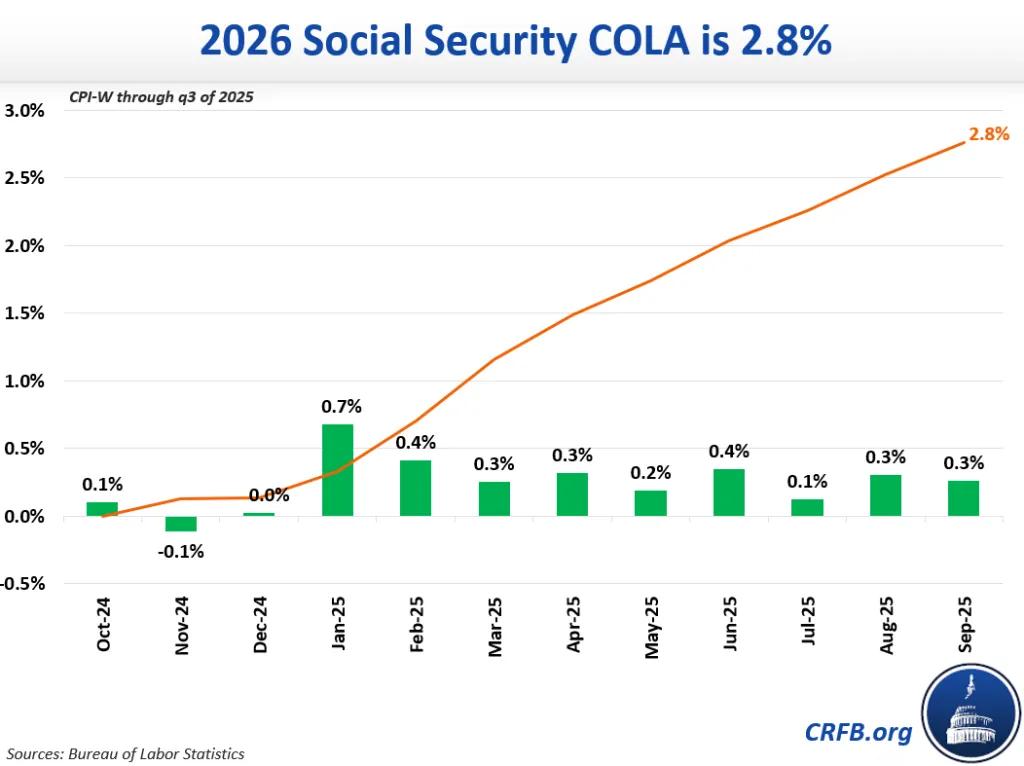
That makes the next several weeks particularly important for the roughly 70 million-plus Americans who receive Social Security-related benefits. The 2026 COLA was 2.8%, so even a 3.5% increase in 2027 would represent a noticeable step higher. But the size of the check increase will depend on each person’s current benefit, while Medicare premiums and other household expenses could determine how much of that increase actually remains available for spending.
What the Latest Inflation Data Says About the 2027 COLA
The latest official inflation report provides the clearest evidence yet about the direction of the 2027 Social Security adjustment. In July 2026, the CPI-U increased 3.4% over the previous 12 months, while the CPI-W — the specific inflation measure used for Social Security COLA calculations — also increased 3.4% over the year. The CPI-W stood at 327.104 in July.
Inflation has therefore cooled somewhat from earlier readings. The overall CPI rose 3.5% in June, compared with 3.4% in July. Core inflation, which excludes food and energy, increased 2.5% over the year in July. The July report also showed that shelter remained an important contributor to price pressures, while some categories experienced smaller changes.
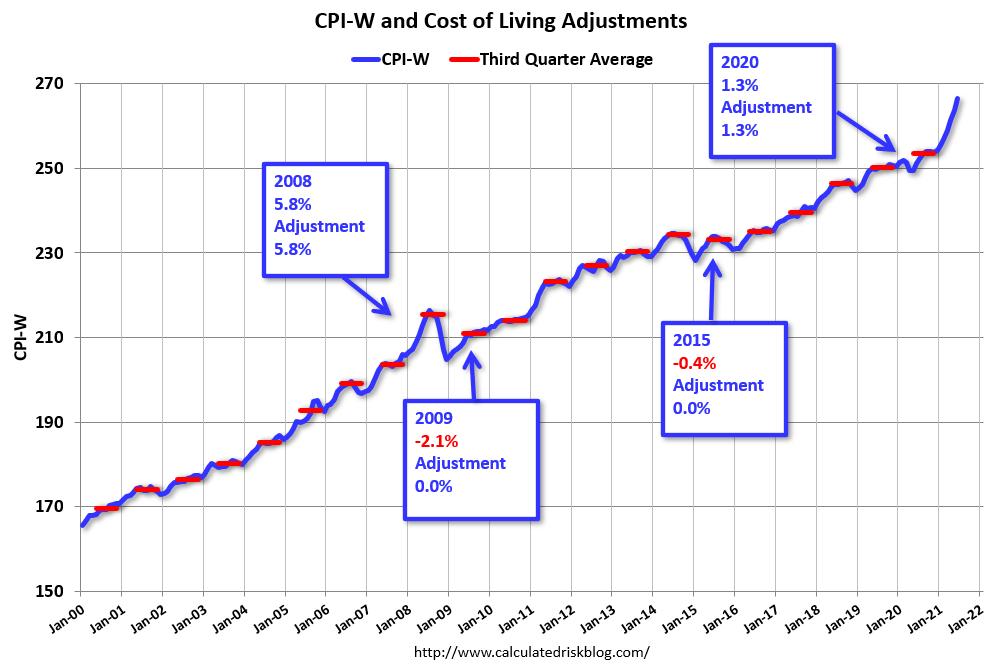
This matters because the Social Security COLA is not simply based on the latest annual inflation rate. Under current law, the Social Security Administration compares the average CPI-W for July, August and September with the average CPI-W for the third quarter of the previous year. The percentage increase, rounded to the nearest tenth of a percentage point, becomes the COLA when the calculation produces an increase.
The 2025 third-quarter CPI-W average was 317.265. July 2026’s CPI-W was 327.104. If the August and September readings were identical to July, a simple calculation would point to a COLA of roughly 3.1%. That is not a forecast of the final number — it is only an illustration of how sensitive the calculation is to the remaining two months of data.
That distinction is important because current analyst forecasts are higher than that simple hold-steady scenario. AARP currently projects 3.5%, while the Senior Citizens League’s latest projection is 3.6%. Independent analyst Mary Johnson has estimated 3.4%. Those differences demonstrate why the final number cannot be known until the full quarter is available.
How Much Could Social Security Checks Increase in 2027?
The easiest way to understand the potential impact is to apply different COLA scenarios to a real benefit amount. The Social Security Administration estimates that the average monthly retirement benefit for January 2026 is $2,071 after the 2.8% COLA.

If the 2027 COLA eventually comes in at 3.2%, an average $2,071 monthly benefit would rise by approximately $66 per month. At 3.4%, the increase would be about $70. At 3.5%, the increase would be approximately $72.50, or about $73 when rounded. A 3.6% COLA would add roughly $75 per month.
| Potential 2027 COLA | Example $2,071 benefit | Approx. monthly increase |
|---|---|---|
| 3.2% | $2,137.27 | $66.27 |
| 3.4% | $2,141.41 | $70.41 |
| 3.5% | $2,143.49 | $72.49 |
| 3.6% | $2,145.56 | $74.56 |
These examples are illustrations, not official benefit calculations. Your actual increase would depend on your current Social Security benefit. Someone receiving $1,500 per month would see a smaller dollar increase, while someone receiving $3,000 would see a larger one.
For perspective, the 2026 maximum retirement benefit for someone claiming at full retirement age after earning the taxable maximum throughout their career is $4,152 per month. A 3.5% COLA applied to that amount would be about $145 more per month, assuming the benefit amount were otherwise unchanged. The maximum benefit is not the typical retiree payment, however, and benefits vary substantially based on earnings history and claiming age.
The most useful takeaway is that percentage increases can sound large or small depending on the benefit amount. A 3.5% COLA does not mean every retiree receives the same dollar increase. It means each eligible benefit is adjusted according to the applicable COLA.
What This Means for You
For retirees and other Social Security beneficiaries, the 2027 COLA is more than a headline number. It can affect monthly budgets for housing, groceries, utilities, prescriptions, transportation and other recurring expenses. A higher COLA can provide additional income, but its real value depends on how quickly household expenses are rising.
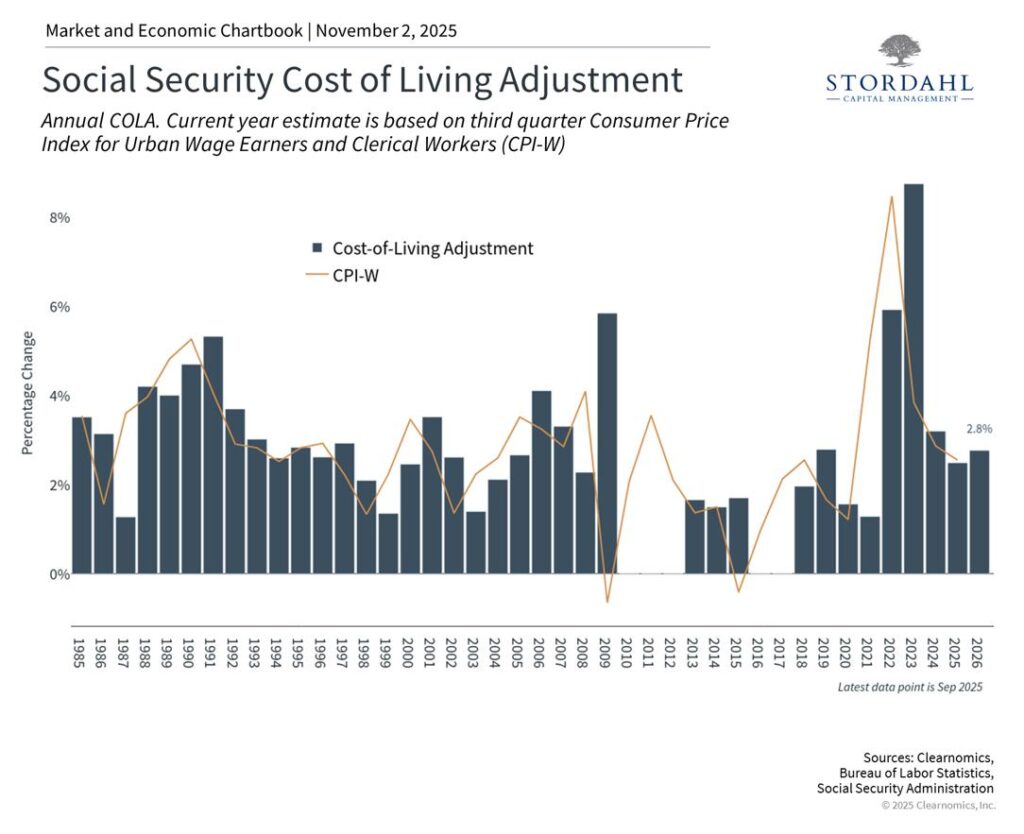
The important thing to remember is that a COLA is designed to help protect purchasing power; it does not guarantee that every beneficiary will feel financially better off. If rent, medical costs, food or insurance premiums increase faster than the benefit adjustment, the practical improvement in household finances can be much smaller.
Medicare is particularly important for beneficiaries who have premiums deducted from their Social Security payments. The 2026 Medicare Trustees Report estimates a standard monthly Medicare Part B premium of $209.50 for 2027, compared with $202.90 in 2026. That figure is an estimate rather than the final 2027 premium, but it demonstrates why beneficiaries should look at their net Social Security payment rather than focusing only on the COLA percentage.
There is another reason to avoid assuming that a larger COLA automatically solves retirement-income pressure. Social Security benefits are only one part of many retirees’ financial picture. Taxes, Medicare premiums, prescription costs, housing expenses and savings withdrawals can all affect how much money is actually available each month.
What this means for you: If you receive Social Security, the smartest approach right now is to use a range rather than one number when planning your 2027 budget. A 3.2% to 3.6% scenario provides a reasonable planning range based on current published estimates, while recognizing that the official figure could move as August and September inflation data arrive.
Investor Takeaway and Retirement Planning Considerations
Investor takeaway: The 2027 COLA should not be viewed only as a benefit increase. It is also a signal about the inflation environment facing older Americans. If inflation remains elevated, Social Security beneficiaries may receive a larger adjustment, but the same inflation can continue to pressure household spending, bond yields, consumer demand and retirement portfolios.
Investors approaching retirement should therefore avoid building a financial plan around the assumption that the COLA will land at exactly 3.5% or 3.6%. The final number will depend on the official CPI-W calculation, and the forecast can change quickly when a new monthly inflation report is released.
The broader Social Security system also faces long-term financing challenges. The Social Security Administration’s 2026 Trustees Report assumptions include a 2.4% projected COLA for 2027 under its intermediate assumptions, which is different from the newer short-term forecasts based on currently observed inflation. This is an important distinction: the Trustees’ long-range projection is not the same thing as a current market-style forecast of what the official 2027 COLA will be.
That difference is worth emphasizing because readers may encounter several different numbers online. One article might say 2.4%, another 3.4%, another 3.5% and another 3.6%. They may all be referring to different forecasting exercises or assumptions. The official number is ultimately determined under the statutory CPI-W formula, not by AARP, the Senior Citizens League, a financial website or an individual analyst.
For households, a conservative strategy is to budget using a lower COLA scenario and treat anything above it as additional breathing room. That can reduce the risk of planning expenses around an increase that ultimately turns out to be smaller.
Future Outlook: The Inflation Reports That Will Decide the 2027 COLA
The next major milestone is the August CPI report, scheduled for September 11, 2026. That report will provide the second of the three third-quarter CPI-W readings used in the calculation. The final piece will arrive with the September CPI report on October 14.
The final September reading is especially important because the third-quarter average cannot be calculated until all three months are available. If inflation accelerates in August or September, current 3.4%–3.6% projections could move higher. If inflation continues cooling, estimates could fall.
That is why readers should be cautious with headlines claiming that Social Security beneficiaries are “getting” a specific 2027 increase right now. They are not. At this stage, the most accurate language is estimated, projected, or could increase.
Recent coverage illustrates the changing forecasts. AARP’s August 12 analysis projected a 3.5% COLA, while the Senior Citizens League’s estimate was 3.6%. CBS News reported that both forecasts had declined from earlier projections after inflation cooled. Another current estimate from Mary Johnson put the potential increase at 3.4%.
Readers interested in following the calculation can also watch recent financial-news coverage. Yahoo Finance published a video explaining how July’s CPI reading begins the process of determining the 2027 adjustment and why July, August and September are the key months. Yahoo Finance: July CPI and the 2027 Social Security COLA Another Yahoo Finance video explains how inflation data can change the COLA forecast. Yahoo Finance: How inflation data will impact the 2027 Social Security COLA
For the most authoritative updates, readers should rely on the Social Security Administration’s COLA information and the Bureau of Labor Statistics CPI releases. Those government sources will ultimately provide the data behind the official calculation.
The bottom line is straightforward: the 2027 Social Security COLA is currently expected to be higher than the 2.8% adjustment received in 2026, but the final percentage has not been determined. Based on the latest available estimates, a range around 3.2% to 3.6% is useful for planning, with several prominent current forecasts clustered around 3.4% to 3.6%. The next two inflation reports could materially change that outlook.
For retirees, the most important date is October, when the full third-quarter CPI-W data should make the official calculation possible. Until then, any exact 2027 COLA number should be treated as a projection rather than a promise.
Subscribe to trusted news sites like USnewsSphere.com for continuous updates.