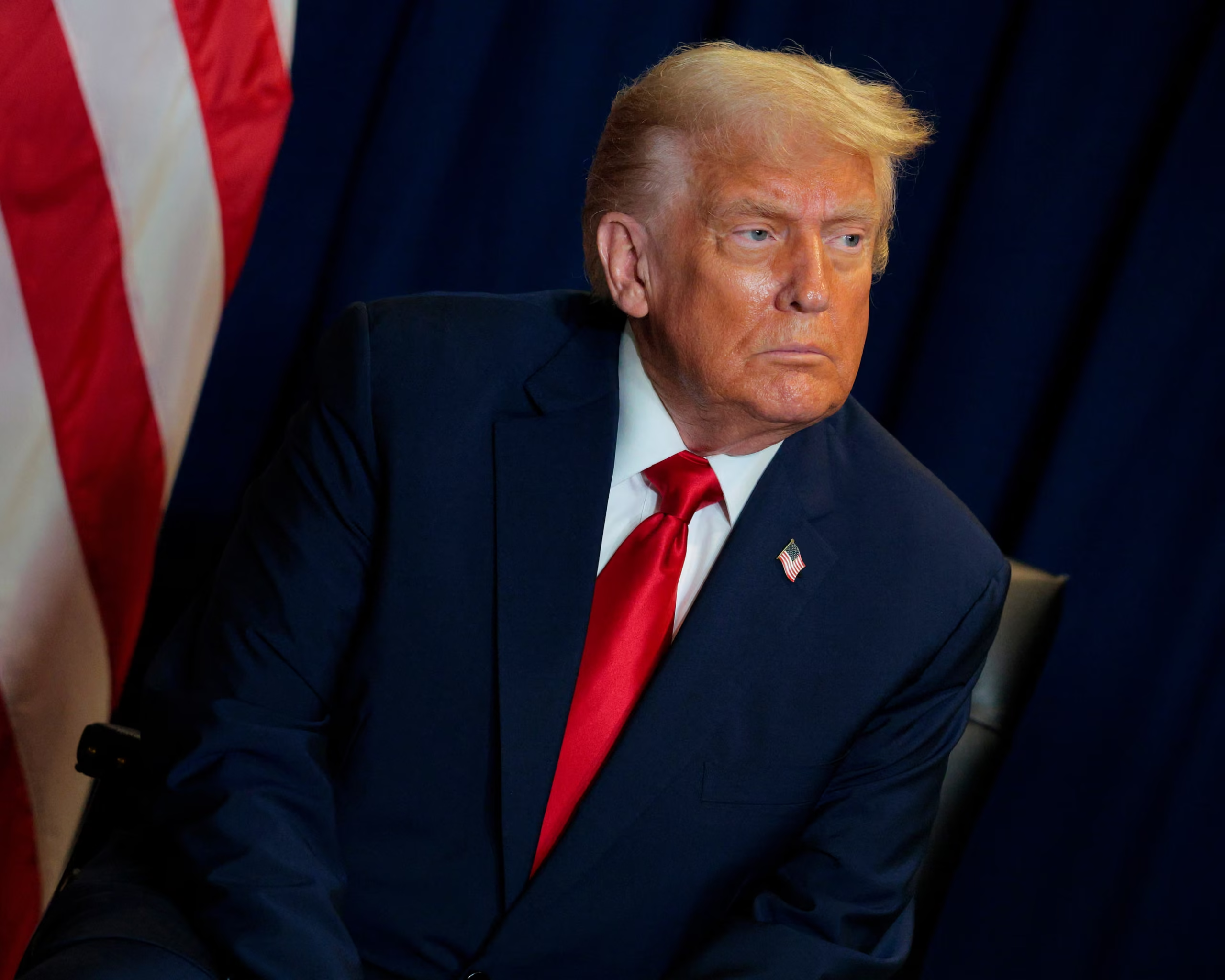
In a bold and controversial move that is poised to dominate global headlines, Trump says the US will start hitting drug cartels on Mexican land — signaling a major escalation in America’s long-standing campaign against international narcotics trafficking and organized crime. Former U.S. President Donald Trump, speaking in a high-profile interview, declared that the United States would shift its anti-drug campaign from sea to land, with planned military strikes against powerful criminal networks operating in Mexico. This groundbreaking announcement marks one of the most assertive foreign policy declarations in recent memory and has reverberated across diplomatic, legal, and national security circles worldwide.
The initiative follows an expanding U.S. campaign that has already included maritime strikes on drug-smuggling vessels and the capture of Venezuelan President Nicolás Maduro, whom U.S. authorities accuse of leading narco-trafficking operations. Trump’s comments reflect deep frustrations over drug smuggling and cartel violence, but they also raise urgent questions about international law, Mexican sovereignty, and the future of U.S.–Mexico cooperation on security.
Escalation in Anti-Cartel Operations: What Trump Actually Said
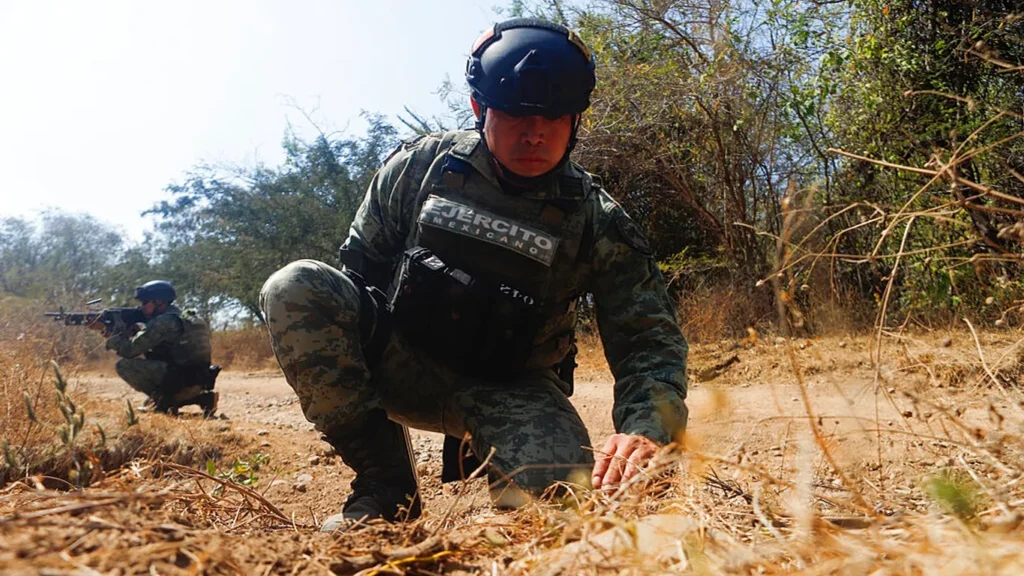
Trump’s declaration that the U.S. would “start now hitting land with regard to the cartels” represents a new phase in the U.S. strategy against drug trafficking and criminal networks. After months of targeting drug-transporting boats in the eastern Pacific Ocean and Caribbean Sea, Trump said the next logical step was to confront cartels where they operate on the ground, especially in Mexico.
In the interview, he asserted that combating maritime drug smuggling had been largely successful — claiming that 97% of drugs coming into the U.S. by sea had been disrupted — and that land-based cartel operations remained the primary challenge. Trump argued that Mexican cartels wield enormous power, contending, “The cartels are running Mexico,” and framing the land strikes as essential to U.S. security.
Despite these statements, key details — such as the precise timing, location, legal basis, and military capacity for such land operations — remain undisclosed, leaving analysts and policymakers questioning how, where, and under whose authority these plans would proceed.
Mexico’s Strong Reaction: Sovereignty and Cooperation
Mexico’s President Claudia Sheinbaum responded quickly to Trump’s remarks, firmly rejecting unilateral military action on Mexican soil and underscoring her nation’s sovereignty. Sheinbaum publicly stated that any foreign military presence or strikes inside Mexico “without consent” would be unacceptable and violate international law.
Rather than welcoming direct intervention, Sheinbaum called for deeper coordination between the United States and Mexico on shared security challenges. She emphasized that both nations have already been working on joint law enforcement and intelligence efforts to combat trafficking and violence, even as disputes over strategy continue.
Mexico has seen a notable decline in homicides in recent years, with government officials highlighting a roughly 40% drop in certain crime metrics — a point used to counter claims of total cartel dominance and justify collaborative rather than coercive approaches.
Legal and International Implications
If the United States were to carry out military strikes on Mexican territory without Mexico’s consent, the action would represent an extraordinary departure from traditional norms of international relations. Under the United Nations Charter and widely recognized principles of state sovereignty, the use of force on another nation’s land — absent clear self-defense justifications or host nation approval — could be considered a violation of international law.
International lawyers and security experts warn that such operations could trigger diplomatic crises, undermine regional stability, and harm U.S. relationships with other Latin American nations. Mexico’s strategic importance as a neighbor and trading partner means that any military engagement could have extensive economic and geopolitical repercussions.
Moreover, Congressional oversight and U.S. domestic legal frameworks — including the War Powers Resolution — could further complicate or restrict such foreign actions if they are interpreted as acts of war rather than law enforcement.
The Cartels: Power and Influence on Both Sides of the Border
Mexican drug cartels have long been deeply embedded in both illicit economies and social dynamics within Mexico, controlling vast territories and sophisticated trafficking networks. Two of the most powerful organizations — the Sinaloa Cartel and Jalisco New Generation Cartel — have been central figures in transnational crime, drug trafficking, and violent conflict that extend into the United States.
U.S. efforts to counter these organizations have historically focused on extraditions, surveillance, and cooperation with Mexican authorities. For instance, Mexican anti-narcotics operations and extraditions in 2025 saw numerous alleged cartel leaders transferred to the U.S. for prosecution, signaling persistent bilateral pressure on criminal networks.
Nonetheless, cartel influence persists, fueled by high global demand for illegal narcotics, particularly fentanyl — a potent opioid that has driven a nationwide drug crisis in the United States, including tens of thousands of overdose deaths per year. The border remains a critical transit route for smuggled drugs, human trafficking, and weapons, making it a central concern for U.S. law enforcement and national security.
Broader Geopolitical Context: Venezuela, Fentanyl, and Defense Strategy
Trump’s latest announcement is part of a broader pattern of assertive foreign policy moves, including recent military actions in Venezuela that led to the capture of President Nicolás Maduro, whom U.S. authorities accused of narco-terrorism. These operations underscore a new era of U.S. counter-drug tactics that extend beyond domestic law enforcement into high-stakes military engagements.
Trump has tied these policies to national security imperatives, framing them as necessary to protect American lives and confront the fentanyl epidemic, which he claims has resulted in extraordinarily high death tolls. However, some of these figures have been questioned by independent health experts, highlighting the need for careful analysis of drug mortality statistics versus political rhetoric.
These strategic decisions also occur amid wider policy debates — including U.S.–Mexico border wall construction, trade disputes, and immigration flows — making the proposed land strikes a potential focal point of U.S.–Mexico relations and domestic political polarization.
What Comes Next: Uncertainty and Strategic Calculus
With details sparse and tensions high, the near-term future of U.S. anti-cartel action in Mexico remains uncertain. National and international observers are watching closely to see whether Trump’s declarations will translate into concrete military directives, congressional actions, or diplomatic negotiations.
Mexican officials have signaled they will defend national sovereignty while seeking greater cooperation on shared security challenges, illustrating the complex balance between partnership and independence that defines contemporary U.S.–Mexico relations.
For the United States, any move into land-based military operations against cartels could reshape regional diplomacy, international law precedents, and global perceptions of America’s role in combating transnational crime. As debates unfold in capitals from Washington to Mexico City, this issue is likely to dominate political discourse and news coverage for weeks, months, and potentially years to come.
A Defining Moment in U.S.–Mexico Security Policy
The announcement that Trump says the US will start hitting drug cartels on Mexican land represents a watershed in the ongoing fight against organized crime and the complex web of geopolitical relationships in the Western Hemisphere. As U.S. policymakers consider the path forward, balancing national security, legal constraints, and diplomatic relationships will be critical to ensuring both effective results and regional stability. Reu.
Experts agree that nuanced, cooperative approaches may offer more sustainable progress than unilateral military action, which could provoke significant backlash and unintended consequences. Whatever direction this initiative ultimately takes, its impact will be felt across borders, legal institutions, and communities on both sides of the U.S.–Mexico frontier.
Subscribe to trusted news sites like USnewsSphere.com for continuous updates.