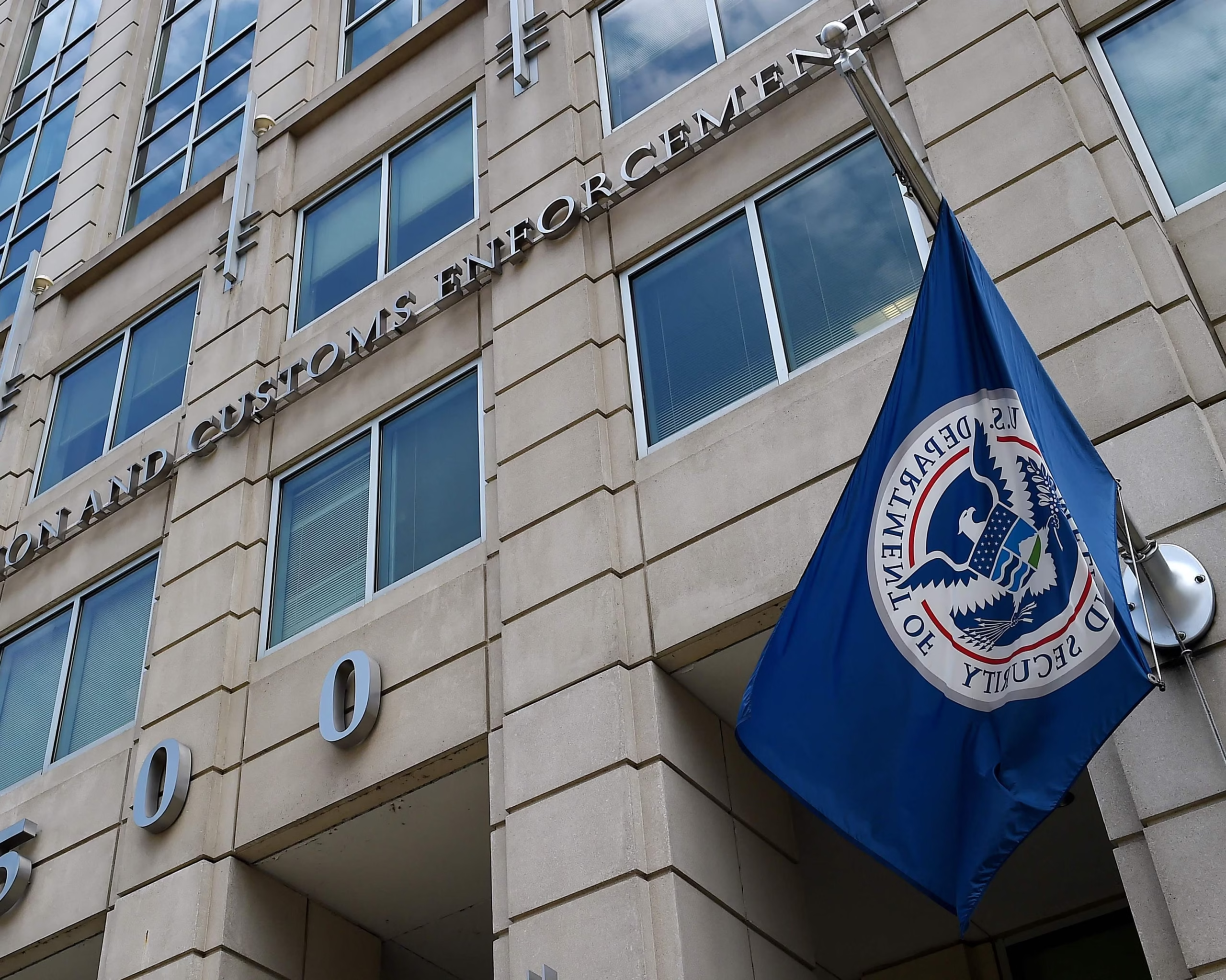
Nazis using U.S. domains have become a growing national security concern after new findings revealed that extremist networks are exploiting American internet infrastructure to spread propaganda, recruit followers, and legitimize hate-driven ideologies online. The issue has drawn renewed scrutiny from federal authorities, cybersecurity experts, and civil rights organizations who warn that the misuse of trusted U.S. web domains allows extremist groups to appear credible while operating largely in plain sight.
This development highlights a troubling intersection between digital infrastructure and domestic security. While the United States maintains strong protections for free speech, experts argue that loopholes in domain registration, hosting oversight, and cross-border enforcement have enabled extremist actors to exploit American systems in ways that were never intended.
How Extremist Groups Are Exploiting U.S. Internet Domains
Extremist organizations increasingly rely on the appearance of legitimacy to attract supporters. By operating websites under U.S.-based domains such as “.com,” “.org,” or “.net,” these groups benefit from global trust in American digital infrastructure. Security analysts say that many users associate U.S. domains with credibility, safety, and lawful oversight, making them powerful tools for disinformation and recruitment.
Investigations show that many of these websites are registered through third-party services that require minimal identity verification. This allows foreign and domestic extremist actors to mask their true locations while operating under the protection of U.S. free-speech laws. Once online, these platforms distribute ideological content, historical revisionism, and coded hate messaging designed to evade moderation systems.
Why Homeland Security Is Paying Close Attention
The Department of Homeland Security has identified online extremism as a major threat vector, particularly when digital propaganda translates into real-world violence. Officials warn that extremist websites often serve as gateways to encrypted messaging apps, fundraising channels, and offline organizing efforts.
Homeland Security analysts note that the presence of Nazi-aligned content on U.S. domains complicates enforcement. While hate speech itself may not always violate federal law, content that promotes violence, terrorism, or coordinated attacks does cross legal thresholds. Determining where speech ends and operational extremism begins remains one of the most complex challenges facing authorities.
The Role of Domain Registrars and Hosting Companies
A significant part of the problem lies in the decentralized nature of the internet. Domain registrars, hosting providers, and content delivery networks each play a role, but responsibility is often fragmented. Some companies terminate services once extremist affiliations are confirmed, while others cite legal limitations or free-speech concerns.
Cybersecurity experts argue that clearer federal guidelines are needed. Without standardized rules, extremist sites frequently migrate between providers, creating a “whack-a-mole” enforcement problem. Critics say this allows hate-driven platforms to resurface repeatedly under new names while continuing to use U.S.-based infrastructure.
The Free Speech vs. National Security Debate
The United States has long defended broad speech protections, even for unpopular or offensive views. Civil liberties advocates caution that overly aggressive takedown policies could set dangerous precedents for censorship. At the same time, national security experts stress that online extremism is not merely ideological but operational.
The debate centers on intent and impact. When websites actively encourage violence, radicalization, or terrorist acts, many legal scholars argue that intervention becomes justified. The challenge is crafting policies that protect constitutional rights while preventing digital spaces from becoming incubators for harm.
How These Websites Influence Radicalization
Research into online extremism shows that many individuals do not begin with overtly violent beliefs. Instead, they are gradually drawn into echo chambers through forums, blogs, and pseudo-academic content hosted on seemingly legitimate platforms. U.S. domains provide an added layer of trust, making early-stage propaganda more persuasive.
Over time, users are exposed to increasingly extreme narratives that normalize hatred and dehumanization. Experts warn that this progression has been linked to several violent incidents in recent years, reinforcing concerns that unchecked online platforms pose real-world risks.
International Implications and Global Reach
Although these websites may be hosted on U.S. infrastructure, their audiences are global. European and international security agencies have expressed concern that American domains are being used to bypass stricter hate-speech regulations abroad. This creates diplomatic and legal challenges, as content legal in one country may violate laws in another.
The issue underscores the need for international cooperation. Extremism is not confined by borders, and experts argue that digital governance must reflect the global nature of modern threats.
What Trending Analysis Shows About This Issue
A review of trending discussions across major U.S. news platforms and policy forums shows growing attention to digital extremism, infrastructure misuse, and online radicalization. Analysts note that public interest spikes following revelations about extremist networks exploiting mainstream systems rather than fringe platforms.
This trend suggests that readers are seeking deeper explanations—not just headlines—about how these systems work, why they matter now, and what solutions are realistically available. High-quality, context-rich reporting is increasingly favored by both readers and search algorithms.
Possible Policy Responses Under Consideration
Lawmakers and regulators are exploring several options, including enhanced identity verification for domain registration, improved transparency requirements for hosting providers, and stronger collaboration between tech companies and federal agencies. None of these proposals are without controversy.
Some experts advocate for targeted reforms that focus on behavior rather than ideology, ensuring that enforcement actions are triggered by credible threats rather than political beliefs. Others emphasize the importance of digital literacy, arguing that informed users are less susceptible to extremist messaging.
Why This Issue Matters Right Now
The renewed focus on Nazis using U.S. domains comes at a time of heightened political polarization and global instability. Online ecosystems have become central to how movements organize, fundraise, and recruit. Allowing extremist groups to operate under the banner of trusted infrastructure risks undermining public confidence in the digital space itself.
Security officials warn that complacency could have long-term consequences. As technology evolves, so do the tactics of those who seek to exploit it for harmful purposes.
The discovery that Nazis and other extremist groups are exploiting U.S. domains is not merely a technical issue—it is a societal challenge that touches on security, free speech, and democratic values. Addressing it will require cooperation between government agencies, private companies, and civil society, along with informed public engagement.
As digital platforms continue to shape modern life, ensuring they are not weaponized against the public becomes a shared responsibility. Clear policies, ethical enforcement, and high-quality journalism all play critical roles in confronting this evolving threat.
Subscribe to trusted news sites like USnewsSphere.com for continuous updates.