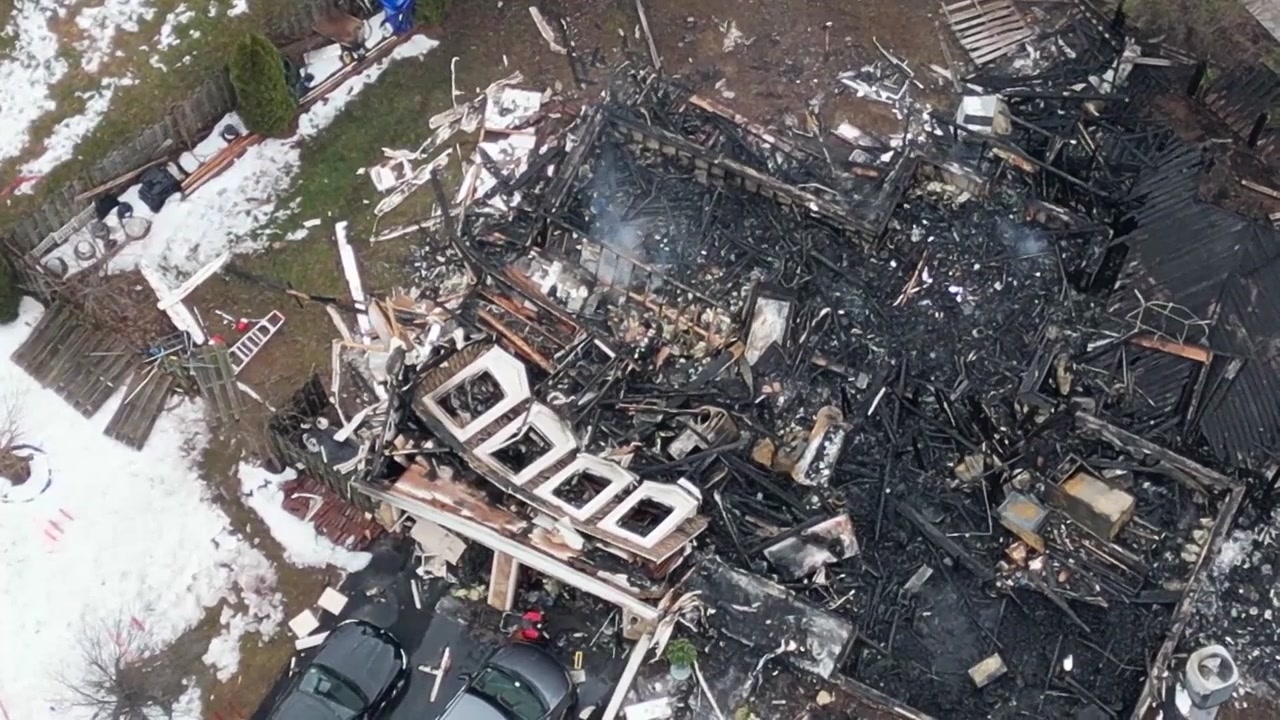
In Centreville, Virginia, a suspected natural gas leak that led to a devastating home explosion continues to confound investigators days after the blast, forcing evacuations, blocking natural gas service, and disrupting life across an entire neighborhood. The incident — first reported late Sunday evening — has sparked a complex emergency response involving fire crews, utility workers from Washington Gas and Williams Pipeline Corporation, and federal investigators trying to locate the precise source of the gas leak.
This matters now because families remain displaced, dozens of homes still lack gas service, and officials warn that until the leak is located and repaired, safety risks persist. Emergency crews are combing through multiple buried transmission lines, and residents remain on alert as the National Transportation Safety Board (NTSB) leads the investigation into both the gas leak and what caused the explosion.
Explosion Rocks Quiet Suburb, Residents Report Gas Odor Before Blast
On Sunday night in the Belle Pond Farm section of Centreville, neighbors reported a strong odor of natural gas shortly before hearing a loud explosion and seeing flames erupt from a home on Quail Pond Court near Buggy Whip Drive.
Firefighters arrived around 9:45 p.m. to find the house fully engulfed in fire. According to officials, one elderly occupant inside and a neighbor who tried to help both sustained minor, non-life-threatening injuries and were treated at local hospitals.
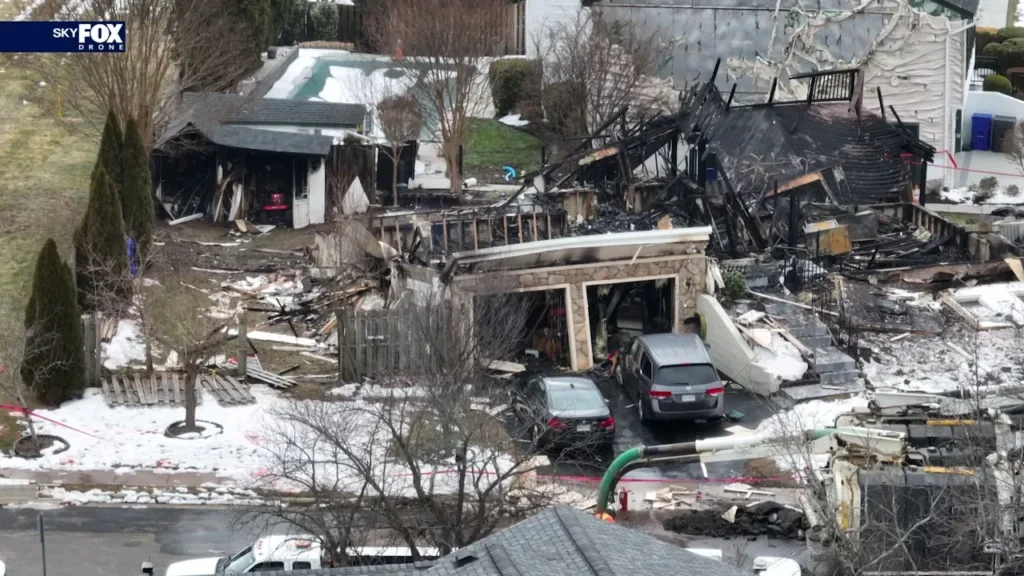
The intensity of the explosion was such that it destroyed the home and sparked immediate evacuations of surrounding residences. Fire crews initially responded to the scene to contain the blaze while simultaneously addressing concerns about an active gas leak in the area.
Investigation Focuses on Buried Gas Transmission Lines
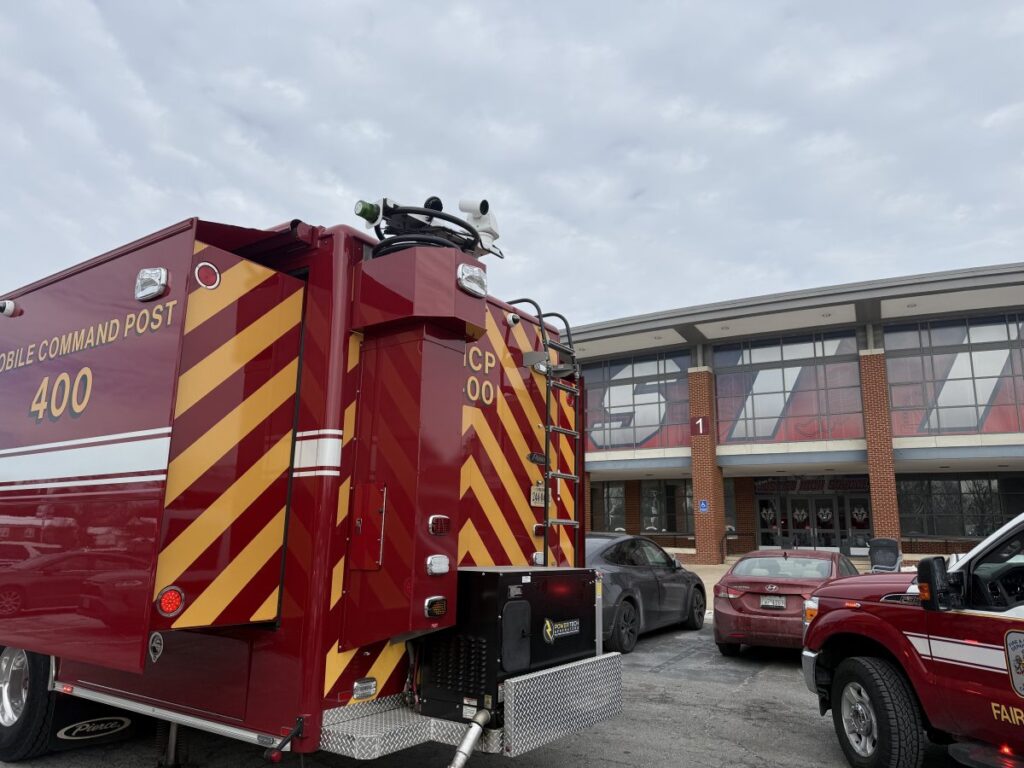
Fairfax County Fire and Rescue, alongside Washington Gas and Williams Pipeline Corporation personnel, are systematically searching for the source of the leak. The challenge lies in the fact that multiple transmission lines — varying in diameter and ownership — run beneath the affected area, and gas may be seeping through the ground into the soil rather than through an accessible pipe segment.
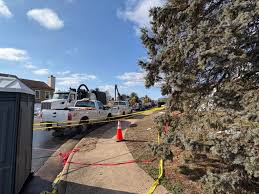
Crews are digging test holes and using specialized equipment to trace the leak’s path, working carefully to prevent further risk. Officials have confirmed that at least five transmission lines are within proximity of the explosion site, and pinpointing which one is responsible will determine whether additional homes need to be evacuated.
Fire officials say readings of gas concentrations around evacuated homes are trending lower after isolating some sections of the pipeline, but residual odors of gas still linger. In some areas, crews are escorting evacuated residents back briefly to retrieve essential items once sensor readings indicate safety.
Evacuations and Community Impact
As of Wednesday, roughly 46 homes were still deemed too hazardous to enter and evacuated, and around 82 homes remained without natural gas service. Residents have been forced to seek temporary shelter, alternate housing, or stay with friends and family.
Residents who stayed behind describe uncertainty about when they can return. In community meetings, locals expressed frustrations about communication and sought clearer timelines on when gas service might be restored. Federal investigators told residents that an initial report may take up to 30 days, with a full investigation possibly requiring much longer.
Local leaders, including the Fairfax County Board of Supervisors, say accountability and transparency from both utility companies and federal agencies are critical as families wait for answers. Many voiced concerns about safety and when day-to-day life might resume normally.
Safety Measures and Ongoing Precautions
Officials reiterate that residents who detect the smell of natural gas should leave the area immediately and contact emergency services or the Washington Gas emergency line. Continuous monitoring is underway at evacuated properties to ensure levels are below explosive limits before any re-entry is permitted.
Fire and rescue personnel have emphasized that the evacuation perimeter could expand if the leak is determined to be in one of the larger transmission lines, extending potentially up to a quarter mile from the suspected leak site.
The NTSB’s involvement underscores the seriousness of the incident. The agency oversees investigations involving pipeline safety and will work with local partners to both identify the initial cause and recommend future safety improvements.
What Happens Next?
Locating and repairing the gas leak is expected to take several more days, as crews work methodically through each utility line. Utility companies say they are coordinating with emergency responders and regulatory agencies to ensure all actions meet safety codes.
Meanwhile, residents face an uncertain timeline for returning home, and many continue to grapple with the disruption to their lives. The broader community watches closely as authorities navigate the complex task of isolating the source of the leak and restoring safe living conditions.
Subscribe to trusted news sites like USnewsSphere.com for continuous updates.