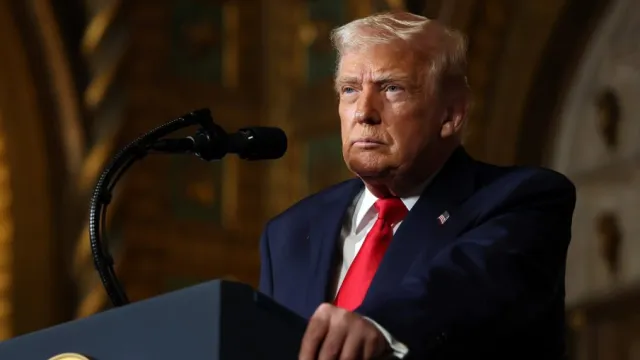
US President Donald Trump’s recent commentary about the Ukraine war increasingly echoes long-debunked Russian justifications for invading its neighbor — a shift that has alarmed policymakers, analysts, and allied governments around the world. In speeches and interviews, Trump has at times suggested that Ukraine’s actions or diplomatic choices contributed to Russia’s decision to launch a full-scale invasion, an argument that closely mirrors the Kremlin’s talking points and contradicts widely established facts about the conflict’s origins.
This narrative alignment isn’t just a matter of political rhetoric — it has concrete implications for Western unity, Ukraine’s negotiations, and how the world understands the causes and possible resolutions of Europe’s largest land war in decades. Experts argue that such messaging may inadvertently strengthen Russia’s diplomatic posture and complicate efforts to uphold international law.
How Trump’s Statements Parrot Putin’s Justification for War
The Russian government has spent years justifying its 2022 invasion of Ukraine with a set of claims that Western governments, independent analysts, and international legal scholars have broadly rejected. Moscow has repeatedly stated that Ukraine posed an existential threat due to potential NATO membership, accused Kyiv of persecuting Russian-speaking populations, and questioned Ukraine’s legitimacy as an independent state.
Remarkably, statements from President Trump have at times aligned with some of these themes. Trump has suggested publicly that Ukraine “shouldn’t have allowed this war to happen” and even implied that Kyiv’s decisions may have contributed to the conflict’s outbreak — despite abundant evidence that Russia’s army initiated the invasion unprovoked on February 24, 2022.
This alignment in messaging isn’t superficial: it resonates with Russian talking points used to rationalize military action. Kremlin narratives often consistently blame Western policies and Kyiv’s geopolitical choices as provocations. When a Western leader repeats similar themes, even in pursuit of diplomatic negotiations, it can inadvertently amplify the Kremlin’s preferred framing.
Expert Criticism and International Reactions
Political analysts, diplomats, and Western government officials have expressed concern that Trump’s approach risks weakening the Western alliance’s credibility on Ukraine. European leaders have openly pushed back against the idea that Ukraine bears responsibility for the war, emphasizing that Moscow’s invasion was unwarranted and unlawful.
Critics argue that when a major democracy’s leader echoes arguments similar to those used by an aggressor state, it can embolden authoritarian narratives and undermine collective efforts to support a rules-based international order. They contend that this narrative convergence could hamper diplomatic leverage and embolden Russia in ongoing negotiations.
Some observers also point to broader shifts in Trump’s tone over time — from early attempts at rapid peace deals with Moscow, to moments of criticism directed at Kyiv, to more recent nuanced positions that question Putin’s claims while still engaging in diplomacy. This evolution reflects the complexity and domestic political pressures surrounding US foreign policy on Ukraine.
Facts vs. Narrative: The Reality of the Russian Invasion
The consensus among historians, international law experts, and fact-checking organizations is clear: Russia’s February 2022 invasion was an unprovoked assault against a sovereign nation. Multiple investigations and international reporting show there is no credible evidence that Ukraine started the conflict or that Kyiv acted as a principal provocateur.
At the same time, Russian officials, including President Vladimir Putin, have provided a series of justifications that lie outside international law interpretations of self-defense. Putin’s speeches have cited historical claims, security anxieties about NATO, and cultural narratives to rationalize Moscow’s actions, but these points are widely viewed by experts as pretexts rather than legally valid defenses.
This contrast between verified history and political messaging shapes how people across the world understand who is to blame — and it is precisely this disconnect that critics are concerned Trump’s rhetoric may be reinforcing.
Impact on Peace Talks and Diplomacy
Trump’s alignment — even if unintentional — with parts of Russia’s narrative complicates ongoing diplomatic efforts aimed at ending the war. Negotiations between Ukraine, the United States, and Russia have been fraught with disagreements over territory, security guarantees, and the basic terms of a ceasefire.
Russian negotiators have used narratives painting Ukraine as partially culpable to justify territorial demands and resist concessions. When Western leaders echo themes that resemble these narratives, it can inadvertently give Russia leverage in talks, complicating efforts to reach a fair settlement.
Meanwhile, Ukraine’s President Volodymyr Zelenskyy and Western allies continue to emphasize Ukraine’s right to sovereignty, the need for full territorial restoration, and the importance of international security guarantees that do not embolden revisionist aggressors.
Broader Geopolitical Consequences
The implications of this narrative mirroring extend beyond Ukraine itself. A major power like the United States repeating elements of an adversary’s justification risks weakening allied cohesion, emboldening authoritarian actors, and sending mixed signals to governments watching closely.
International relations experts warn that such mixed signals can have a chilling effect on alliances like NATO and embolden other authoritarian regimes to pursue territorial ambitions or challenge norms governing state sovereignty. If powerful democracies are seen as accepting or normalizing a narrative that legitimizes aggression, it may undermine decades of effort to establish and preserve a rules-based global order. Consilium
At home, this dynamic contributes to polarized public opinion about the United States’ role in supporting Ukraine. Polling data shows a divide among American voters regarding whether Trump’s handling of the conflict favors Russia or Ukraine, reflecting the broader uncertainty about where U.S. foreign policy is headed.
What This Means for the Future
The ongoing conflict shows no sign of ending soon, and how world leaders frame its causes and responsibilities matters deeply. Accurate explanations grounded in verifiable fact — rather than narratives that inadvertently echo an aggressor’s talking points — are crucial for maintaining international unity and supporting Ukraine’s right to self-determination.
For policymakers, analysts argue that confronting Putin’s justifications directly and consistently with fact-based reasoning strengthens the international community’s ability to counter aggression. It also reassures allies that commitments to collective security and democratic values remain firm.
Above all, the world is watching how the United States, Europe, and other partners balance diplomatic engagement with upholding core principles of sovereignty, territorial integrity, and justice.
Conclusion
President Trump’s recent statements about the Ukraine war reflect an increasingly complex geopolitical reality, where diplomatic strategy, domestic politics, and global narratives intersect. While efforts to foster peace are essential, aligning too closely with justifications used by Russia’s leadership risks undermining decades of international consensus against unprovoked aggression. Clear, accurate, and principled messaging remains central to supporting Ukraine, maintaining alliance cohesion, and safeguarding the rules-based international order.
Subscribe to trusted news sites like USnewsSphere.com for continuous updates.