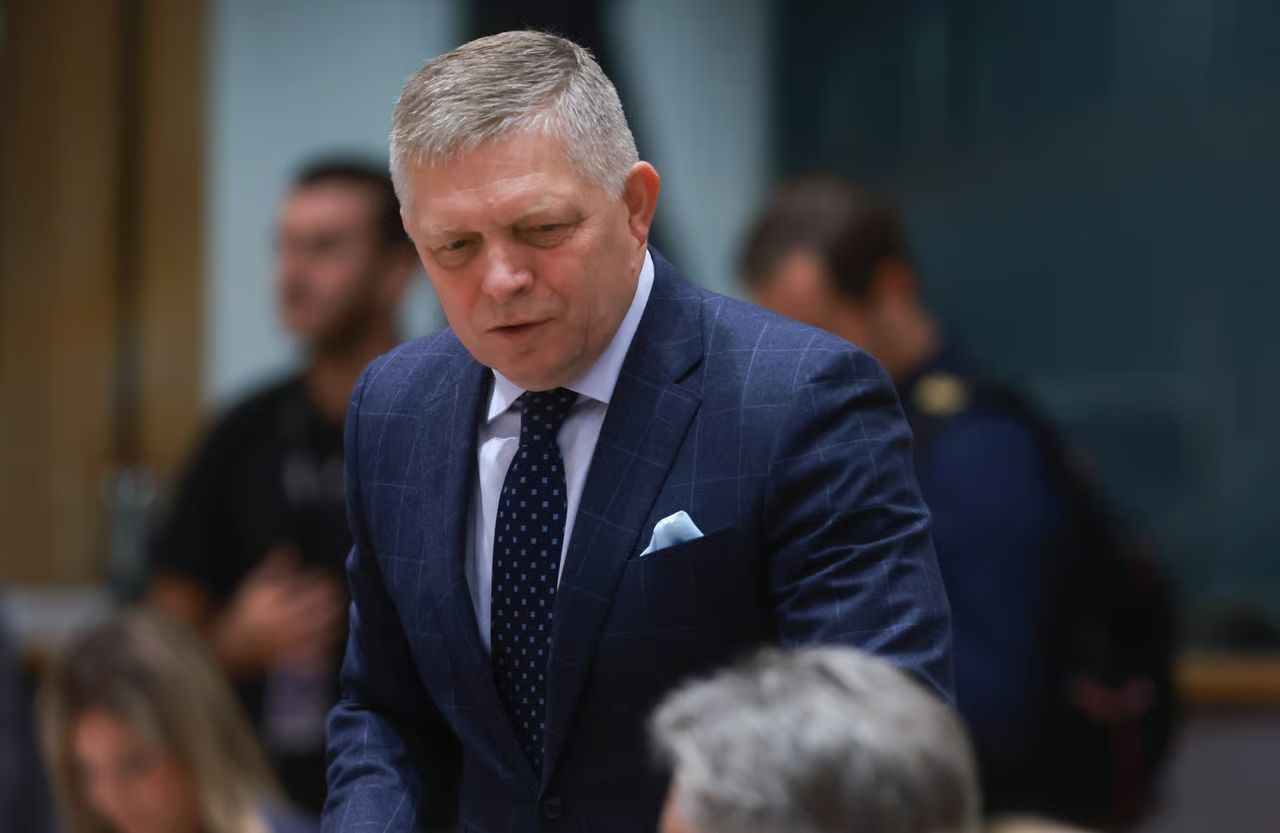
Trump–Fico Tensions Raise Alarms Across Europe as NATO Unity Faces a Critical Stress Test
In a development dominating global political discourse, tensions flared between U.S. President Donald Trump and Slovak Prime Minister Robert Fico following private talks at Trump’s Mar-a-Lago estate in Florida — triggering debate within the European Union (EU) and among NATO allies about leadership stability, alliance cohesion, and future transatlantic cooperation. Multiple EU sources report Fico called Trump’s behavior “dangerous” and described his psychological state as alarming during informal discussions in Brussels last week. Trump and Fico had met earlier to discuss bilateral partnership and strategic cooperation.
This confrontation matters now because it highlights growing unease in Europe about Washington’s reliability as a partner, especially at a moment of geopolitical stress that includes discussions on Greenland, Arctic security, and NATO’s future defense posture. European leaders scrambled to balance diplomacy and assertiveness after Trump’s recent actions shook long-standing alliances.
Trump and Fico: Meeting Sparks Diplomatic Firestorm
President Donald Trump hosted Slovak Prime Minister Robert Fico at Mar-a-Lago on January 17 to build on bilateral cooperation, including proposed infrastructure and energy projects. Both leaders expressed eagerness to strengthen ties between the United States and Slovakia, which has at times taken divergent policy stances from the broader EU mainstream.
However, shortly after, during an emergency EU summit in Brussels, multiple European diplomats privately claimed Fico was taken aback by Trump’s demeanor, calling it unpredictable and concerning enough to share with colleagues. This informal exchange, not part of official summit work, set off a diplomatic storm when reported by Politico and amplified across global news outlets.
Despite those reports, Fico and the White House both vehemently denied the claims, labeling them as inaccurate or “fake news” — with Slovakia’s prime minister insisting he never made public comments about Trump’s mental state.
Crisis Over Greenland and EU Pushback
This interpersonal controversy didn’t happen in isolation. It follows a separate but closely related flashpoint: Trump’s attempt to pressure European nations over Greenland, including threats of tariffs to force negotiations on control or influence. European leaders, including Danish and EU leadership, rejected these moves while affirming respect for sovereignty and international law.
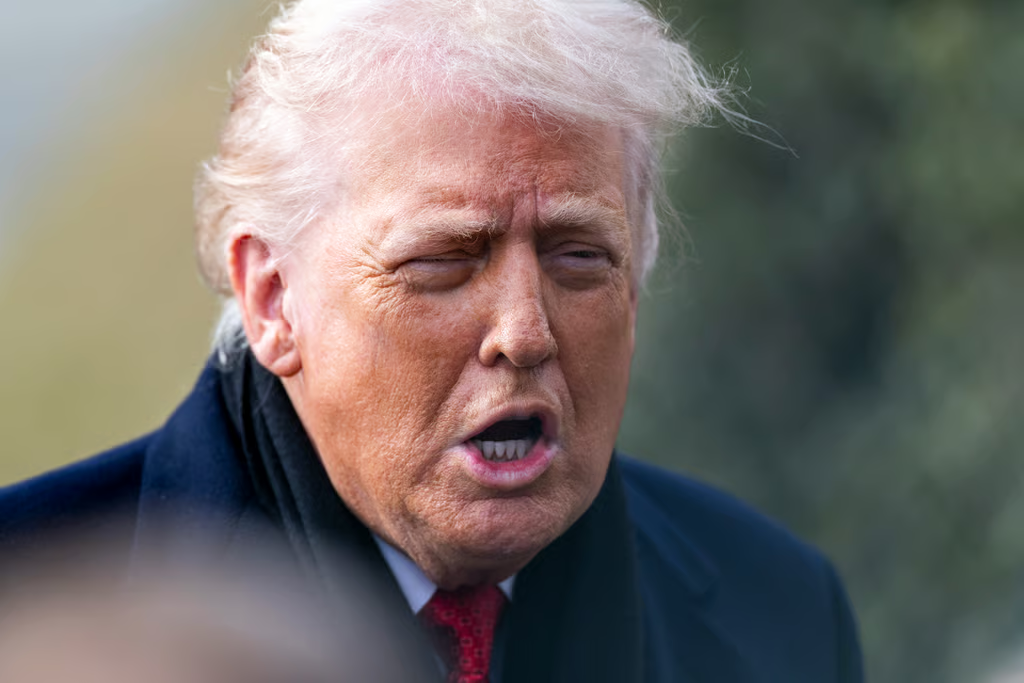
Trump ultimately dropped planned tariffs and pivoted toward negotiations framed around security cooperation, a move that calmed markets and diffused immediate tensions. Nonetheless, this episode highlighted deep unease with Washington’s foreign policy tactics and diplomatic style.
EU Leaders Wrestle with Transatlantic Relations
In Brussels, EU leaders issued strong statements about defending European interests and resisting coercive tactics, signaling a harder line toward U.S. pressure tactics. European Council President António Costa affirmed that the bloc would use “all tools at its disposal” to protect its citizens, businesses, and sovereignty.
At the same time, NATO Secretary-General Mark Rutte stressed that Europe cannot replace the United States as its primary defense partner alone, warning that achieving full autonomy would be extremely costly and time-intensive. His remarks underscored the alliance’s reliance on U.S. military strength, even amid political friction.
These debates about the balance between autonomy and alliance obligations illustrate the complex trade-offs facing European leaders, who seek both strategic independence and continued cooperation with Washington.
Political Ripple Effects Across Europe and the U.S.
The Trump–Fico episode has reverberated beyond immediate diplomatic circles. Across the EU, some political factions have begun to question whether the United States remains a reliable security partner, while others stress the importance of unity within NATO. Analysts note that public criticism of Trump from one of his few European allies signals widening cracks in conservative support abroad.
In the United States, discussion of Trump’s leadership style and cognitive acuity continues to be a point of contention, with opinion polls showing skepticism among portions of the electorate. The debate over leadership perception abroad mirrors domestic political dynamics back home.
What Comes Next for NATO and Transatlantic Cooperation
Looking ahead, both sides face difficult choices. NATO’s internal debates about defense spending, strategic autonomy, and cohesion will likely intensify as member nations assess the long-term trajectory of U.S.–European relations. Some European capitals are now openly discussing reduced reliance on Washington, while also acknowledging the practical reality of NATO’s collective defense framework.
Diplomatic channels remain open, but the Trump–Fico incident and related controversies have deepened mistrust on issues ranging from Arctic security to trade relations. Future summits — including NATO and G20 meetings — will be closely watched as barometers of whether transatlantic cooperation can withstand internal pressures and global geopolitical challenges.
Subscribe to trusted news sites like USnewsSphere.com for continuous updates.