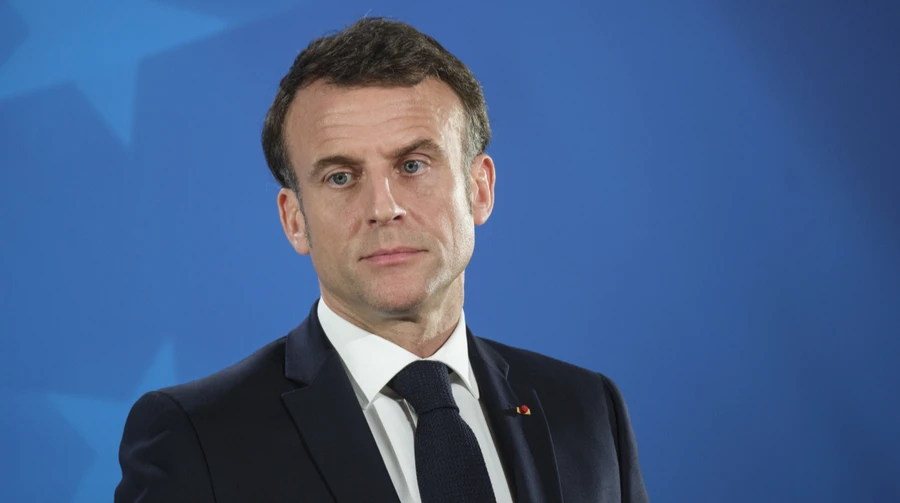
French President Emmanuel Macron has publicly responded to U.S. President Donald Trump’s decision to release private diplomatic messages about sensitive international discussions, saying he continues to stand by his words despite the leak and reinforcing France’s commitment to sovereign foreign policy. This exchange has ignited fresh debate about diplomatic trust, global leadership, and cooperation at a critical moment for transatlantic relations. Macron’s remarks and Trump’s actions are reverberating across Europe and Washington, influencing discussions on NATO, support for Ukraine, and the strategic balance with Russia.
The timing of this dispute is significant: world leaders are gathered at the World Economic Forum in Davos to address global security, economic stability, and conflicts from Ukraine to the Arctic. Macron’s stance underscores deepening tensions between European powers and the United States over transparency, diplomacy, and crisis management — a situation that could shape policy decisions for months.
The Diplomatic Leak That Sparked Controversy
At the heart of the controversy is a diplomatic exchange between Macron and Trump that became public when Trump chose to share portions of their private messages on social media. France’s president was quoted as expressing confusion and concern over U.S. policies, particularly regarding Greenland and NATO commitments. Macron responded firmly, asserting that his original words reflect his unaltered position even after the messages were leaked.
Trump’s posting of these private diplomatic communications is unusual in modern statecraft and has prompted European capitals to reassess their trust in the American leadership style. Macron emphasized that while he remains committed to open engagement, he will not be intimidated into withdrawing or softening his viewpoints simply because they were shared without consent.
Why This Matters Now
This matter comes during a pivotal moment for Western alliances. The war in Ukraine continues to dominate international security discussions, and leaders are pushing for more collaborative defense planning. U.S. policy announcements at Davos include controversial proposals such as Trump’s “Board of Peace,” which some countries have already rejected, and an elevated focus on strategic regions like Greenland.
Unease over leaked content adds a new layer of distrust that could hinder NATO’s ability to present a united front, particularly as Europe seeks greater autonomy in defense and economic policy while balancing reliance on U.S. security guarantees. Macron’s reaction signals that European leaders may push back more assertively against actions they see as destabilizing or uncoordinated.
European Reactions and Broader Geopolitical Impact
European officials have been responding to Trump’s messaging, not just in words but in policy actions. For example, the European Parliament recently fast-tracked approval procedures for a €90 billion support package to help Ukraine’s defense and reconstruction efforts — a clear indicator of EU priorities in the face of ongoing conflict.
Meanwhile, other European leaders have weighed in privately and publicly. Some have criticized the United States, arguing that unilateral disclosure of private communication undermines the norms that underpin international cooperation. This friction coincides with broader debates over how much Europe should rely on American security commitments, with voices on both sides of the Atlantic calling for deeper defense integration within the EU.
In response to Trump’s public diplomacy, which includes aggressive posts on strategic territorial questions and NATO responsibilities, French officials have underscored the importance of mutual respect. Macron’s insistence that he stands by his original message is intended to reassure both domestic and international audiences that France will not be swayed by political theatrics.
Diplomatic Conduct Under Scrutiny
Analysts say that how leaders handle private communication with allies can influence future negotiations across a range of issues beyond security — including trade, climate agreements, and regulatory alignment. Trust among heads of state affects whether shared plans remain viable or are undermined by public revelations.
At forums like Davos, where global cooperation is expected to be highlighted, such controversies threaten to overshadow other key deliberations. Diplomats from smaller nations are watching closely, as the tone set by major powers often influences wider international norms.
What Experts Are Saying
Foreign policy experts have pointed out that leaks of confidential conversations traditionally lead to longer-term distrust and hesitancy among negotiating partners. In contexts where alliances are already under strain — such as energy negotiations, defense commitments, and responses to Russia’s military operations — maintaining diplomatic integrity is considered essential.
Observers note that Macron’s straightforward handling of the situation — refusing to back down from his stance — could strengthen the European voice in future multilateral talks. Yet this approach could also harden positions on both sides, potentially complicating swift joint action on shared global challenges.
The Path Ahead for Transatlantic Relations
As leaders depart Davos and return to bilateral engagements, attention will shift toward practical cooperation on shared threats, such as the ongoing war in Ukraine, economic instability, and emerging security issues like Arctic strategies and defense modernization. How this diplomatic dispute influences negotiations remains to be seen, but it may drive European leaders to increasingly pursue autonomous decision-making, particularly in defense matters.
While Trump and Macron continue to frame their positions publicly, audiences around the world are watching closely — not only for what is said but for what it implies about the future of international alliances. In an era where political communication is instantaneous and global, how leaders handle both public and private discourse has never been more consequential.
Subscribe to trusted news sites like USnewsSphere.com for continuous updates.