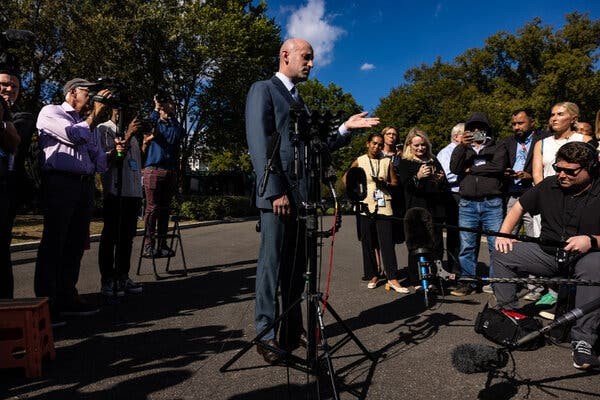
In a major geopolitical upheaval that is now drawing intense global attention, senior White House adviser Stephen Miller has outlined aggressive U.S. intentions toward both Greenland and Venezuela, blending national security rhetoric with expansionist policy ambitions that are reverberating across Europe, the Arctic, and Latin America. These developments, which follow the dramatic capture of Venezuelan leader Nicolás Maduro by U.S. forces, are already reshaping traditional alliances, prompting unprecedented diplomatic backlash from NATO allies, and fueling debate over American strategy on the world stage.
Senior policymakers around the world — from Denmark’s prime minister to European leaders — are warning that these actions, coupled with incendiary social media posts by political allies of Miller and President Donald Trump, could have lasting consequences for global stability. In response, critics argue this marks a new chapter in U.S. foreign policy, one prioritizing strategic dominance over centuries-long norms of sovereignty and diplomatic reciprocity.
Stephen Miller’s Strategic Vision: A Bold U.S. Agenda Beyond Borders
Stephen Miller, currently serving as White House deputy chief of staff for policy and homeland security, has long been a central figure shaping hard-line priorities in the Trump administration. According to multiple reports, he has argued forcefully that the United States “must secure Greenland” due to its strategic Arctic position and growing resource significance, while also justifying unprecedented U.S. military involvement in Venezuela.
In interviews this week, Miller claimed that Greenland’s status as a semi-autonomous Danish territory should not hinder U.S. interest and that no nation would militarily oppose the United States in asserting influence in the region — a statement that has triggered widespread alarm among international security analysts.
He defended the controversial capture of Maduro and portrayed it as part of a broader U.S. mission to uphold global security against threats from rival powers, while hinting that Arctic strategy and Latin American policy are now inseparable within U.S. strategic planning.
Greenland: A Geopolitical Flashpoint With NATO and Europe
Greenland — a vast Arctic island with a small population but huge strategic importance — is officially part of the Kingdom of Denmark and a key NATO partner. The mere suggestion of U.S. ambition to integrate it into American territory has stirred diplomatic condemnation from Copenhagen and allied capitals across Europe.
Danish Prime Minister Mette Frederiksen called the notion of a U.S. takeover “absurd” and warned that any attempt to seize Greenland by force could end NATO as we know it. European Union leaders, including UK Labour leader Keir Starmer, have reiterated support for Denmark’s sovereignty and rejected external coercion.
Amid this tension, Greenland’s own Prime Minister has emphasized that the territory’s future should be determined through peaceful diplomatic engagement and respects international law rather than through threats or military action.
Political rhetoric was further inflamed by a social media post from Katie Miller, wife of Stephen Miller, showing Greenland under a U.S. flag with the caption “SOON,” which many nations read as an implicit threat.
Venezuela’s Capture: A New Precedent for U.S. Military Engagement
Just days earlier, the United States executed a high-profile military operation in Venezuela, seizing Maduro and his wife in what the White House described as part of a campaign against alleged narcoterrorism and global security threats. International observers, however, see this as a major breach of traditional non-intervention norms, and critics have described it as U.S. overreach.
With Maduro now in U.S. custody and political authority in Caracas in disarray, Washington has signaled it will “run” parts of Venezuela until conditions stabilize, a move that departs sharply from earlier U.S. foreign policy even under Trump’s previous administration. This shift has sparked debate about U.S. respect for sovereignty and democratic institutions abroad.
Experts say this unprecedented combination — heavy military intervention in Latin America alongside claims on Arctic territory — reflects a broader strategic pivot in American policy toward power projection rather than alliance-based diplomacy.
Global Fallout: Allies, Law, and International Consensus Challenged
The diplomatic fallout from the Greenland remarks and Venezuela operation has been swift and significant. Danish leaders argue the U.S. threatens centuries of alliance cooperation, while European partners reiterate that borders and sovereignty cannot be altered by force or threat.
Meanwhile, critics within global forums warn that this stance undermines international law and sets a dangerous precedent for powerful nations seeking resource-rich territories. Analysts point out that as polar ice melts and new shipping routes and resources emerge, control of the Arctic will be a central geopolitical contest for decades, not simply a matter for diplomatic negotiation.
At the same time, the Maduro capture has reignited debates about U.S. authority, due process, and multilateral cooperation in addressing regional instability. Political adversaries argue these actions could set the United States on a path toward isolation or resistance from both allies and global institutions. The Express Tribune
What Comes Next: Strategy, Security, and the Future of Global Order
The turbulence ignited by Stephen Miller’s statements and the broader Trump administration agenda could mark a fundamental shift in American foreign policy doctrine — one where military might and strategic influence are prioritized over diplomatic partnerships and established norms.
This emerging policy stance has already put NATO’s relevance into question, prompted stronger Arctic alliances among non-U.S. states, and revived broader conversations about territorial sovereignty in the 21st century. As the world watches, questions loom about how the U.S. will balance its strategic interests with international law, alliance commitments, and global stability.
In Washington, lawmakers from both parties are debating the wisdom and legality of these moves, signaling that domestic political pressure may soon shape the direction of foreign strategy. Meanwhile, global leaders are tightening their defense cooperation and reaffirming principles of territorial integrity and peaceful conflict resolution.
Conclusion: A Turning Point in International Relations
The debate over Greenland’s geopolitical future and the U.S. role in Venezuela represents more than isolated policy decisions — it is a defining moment for twenty-first century diplomacy. What happens next will influence not only Arctic and Latin American geopolitics but also alliance frameworks, global law, and the balance of power for years to come.
As tensions escalate and international responses continue to unfold, one thing is clear: the world is watching closely, and the outcomes of these U.S. moves will help determine the shape of global order in the decades ahead.
Subscribe to trusted news sites like USnewsSphere.com for continuous updates.