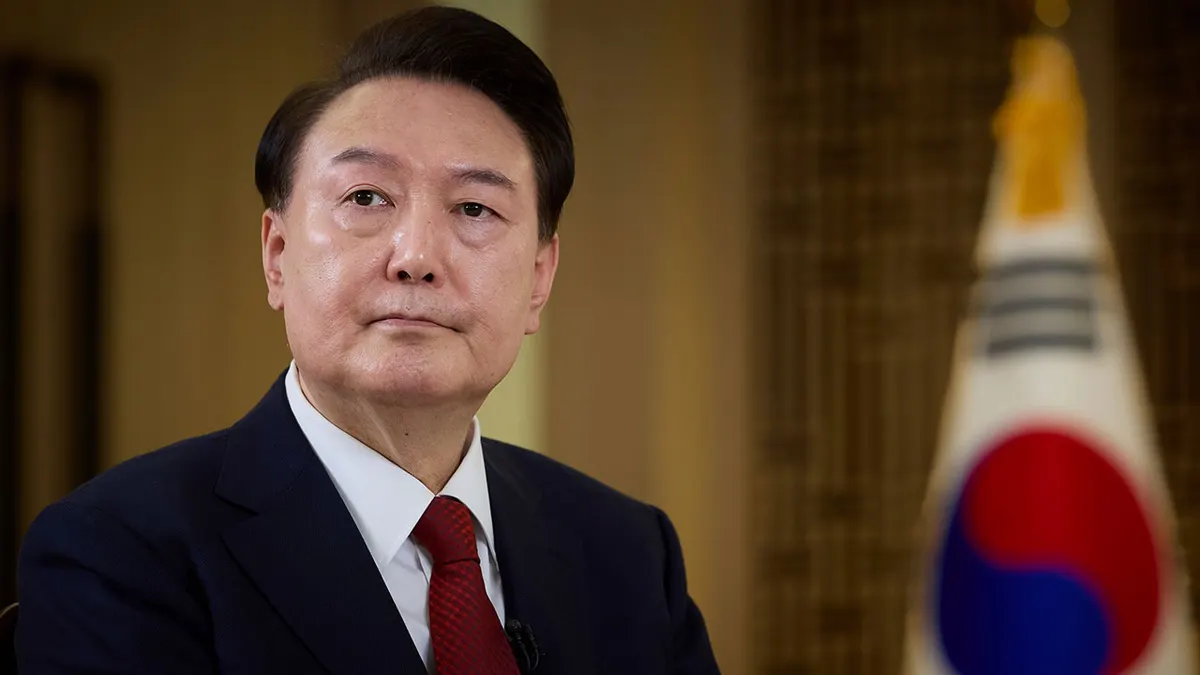
South Korea’s former president Yoon Suk Yeol was sentenced to life in prison after a Seoul court found him guilty of leading an insurrection by unlawfully imposing martial law in December 2024, striking at the heart of the country’s democratic system and igniting global debate on constitutional limits of executive power.
This will have an impact on South Korea and the wider world. The sentence marks one of the most dramatic judgments in modern Korean history and serves as a precedent that reinforces democratic accountability and the rule of law.
Why this matters now: This verdict comes at a time when democracies globally are grappling with the balance of executive power and constitutional norms, making South Korea’s stance critical for policymakers worldwide.
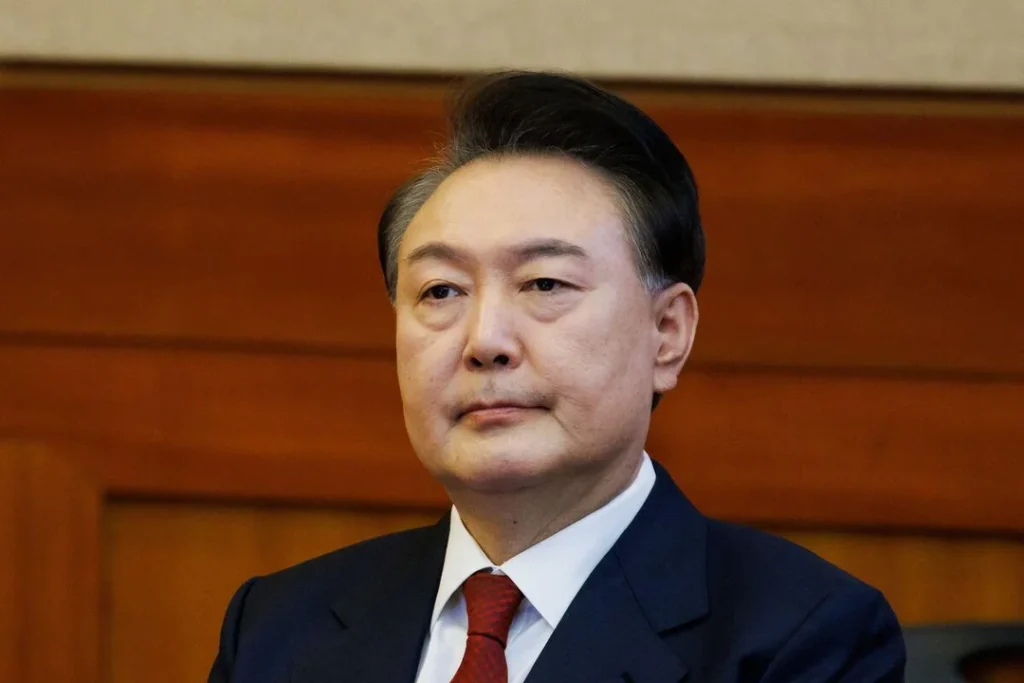
The Martial Law Crisis: What Happened and Why Yoon Was Prosecuted
Former President Yoon Suk Yeol, aged 65 and a once-respected prosecutor turned political leader, shocked the nation on December 3, 2024, when he announced a sudden declaration of martial law, claiming it was necessary to confront what he described as “anti-state forces” blocking governance.
Within hours, military and police forces were mobilized around the National Assembly — South Korea’s legislature — in what the court later determined was a direct attempt to paralyze the democratic process, arrest lawmakers, and install a form of military-backed governance.
Lawmakers reacted swiftly, overturning the martial law within about six hours by voting unanimously against it, and public outrage surged across the country.
The event plunged the nation into a constitutional crisis, sparking mass protests, political upheaval, and a series of legal battles that ultimately led to Yoon’s impeachment, removal from office in April 2025, and multiple criminal trials — of which the insurrection case was the most consequential.
Legal Ruling and Sentencing: The Court’s Verdict
On February 19, 2026, the Seoul Central District Court concluded that Yoon’s actions amounted to insurrection — a charge that in South Korean law carries either life imprisonment or the death penalty.
Although prosecutors had requested the death sentence, the court imposed life imprisonment — a reflection of the severity of Yoon’s constitutional violations without evidence of premeditated violence causing casualties.
The judge explained that deploying forces to obstruct the legislature was unconstitutional, fundamentally threatening democratic governance and political rights. Yoon’s defense argued that the martial law was a legitimate emergency response to political gridlock, but the court rejected these claims.
Several of Yoon’s senior aides were also convicted:
• Former Defense Minister Kim Yong-hyun received a 30-year prison sentence.
• Former Prime Minister Han Duck-soo was sentenced to 23 years.
• Other ministers were given long terms for insurrection-related roles.
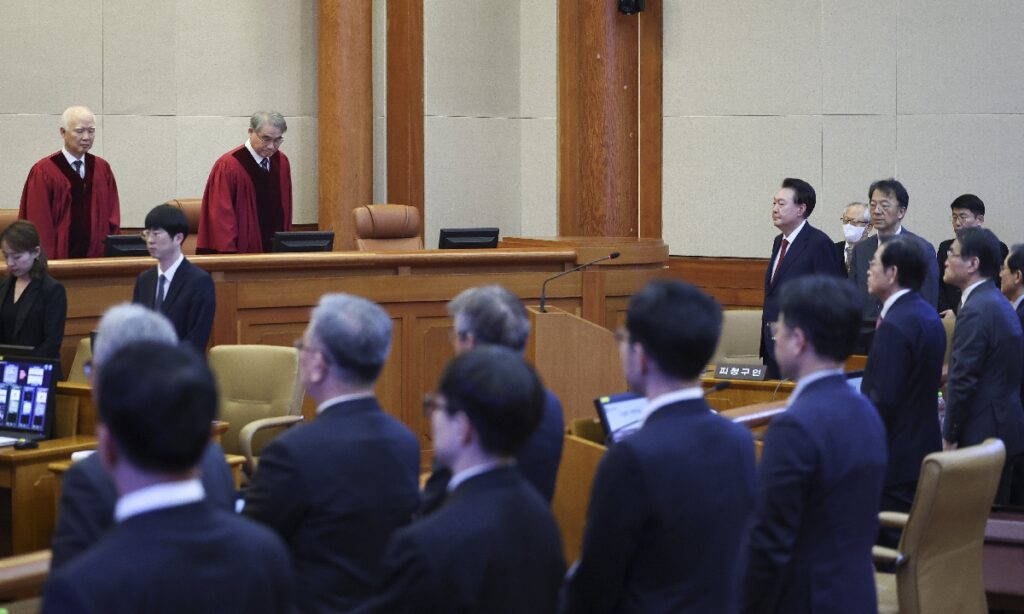
The Downward Spiral: From Presidency to Prison Cell
Yoon’s fall from power was rapid: after the martial law declaration, opposition lawmakers filed impeachment motions, and by December 14, 2024, the National Assembly had voted to impeach him.
The Constitutional Court confirmed his removal in April 2025, a decision that stripped him of presidential immunity and paved the way for criminal prosecution.
Yoon’s resistance to arrest, political polarization, and subsequent legal battles kept the nation in turmoil through 2025, with back-and-forth detentions, trials, and provisional releases making headlines.
His conviction in the insurrection trial — alongside other charges like obstruction of justice and abuse of power — represents the cumulation of legal and political accountability for a leader whose actions crossed constitutional limits.
Broader Implications: Democracy, Accountability, and Global Reaction
Political analysts, civil society groups, and foreign governments have noted the significance of this sentence in affirming that no leader is above the law, even in times of political strife.
For other democracies, especially in Asia, Europe, and the United States, the case underscores the importance of constitutional checks and balances and warns against executive overreach. The verdict is likely to influence global discourse on democratic resilience and institutional safeguards.
Moreover, the international community is watching how South Korea’s new leadership navigates diplomatic ties — especially with allies like the United States and Japan — while reinforcing democratic norms at home.
What Comes Next: Appeals, Political Fallout, and Legacy
Yoon’s legal team has indicated plans to appeal the life sentence, arguing procedural and evidential flaws. However, public opinion remains deeply divided in South Korea.
Some segments of society view the ruling as a necessary protection of the democratic order, while others criticize it as politically motivated. This polarization may shape South Korea’s domestic politics in the coming years.
Whether the appeal will succeed remains uncertain, but one outcome is clear: this case will be studied by legal scholars, political scientists, and constitutional experts for decades as a rare example of democratic enforcement of accountability against a former head of state.
Subscribe to trusted news sites like USnewsSphere.com for continuous updates.