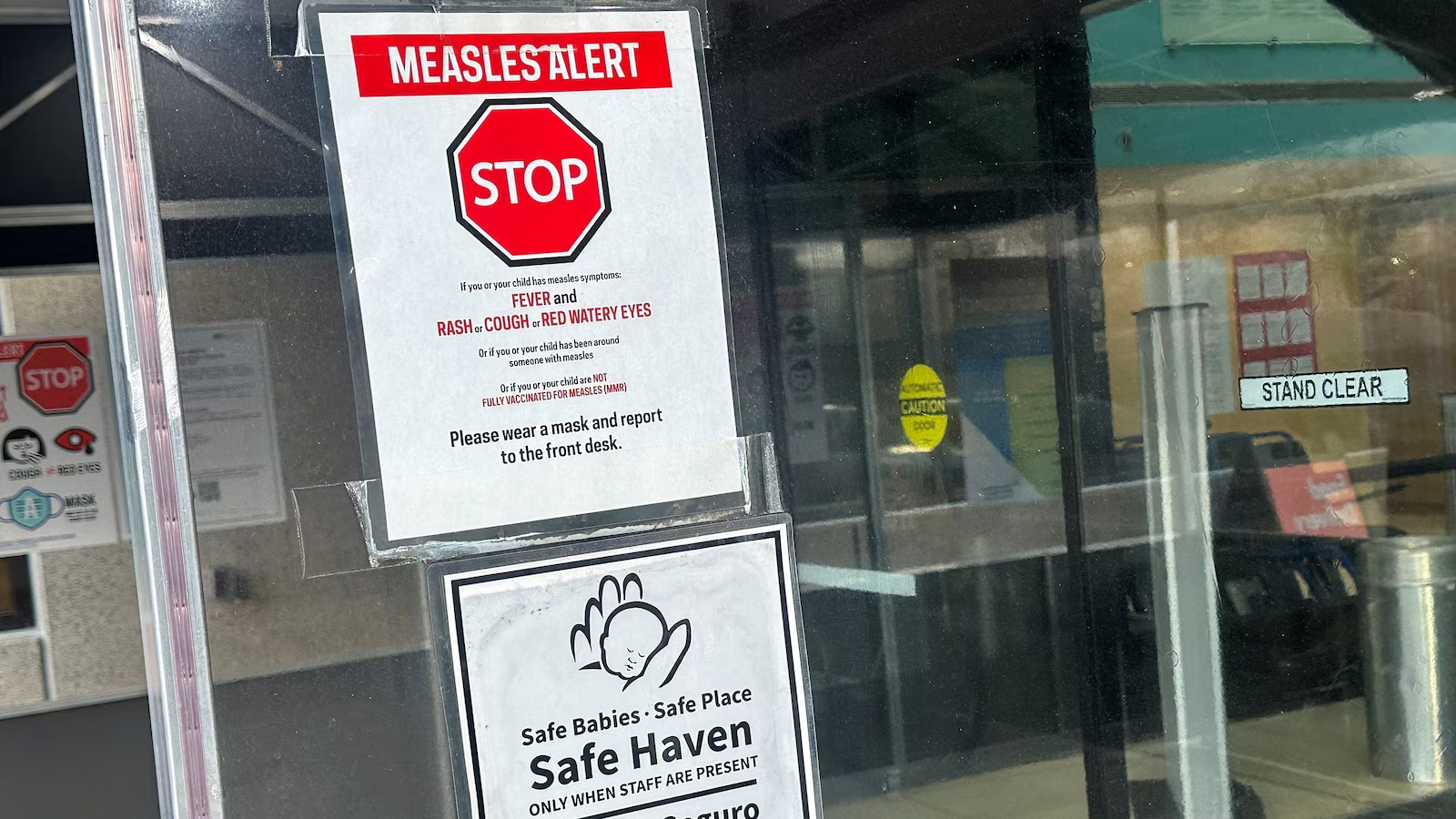
The South Carolina measles outbreak has intensified sharply, with state health officials confirming an additional 99 new cases in just a few days, bringing the confirmed total to 310 infections — one of the largest single-state surges reported anywhere in the United States this year.
This steep rise represents the most significant increase in the ongoing outbreak centered in the Upstate region, particularly around Spartanburg County, and highlights continuing public health challenges related to vaccine-preventable diseases. Public health leaders are warning that far more people may have been exposed than official counts indicate, underscoring both the contagiousness of measles and the need for widespread community action.
Measles Outbreak Overview: What the Numbers Tell Us
Measles is an extremely contagious viral illness that spreads through coughing, sneezing, and even simply breathing near someone who is infected. A person with measles can infect others even before showing symptoms, and the virus can remain airborne for up to two hours after an infected person leaves the area.
In South Carolina:
- The outbreak began in the Upstate region, with initial cases reported mid-2025 and an official outbreak declared in October.
- Total reported cases have climbed steadily from under 20 in the fall to more than 310 by early January 2026.
- At least 200 people are currently in quarantine, with several others in isolation to prevent further spread.
- While most new infections are among unvaccinated individuals, a small number of vaccinated people have also tested positive, illustrating measles’s high transmissibility even among those with some level of immunity.
State epidemiologists caution that the number of people exposed to the virus is almost certainly much higher than official figures, since many who have encountered the virus may not yet know it or have not been contacted for quarantine instructions.
National Context: Measles Cases Across the U.S.
This outbreak in South Carolina is not isolated: the United States is currently experiencing its highest measles activity in more than three decades. According to the Centers for Disease Control and Prevention (CDC), more than 2,100 confirmed measles cases were reported in 2025, with outbreaks documented in nearly every region of the country.
These rising national figures mark a dramatic resurgence from just a few years ago, when measles was extremely rare in the U.S., largely due to high vaccination coverage and past elimination of sustained local spread. If outbreaks continue unchecked, the U.S. risks losing that elimination status — a symbolic but important marker of disease control — as has occurred in other countries facing similar surges.
In addition to South Carolina, other states such as North Carolina and Ohio have reported linked measles cases connected to travel and exposure from the South Carolina outbreak, further extending the impact beyond state lines.
How Measles Spreads and Why This Outbreak Is So Concerning
Measles is far more contagious than many childhood illnesses. The virus:
- Can infect up to 90% of susceptible people who share close space with an infected person.
- Is airborne and can linger for up to two hours after an infectious person leaves the area.
- Causes symptoms that may not emerge until 7–14 days after exposure, meaning individuals can spread it before they even know they are sick.
Because of this, public health authorities emphasize early detection, isolation of suspected cases, and rapid vaccination of susceptible people — strategies that are essential to halting transmission. When vaccination coverage drops below certain thresholds, outbreaks can grow rapidly, especially in communities with low immunization rates.
Experts also stress that vaccinated individuals are significantly less likely to develop severe illness if they do contract measles, even though breakthrough infections can occur.
The Importance of Vaccination and Public Health Response
The most effective tool against measles remains the measles, mumps, and rubella (MMR) vaccine. According to public health data:
- Two doses of the MMR vaccine are about 97% effective at preventing measles.
- One dose is about 93% effective.
- High community (or “herd”) immunity requires at least 95% vaccination coverage to prevent sustained outbreaks.
In South Carolina and nationally, vaccination rates have dipped compared to pre-pandemic years, helping create conditions ripe for outbreaks. The South Carolina Department of Health is actively reminding health care providers and the public to remain vigilant, isolate suspected cases quickly, and ensure up-to-date vaccination.
Quarantine orders, health alerts, and communication with schools and community institutions are also part of the response, aiming to slow the spread and break chains of transmission.
What This Means for Communities and Individuals
Given how contagious measles is, individuals and communities must stay informed and proactive:
- Parents should check vaccination status for all children, especially before school or travel to high-risk areas.
- Anyone with measles symptoms — including fever, cough, runny nose, red eyes, and rash — should contact a healthcare provider before visiting clinics in person to avoid spreading the virus.
- Communities with low vaccination rates are particularly vulnerable and should prioritize outreach and access to immunizations.
The CDC’s ongoing data shows that the U.S. is experiencing a rare large-scale resurgence of measles, reflecting both international travel patterns and gaps in immunization coverage that public health experts say must be addressed to protect vulnerable populations.
What Happens Next and Long-Term Outlook
Public health officials have emphasized that measles outbreaks tend to follow predictable patterns: once a virus enters a community with insufficient immunity, it can spread rapidly in close-contact settings such as schools, daycare centers, places of worship, and public events.
In South Carolina, health authorities continue to monitor cases twice weekly and update the community on new exposures and quarantine guidance. Given the current trajectory, the outbreak is expected to remain active for at least several weeks unless vaccination uptake and quarantine compliance increase substantially.
At the national level, the CDC and state health departments are tracking data to anticipate whether this year’s heightened measles activity will have long-lasting implications for U.S. disease control — including the potential reevaluation of the country’s measles elimination status if chains of transmission are not fully interrupted.
Conclusion: A Critical Moment for Public Health
The sharp rise in measles cases in South Carolina — 99 new infections in a matter of days — underscores how quickly vaccine-preventable diseases can resurface when immunity gaps widen. This outbreak serves as a powerful reminder of the importance of maintaining high vaccination coverage, early detection, and strong public health infrastructure to protect communities.
While this outbreak presents significant challenges, the tools to control measles are well known and effective: vaccination, quarantine, and awareness.
Stay informed and protect yourself and your community by following public health updates and ensuring vaccinations are up to date.
Subscribe to trusted news sites like USnewsSphere.com for continuous updates.