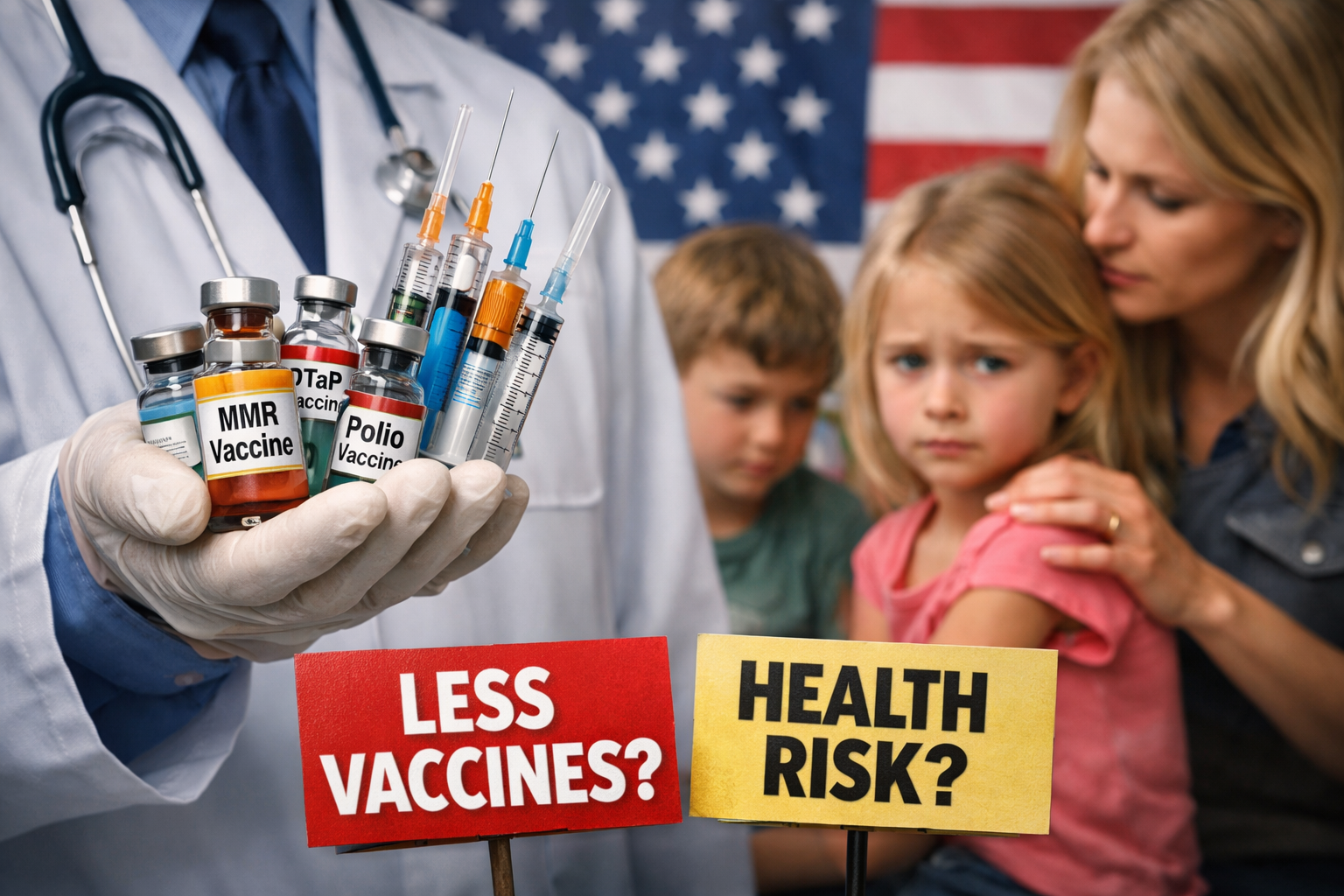
RFK Jr. Shakes U.S. Health Policy by Slashing Childhood Vaccine Schedule in Denmark
In a historic policy shift that United States has overhauled its childhood vaccination schedule, reducing the number of vaccines recommended for every child from 17 to 11 — a move modeled in part on Denmark’s national immunization approach. This change has triggered intense debate among public health experts, pediatricians, government officials, and medical organizations nationwide, with strong opinions on both the potential benefits and risks.
The sweeping update, announced by the Centers for Disease Control and Prevention (CDC) and supported by Health and Human Services (HHS) Secretary Robert F. Kennedy Jr., comes after a presidential directive to examine how other developed countries structure their immunization policies. The goal, officials say, is to restore public trust, streamline recommendations, and emphasize transparency and informed consent. Yet critics — from pediatric societies to infectious disease specialists — argue the decision departs from decades of evidence-based practice and may endanger children’s health. HHS.gov
What the New Schedule Changes and Why Officials Say It Matters
After an internal scientific review of U.S. vaccine guidance compared with that of peer nations, federal health officials formally adopted significant revisions to the routine vaccine recommendations for children. Under the revised framework:
- The number of diseases for which immunizations are recommended universally for all children has been reduced from 17 to 11.
- Vaccines for illnesses such as influenza (flu), COVID-19, rotavirus, hepatitis A, hepatitis B, respiratory syncytial virus (RSV), and meningococcal disease are no longer recommended for every child but instead fall under “high-risk groups” or “shared clinical decision-making” between parents and health care providers.
- This shift places a greater emphasis on individualized risk assessment while preserving insurance coverage for all vaccine doses, according to CDC officials.
Officials involved in the decision have described the long-term aim as fostering greater trust in public health by aligning U.S. policy with practices in countries that report high vaccination rates despite fewer routine shots. Denmark, frequently referenced in the CDC’s assessment, is noted for recommending fewer routine vaccines and relying more on targeted strategies based on specific individual or epidemiological risk factors.
Supporters argue that the previous list of recommended vaccines placed the U.S. well above many other high-income nations, potentially contributing to public skepticism and confusion. HHS maintains that keeping only the most essential immunizations on the routine schedule could improve clarity and parental engagement.
Voices of Support: Trust, Transparency, and Parental Choice
Proponents of the overhaul emphasize three core objectives:
- Rebuilding Public Trust: Health officials say public trust in institutions waned during the COVID-19 pandemic. By simplifying the schedule and focusing on transparent, risk-based guidance, they aim to encourage informed decision-making rather than automatic compliance.
- International Comparison: Supporters cite international immunization schedules as evidence that strong public health outcomes are achievable with fewer routine vaccines, especially in countries with high baseline vaccination rates and robust public health communication.
- Personalized Health Decisions: Medical decisions are increasingly patient-centered, proponents argue. Allowing families and clinicians to jointly assess risks could empower caregivers without removing access to vaccines entirely.
Some political figures have hailed the decision as “common-sense reform” that empowers families and respects individual health choices. They note that while the recommendation tier is changing, the same vaccines remain available and covered under federal insurance programs like Medicaid, CHIP, and Affordable Care Act plans.
Sharp Criticism From Medical Experts and Public Health Authorities
Despite supportive rhetoric from the administration, many public health professionals and medical organizations have vehemently criticized the schedule overhaul, warning that it undermines decades of scientific consensus and could have serious consequences. Their main concerns include:
- Risk of Disease Resurgence: Critics point to the fact that diseases controlled through vaccination — including influenza, hepatitis, and meningitis — pose serious threats when immunization coverage wanes, especially among vulnerable populations.
- Expert Bypass and Lack of Transparency: Many public health specialists argue that the changes bypassed the traditional consultative process involving the Advisory Committee on Immunization Practices (ACIP), an independent group of experts in immunology and infectious diseases.
- Potential for Increased Hospitalizations: Some infectious disease experts warn that fewer recommended vaccines could lead to higher rates of preventable hospitalizations and deaths, particularly given current trends in flu activity and other respiratory illnesses.
Pediatricians’ associations, including the American Academy of Pediatrics (AAP), describe the policy shift as “dangerous and unnecessary,” emphasizing that the previous U.S. schedule was crafted thoughtfully over many years of scientific study and real-world data on disease prevention.
How Denmark’s Vaccine Strategy Fits Into the Debate
Denmark’s childhood immunization schedule is often cited by both supporters and detractors of the U.S. overhaul, though the comparison must be carefully contextualized.
In Denmark:
- Several vaccines that are considered routine in the U.S., such as those for RSV, influenza, and hepatitis A, are not part of the standard schedule.
- Denmark operates under a universal health care system and has very high baseline vaccine uptake and coverage for the diseases it does target — a context very different from the U.S. health landscape.
- High public trust in health institutions and streamlined health infrastructure contribute to high participation rates without heavy reliance on mandates.
Experts on both sides of the debate caution against “apples-to-oranges” comparisons. The United States, unlike Denmark, has a much larger and more diverse population, varying healthcare access across states, and different disease prevalence patterns. Public health leaders argue that what works in one nation’s system may not translate directly to another without consequences.
Broader Implications: Public Health, Policy, and Parental Decisions
The updated vaccine recommendations carry implications beyond immediate clinical practice:
- Insurance and Access: Although vaccines remain covered under major federal programs, insurers and clinicians may adjust how they prioritize outreach and reminders if certain shots are no longer designated as “routine.”
- School Entry Requirements: School vaccine mandates are determined at the state level and often rely on CDC guidelines. Changes in federal recommendations may influence the ease or difficulty of maintaining existing state requirements.
- Public Understanding: With multiple tiers of recommendations now in place, parents may find it harder to navigate what is medically advisable versus what is merely optional — potentially exacerbating confusion in an era already fraught with misinformation. AP News
Public survey data show that while a majority of Americans support vaccines broadly, there remains significant concern among certain groups about over-vaccination or conflicting health guidance. The CDC’s new framework seeks to respond to these concerns, though whether it will actually improve trust or outcomes is a matter of ongoing debate.
Looking Ahead: What the Future Holds
As this policy shift unfolds nationwide, the final outcomes will likely be shaped by how clinicians, policymakers, and families respond in practice. Key areas to watch include:
- Disease Surveillance: Monitoring trends in hospitalizations and infection rates for influenza, rotavirus, RSV, and other diseases previously under universal recommendation will provide early indicators of the impact of these changes.
- Pediatric Provider Responses: Whether pediatricians broadly adopt the new framework or continue to encourage a more comprehensive set of immunizations — as many professional organizations urge — will influence real vaccination patterns.
- Public Communication: Transparent, evidence-based messaging that explains risks, benefits, and scientific rationale could help reduce confusion and improve informed choice.
What remains clear is that this overhaul marks one of the most significant shifts in U.S. public health policy in decades — a realignment of priorities that will influence childhood health outcomes, clinical practice, and national vaccination strategy for years to come.
Conclusion
The U.S. childhood vaccination schedule has been dramatically reshaped, reducing the number of vaccines recommended universally for children and introducing a more personalized, risk-based framework that draws inspiration from models like Denmark’s. While government officials champion the move as a path to greater trust and choice, many public health experts warn it may increase preventable illness and confusion. As the nation navigates this landmark change, continuous monitoring, clear communication, and careful guidance from health professionals will be essential.
Subscribe to trusted news sites like USnewsSphere.com for continuous updates.