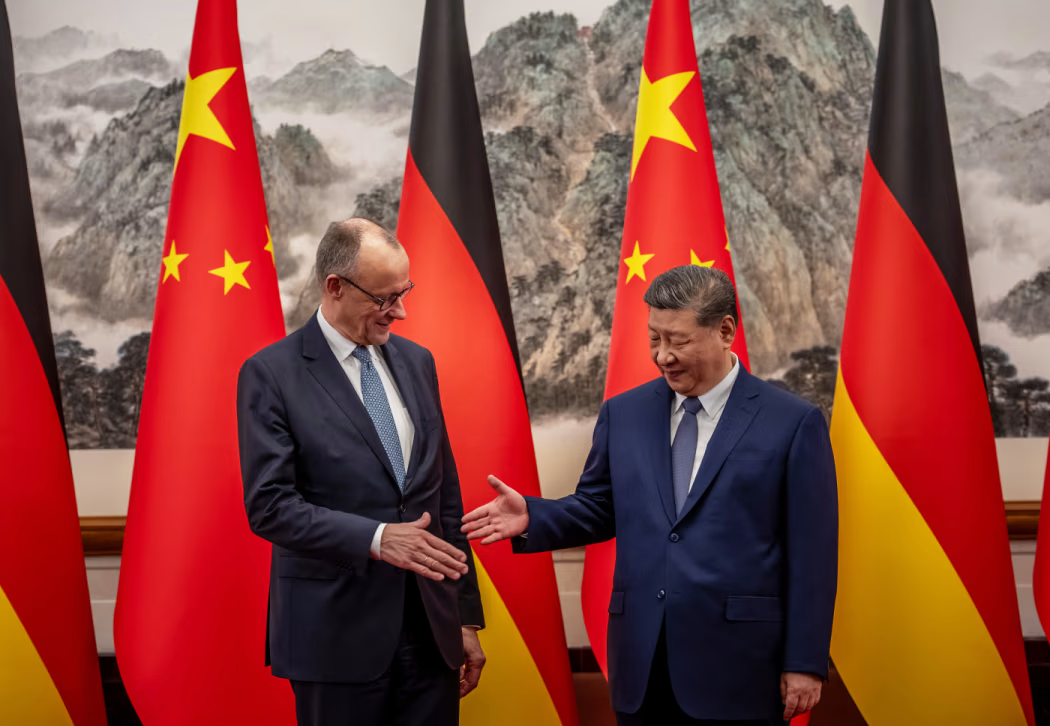
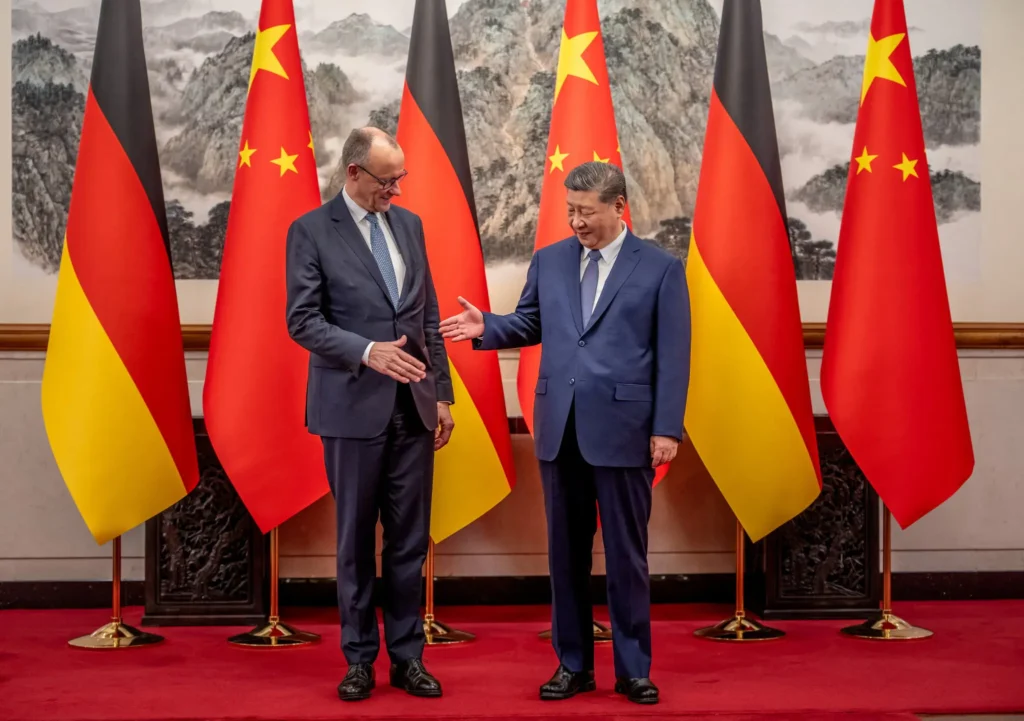
Germany-China trade reset dominates global economic headlines as German Chancellor Friedrich Merz wrapped up his first official visit to Beijing on February 25–26, 2026, by meeting Chinese President Xi Jinping and Premier Li Qiang in a bid to strengthen and reset economic, diplomatic, and strategic ties between Europe’s largest economy and China’s massive market. This visit comes amid a shifting global landscape marked by tariff pressures, deepening economic interdependence, and geopolitical tensions over trade practices and strategic competition.
In essence, this visit matters now because China overtook the United States as Germany’s top trading partner last year, even as Berlin seeks to balance deep economic engagement with concerns over market access, trade imbalance, and China’s role in global power dynamics.
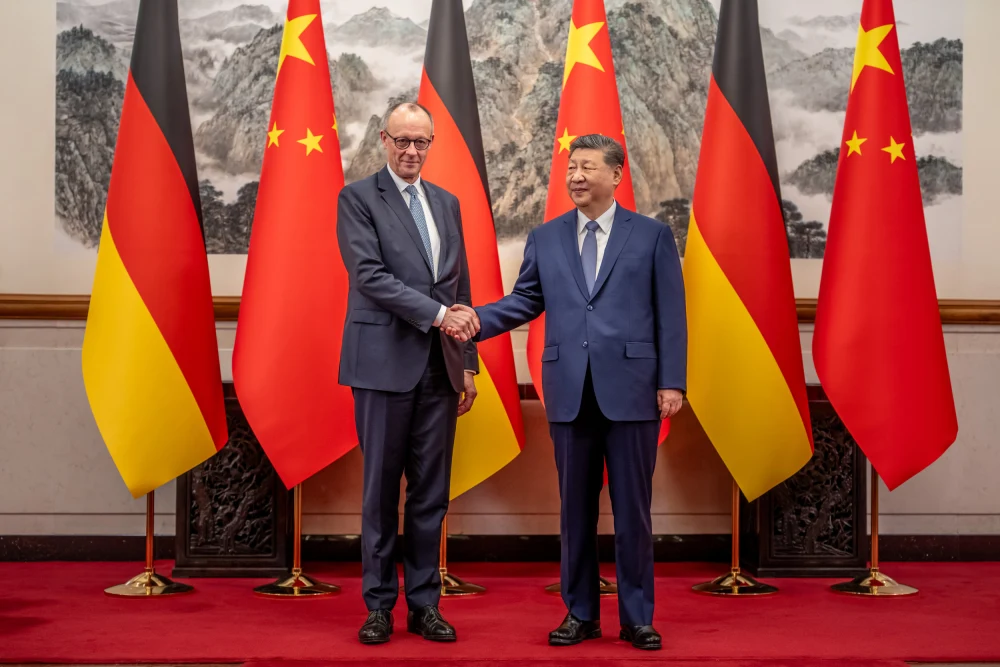
Further analysis from trending reports shows Merz used the trip to push for fairer trade relationships, stronger market access for European companies, and Chinese support for peace efforts in Ukraine, underlining that economic diplomacy is now inseparable from geopolitical strategy.
Deepening China–Germany Economic Ties
German Chancellor Merz’s visit was primarily focused on economics, trade, and cooperation. Germany and China already trade well over €250 billion annually, but Berlin is pushing for “fairer and more balanced access” to China’s market and reduced export barriers that currently favor an inflated trade surplus for Beijing.
During high-level meetings with President Xi and Premier Li, leaders reaffirmed decades of economic exchange and pledged to strengthen cooperation on technology, manufacturing, and automotive industries. China also announced plans to purchase up to 120 additional Airbus aircraft, a move that signals not only confidence in European manufacturing but also a desire to deepen industrial ties.
Officials from both sides stressed the importance of mutual respect, stable multilateral trade, and ongoing dialogue — with Xi highlighting the two nations’ roles as major global economies and calling for enhanced strategic communication and cooperation.
Trade Imbalances and Fair Competition Concerns
A central theme of Merz’s visit was addressing Berlin’s concerns about trade imbalances and China’s industrial practices. Germany’s imports from China have continued to grow, while German exports remain comparatively lower, contributing to a record trade deficit.
European business leaders have also voiced concerns that state subsidies, excess capacity, and market distortions in China threaten fair competition and put German industries at a disadvantage.
In response, Merz pressed Chinese officials on the need for transparent market standards, reduced export restrictions, and fair access, while reiterating that Germany still values Chinese investment and collaboration. This delicate line — promoting cooperation while opposing unfair practices — signals Berlin’s attempt to reset the relationship without severing it.
Strategic Geopolitics: Ukraine, U.S. Tariffs, and Global Order
While economics dominated the trip, geopolitical issues were never far from the agenda. German media reports indicate that Merz used the platform to urge China to help facilitate peace in Ukraine, stressing that global challenges cannot be resolved without Beijing’s cooperation.
Analysts note that this visit also comes as the United States is escalating tariffs and protectionist measures in its own trade policies — a backdrop that has pushed European nations to reconsider how best to navigate relations with China.
Xi Jinping, for his part, emphasized China’s commitment to multilateralism and free trade, striking back at protectionist rhetoric and positioning China as a stabilizing actor in the world economy.
What’s at Stake for Germany and Europe
Germany’s economic future is deeply tied to China, but the relationship is complex. While Chinese markets offer growth opportunities for German automakers, tech firms, and industrial manufacturers, there is also growing political pressure in Europe to reduce strategic dependencies — particularly in critical sectors like semiconductors and clean energy.
Merz’s balancing act reflects this dual reality: advocating for deeper cooperation while acknowledging that China is both a key partner and a systemic competitor. Europeans are now seeking a model that preserves open trade but does not leave strategic sectors vulnerable to external pressure.
The Global Impact: Ripple Effects Beyond Berlin and Beijing
This high-stakes diplomatic visit holds broader implications for the world, especially in an era where economic powerhouses must navigate between cooperation and competition. A reset of China–Germany relations could influence EU–China policies, affect global supply chains, and reshape alliances across Asia, Europe, and the United States.
For global markets, the signals sent from Beijing and Berlin — about openness, cooperation, and strategic balance — may set the tone for economic diplomacy in 2026. Analysts predict that other European nations may follow Germany’s nuanced approach, seeking both engagement and structural reform.
Subscribe to trusted news sites like USnewsSphere.com for continuous updates.