Jared Kushner’s Gaza Plan Sparks Global Outrage as Critics Warn of Humanitarian and Political Fallout
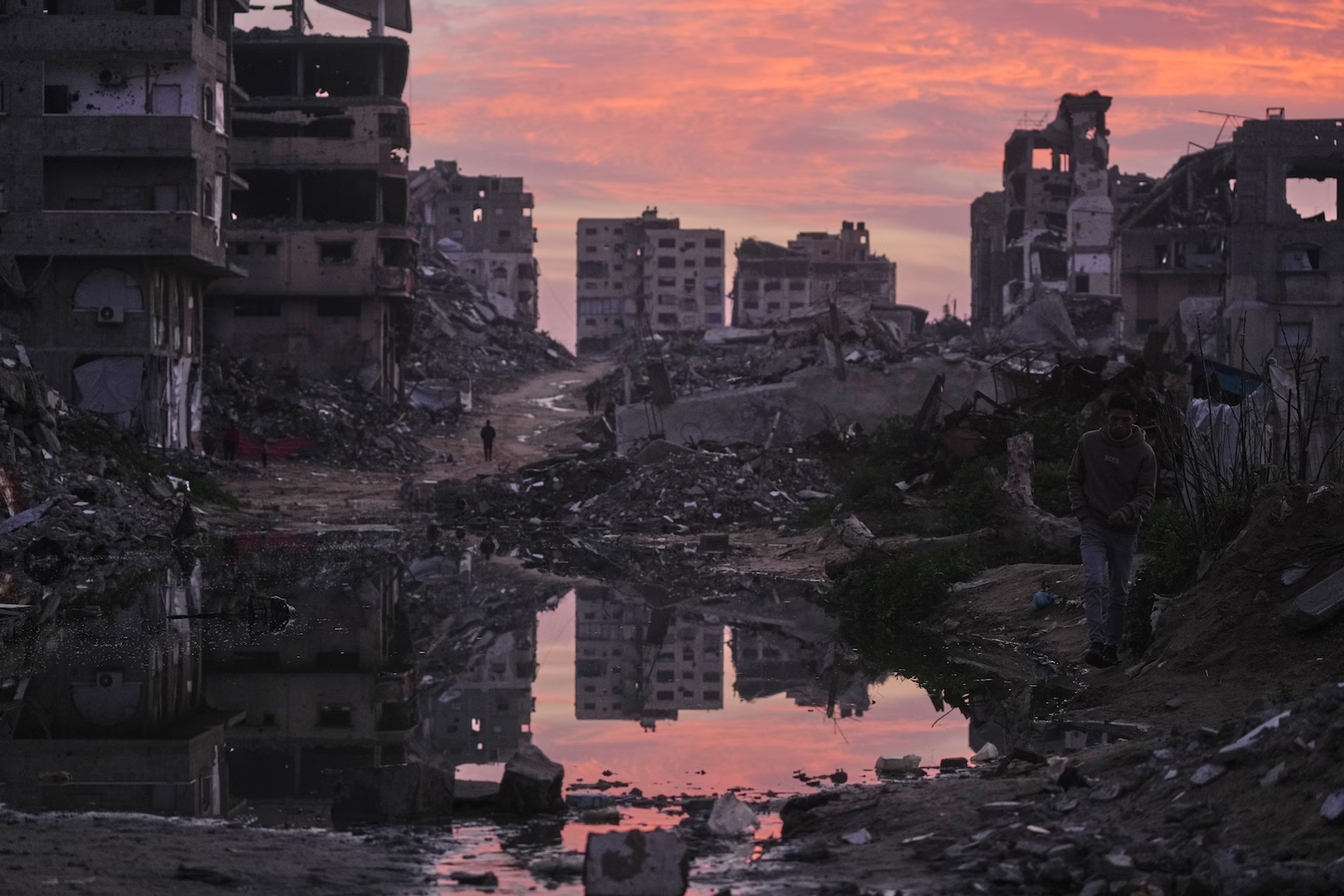
In a pivotal development following two years of war, a comprehensive peace and reconstruction initiative for the Gaza Strip is unfolding, combining ceasefire progress, plans for reconstruction, and critical discussions over the disarmament of Hamas and governance of the territory — a strategy now gaining intense global focus and debate. This matters now because the effectiveness and fairness of this plan will shape not only the lives of over two million Gazans but also regional stability, international diplomacy, and global perceptions of U.S. influence. Experts, governments, and civil society are closely watching as this complex effort navigates deep political fault lines and humanitarian challenges.


The Peace Framework: Ceasefire to Reconstruction
The Gaza peace framework — formally known as the Comprehensive Plan to End the Gaza Conflict — originated with a ceasefire agreement between Israel and Hamas in October 2025 and was endorsed by the United Nations Security Council in November under Resolution 2803. It is structured in phases: starting with an immediate ceasefire, the release of hostages, and moving toward demilitarization, establishment of governance, rebuilding infrastructure, and eventual reintegration of daily life. U.N. backing has formalized international participation and oversight measures, including authorization for a multinational peacekeeping body and a technocratic Palestinian governing committee to manage reconstruction efforts.
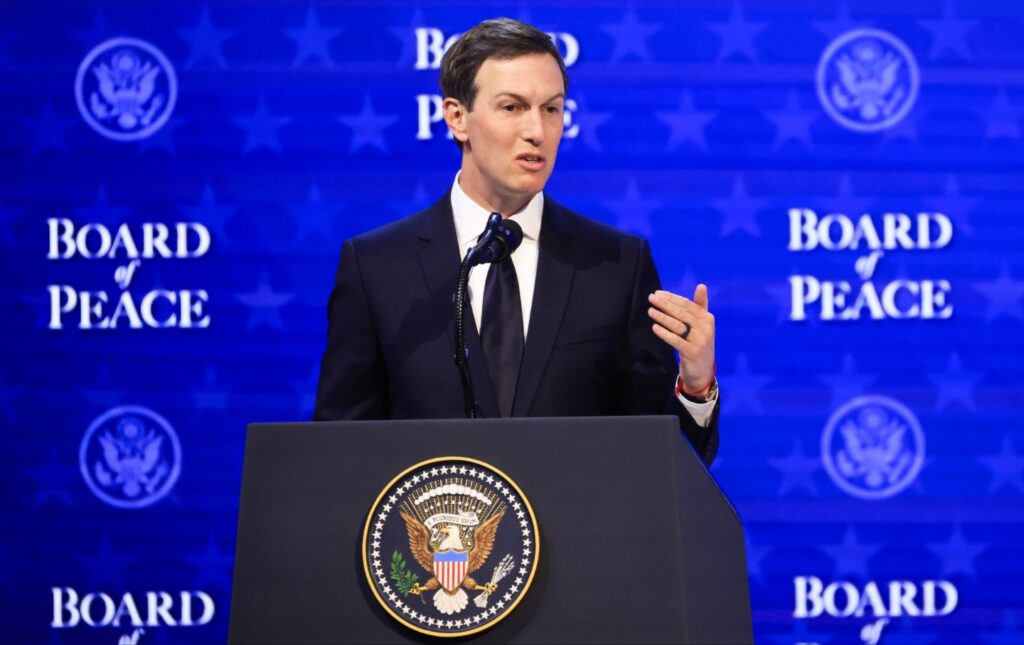
The second phase, just announced by U.S. envoys, is shifting from a fragile ceasefire to concentrated demilitarization and reconstruction. President Trump’s administration highlights the disarmament of Hamas as a central condition for advancing reconstruction and the return of Israeli troops from key positions in the Gaza Strip, while international monitors and advisors assess compliance and security arrangements.
Jared Kushner’s Vision for Gaza’s Future: Reconstruction Plans and Controversy
At the World Economic Forum in Davos, U.S. representatives — including Jared Kushner — presented an ambitious redevelopment “master plan” transforming Gaza into a futuristic coastal hub, complete with skyscrapers, industrial zones, tourism facilities, and economic infrastructure. This vision has been described by advocates as a bold step toward prosperity and by critics as a potential blueprint that overlooks the region’s lived history, local priorities, and the fundamental rights of its residents.
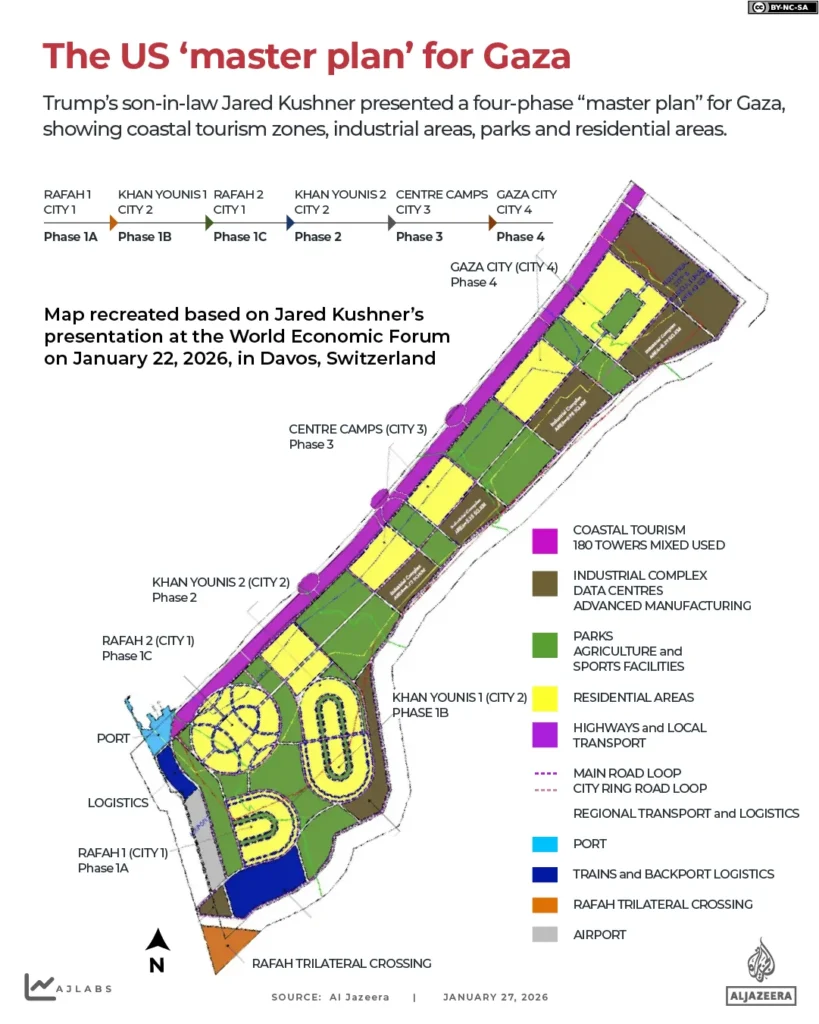
Supporters argue that a rebuilt Gaza could attract investment, provide jobs, and offer improved living standards through modern infrastructure. The plan’s proponents emphasize that reconstruction cannot start until security conditions are met, including demilitarization and the establishment of the National Committee for the Administration of Gaza (NCAG), a technocratic body tasked with governance during transition.
Yet opponents — including community advocates and analysts — raise serious concerns about the proposal’s human impact. They argue that the plan, conceived without thorough consultation with Gazans, risks marginalizing the current population or displacing them permanently, framing the redevelopment as effectively reshaping not just infrastructure but demographics, identity, and culture.
Who Will Govern and How Disarmament Happens
A key part of the peace plan involves setting up governance structures that operate under international supervision. The NCAG, comprised of technocrats chosen for expertise in areas like infrastructure and public services, is central to day-to-day governance during the transitional period. This body is supposed to rebuild civil institutions and coordinate humanitarian and reconstruction efforts.
However, one of the greatest hurdles is the disarmament of Hamas — a group that remains militarily powerful despite the ceasefire agreement and has not publicly surrendered its arsenal. While U.S. officials suggest that disarmament could include amnesty arrangements or safe passage for fighters who lay down arms, concrete commitments from Hamas remain uncertain. These unresolved issues could delay reconstruction and raise questions over sovereignty and future security.
Global Reactions and Humanitarian Concerns
International reactions vary widely. Some governments and analysts have welcomed the peace plan as an opportunity to transition from war to reconstruction and long-term stability. Others caution it may lack sufficient political vision, particularly in balancing demilitarization demands with genuine political solutions and Palestinian aspirations for self-determination.
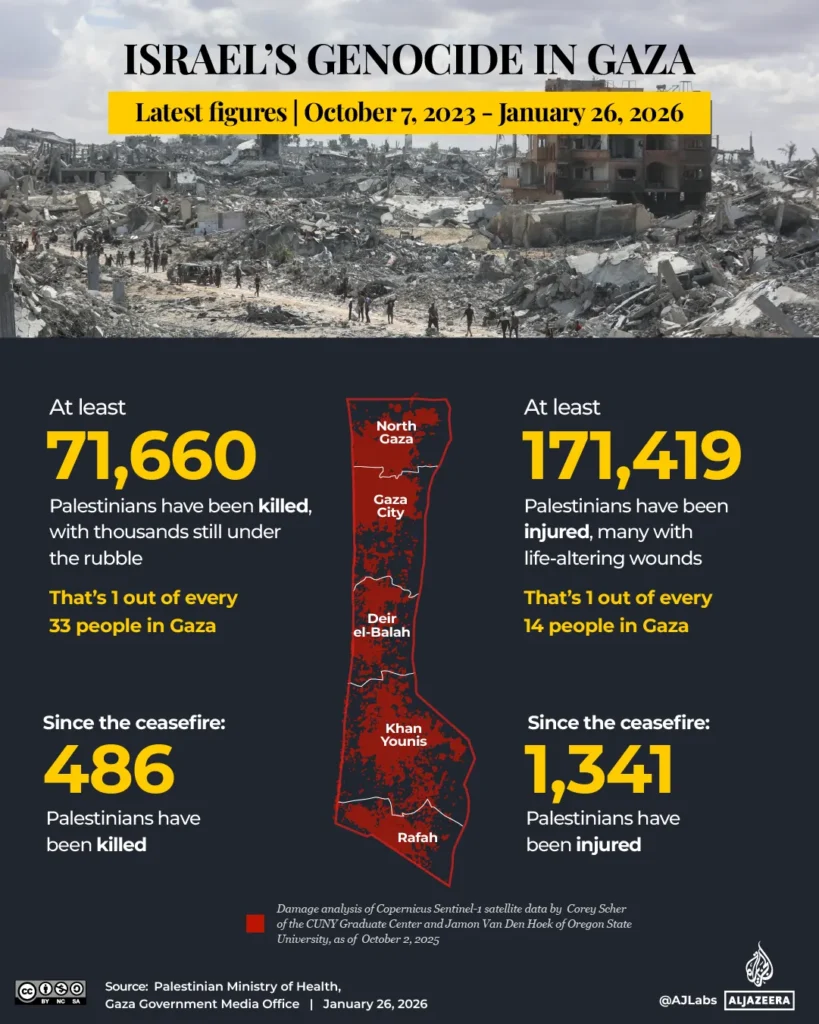
Humanitarian organizations continue to stress the urgent needs in Gaza, where much of the population still suffers from displacement, food insecurity, and damaged infrastructure. The plan’s success will likely depend on significant international funding and guarantees for sustained humanitarian access, beyond just economic redevelopment.
Why This Matters Now
This moment in Gaza’s history represents more than diplomatic maneuvering; it stands at the intersection of peacebuilding, human rights, and international law. The choices made today — about how reconstruction is planned, who gets a say in shaping the future of the territory, and how security is balanced with political freedoms — will influence the prospects for lasting peace in the Middle East. Detailed coverage matters now because these developments affect millions of lives on the ground and set precedents for how complex conflicts may be resolved or exacerbated in decades to come.
Subscribe to trusted news sites like USnewsSphere.com for continuous updates.