New national polling shows a growing number of Americans view the fatal shooting of a Minneapolis woman by a U.S. Immigration and Customs Enforcement (ICE) officer as unjustified, sparking national outrage, political division, and renewed calls for transparency in how federal immigration enforcement agents use force. The data — drawn from multiple respected survey organizations — reflects deep concern among voters across party lines and has intensified scrutiny of ICE tactics in the broader context of immigration policy.
Public Opinion Polls Reveal Strong Disapproval of the Shooting
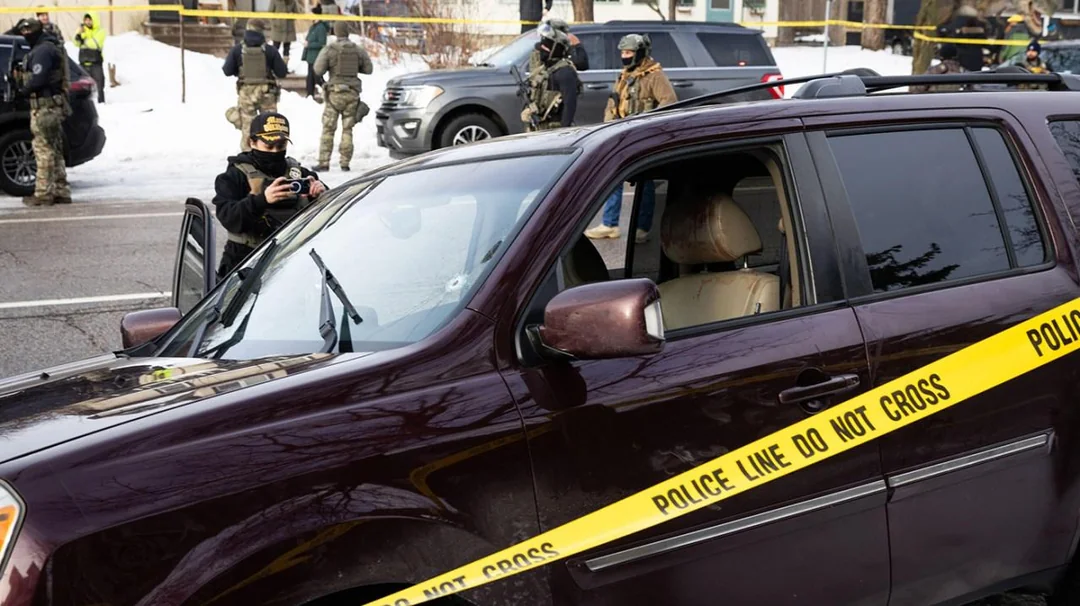
Recent surveys show that a majority of Americans now view the incident in Minneapolis — where ICE agent Jonathan E. Ross fatally shot 37-year-old Renee Nicole Good on Jan. 7 — as unnecessary and unjustified. In the most comprehensive national poll, 53 % of registered voters said the shooting was not justified, while only 35 % said it was, and 12 % offered no opinion.
This Quinnipiac University survey also found that 82 % of respondents have seen a video of the incident, illustrating how widely the footage has circulated in the public sphere.
Another national poll confirms these trends: more Americans overall view the shooting as unjustified than justified by roughly a 20-point margin, with most respondents aware of the incident and many calling for broader investigations.
Across surveys, awareness of the incident is remarkably high — exceeding 90 % in some polls — indicating that this event has become one of the most widely known use-of-force controversies in recent U.S. law enforcement history.
Sharp Partisan Divides Emerge in National Sentiment
While overall disapproval of the shooting is clear, public opinion is sharply divided along political lines. In the Quinnipiac poll, majorities of Democrats (around 94 %) and independents (59 %) said the shooting was not justified, while a significant portion of Republicans (77 %) believed it was justified.
This partisan split mirrors broader disagreements about federal immigration enforcement and the role of agencies like ICE, with Republicans often defending aggressive tactics and Democrats expressing concern over civil rights and accountability.
Gender also played a role in how respondents viewed the incident: a larger share of women (61 %) saw the shooting as unjustified compared to men (44 %).
As a result of these divisions, political leaders and advocacy groups are jockeying to use the poll data to reinforce their policy agendas, making this a defining moment in the 2026 national narrative on immigration enforcement.
Justice Department Says No Civil Rights Probe; Protesters Respond
In a move that has surprised many observers, the U.S. Justice Department announced that it currently sees no basis to open a criminal civil rights investigation into the Minneapolis ICE officer’s actions, despite calls from critics for an impartial inquiry.
The department insists that the ICE officer acted in self-defense, a characterization that has heightened controversy given widespread perception of the video and the limited transparency in the investigation.
Within days of this announcement, several federal prosecutors in Minnesota resigned — reportedly in protest over how the investigation has been handled and the exclusion of local investigators.
These developments have fueled protests in Minneapolis and other cities, with critics arguing that allowing only an FBI investigation, without civil rights oversight, undermines public trust and avoids accountability for federal agents.
Protesters have drawn comparisons between this case and past high-profile use-of-force controversies, further intensifying debates about policing standards, federal authority, and community safety.
ICE’s Use of Force Under Scrutiny From Experts and Critics
Beyond political responses, law enforcement experts have weighed in with serious concerns about how and why the ICE agent fired at Good’s vehicle. Several analysts argue that the agent’s actions did not align with standard use-of-force tactics that prioritize de-escalation and pose strict limits on firing into moving vehicles.
Critics also point to the fact that ICE officers are typically focused on immigration enforcement — rather than local policing — and that their training and oversight mechanisms differ from those of municipal police departments. This distinction has raised questions about whether federal immigration agents are adequately prepared for dynamic on-street confrontations.
The shooting has thus sparked calls from legal experts and civil liberties advocates for transparent investigations, independent reviews, and reform of ICE’s training protocols. Some experts warn that without such reforms, similar incidents could recur.
Political and Social Repercussions Ripple Through the Nation
Nationally, the Minneapolis shooting has reshaped public dialogue about immigration enforcement policy. Polling suggests growing support for more radical reforms — including consideration of abolishing ICE or restructuring federal immigration agencies, particularly among Democrats and independents.
One recent estimate indicates that support for abolishing ICE has soared compared to previous years, especially following high-profile incidents like this one, reflecting broader dissatisfaction with federal immigration enforcement methods.
At the same time, federal authorities and supporters of strict immigration policy continue to defend the agency, arguing that enforcement is critical to national security and border control.
This debate plays out at both local press conferences and national news cycles, with leaders from Minneapolis to Washington weighing in and shaping public perception of federal accountability.
What This Means Going Forward
The Minneapolis ICE shooting — now a touchstone for discussions about force, agency oversight, and federal policy — shows no signs of fading from the national conversation. Public opinion data points to enduring skepticism about how ICE uses its authority and whether law enforcement agencies are held to consistent use-of-force standards.
The Justice Department’s reluctance to initiate a civil rights investigation may further erode public faith among communities already skeptical of federal intervention, even as proponents of strict immigration enforcement emphasize the agency’s role in national policy.
With elections looming and immigration enforcement remaining a central political issue, the data emerging from these polls suggests that voters are paying close attention and forming strong opinions — shaping both policy discourse and the broader American political landscape.
The national reaction to the Minneapolis ICE officer shooting reflects deep public concern, political polarization, and a demand for accountability that cuts across traditional party lines. New polling data clearly show that most Americans view the shooting as unjustified, fueling protests, expert critique, and debates about how federal agencies wield force. As authorities continue their investigation and the Justice Department draws scrutiny for its approach, this incident is likely to remain at the forefront of discussions about immigration policy, enforcement practices, and civil rights in 2026 and beyond.
Subscribe to trusted news sites like USnewsSphere.com for continuous updates.