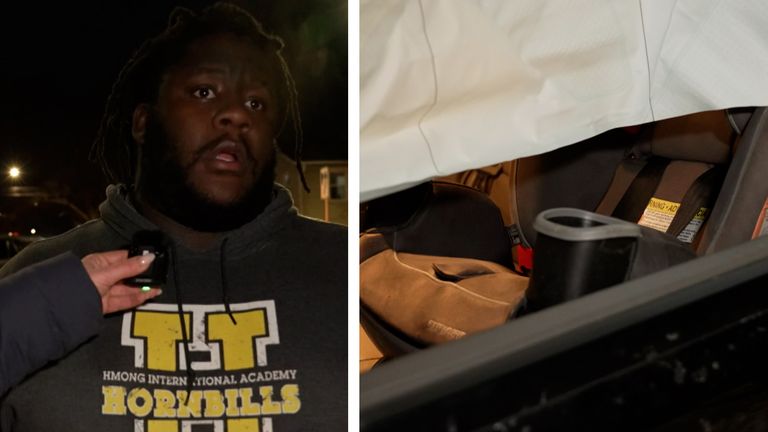
The ICE Tear Gas Incident in Minneapolis is now at the center of a growing national debate after a father and his six children were hospitalized when federal immigration agents allegedly fired tear gas at their car during ongoing protests in Minneapolis, according to initial reporting from Sky News and corroborated by multiple U.S. outlets tracking developments around immigration enforcement and protest policing.
ICE Tear Gas Incident in Minneapolis Shocks the Nation
The ICE tear gas incident in Minneapolis coverage has intensified after disturbing claims emerged that federal agents fired tear gas toward a civilian vehicle carrying a father and six children amid protests in the city. The incident allegedly occurred during heightened tensions linked to immigration enforcement actions and demonstrations criticizing federal agencies.
According to accounts shared by the family and witnesses, the car was caught near protest activity when officers deployed chemical agents. Shortly afterward, all seven occupants reportedly experienced breathing difficulties, prompting emergency medical treatment and hospitalization. The case has rapidly become symbolic of concerns over the use of force during civil unrest.
What Reportedly Happened During the Minneapolis Protest
Eyewitness descriptions indicate that the family was not actively participating in the protest and was attempting to leave the area when law enforcement activity escalated. Protesters had gathered in response to recent immigration enforcement operations, which have reignited anger in immigrant communities across the U.S.
As officers attempted to disperse crowds, tear gas was deployed. The family alleges that canisters were fired toward their vehicle, allowing gas to enter the cabin. Children reportedly began coughing and struggling to breathe within minutes, forcing the driver to stop and seek help.
Medical Impact on the Father and Six Children
Doctors treating the family stated that tear gas exposure can be especially dangerous for young children due to smaller airways and increased sensitivity to chemical irritants. Hospital officials confirmed that all seven were treated for respiratory distress and eye irritation, though no long-term injuries have yet been publicly disclosed.
Medical experts note that tear gas exposure in confined spaces—such as a car—can significantly intensify symptoms. This detail has become central to questions about whether force was used proportionally and responsibly during the incident.
Growing Scrutiny of ICE Crowd-Control Tactics
The actions of U.S. Immigration and Customs Enforcement are now under renewed scrutiny. While ICE has not publicly confirmed every allegation, federal agencies often argue that tear gas is deployed only when officers face imminent danger or fail to disperse hostile crowds.
However, civil rights organizations say this case highlights a pattern of aggressive enforcement spilling into civilian harm. Advocacy groups are calling for an independent investigation to determine whether officers violated operational protocols or endangered non-participants.
Minneapolis Officials Respond to Public Outcry
City leaders in Minneapolis have acknowledged the public anger following the incident. Several local officials stated they were seeking clarity from federal authorities about the chain of events and the rules governing federal agents operating within city limits.
Minnesota lawmakers have also raised concerns about jurisdictional overlap, emphasizing that local governments often have limited authority over federal enforcement actions—even when those actions impact residents not involved in protests.
National Reaction and Civil Rights Concerns
The Minneapolis incident has quickly drawn national attention, with civil liberties groups comparing it to previous cases where chemical agents were used during protests. Organizations argue that deploying tear gas in residential or civilian areas risks violating constitutional protections, particularly when children are involved.
Legal scholars point out that courts have increasingly questioned indiscriminate crowd-control methods. While tear gas remains legal, its use must meet strict standards of necessity and proportionality—standards that critics argue may not have been met in this case.
Broader Context: Protests and Immigration Enforcement
This incident did not occur in isolation. Across the United States, immigration enforcement has become a flashpoint amid broader political polarization. Protests have erupted in multiple cities as communities react to deportations, detention practices, and expanded federal authority.
Minneapolis, already known globally for past protests over policing, has once again become a focal point in the national conversation about law enforcement accountability and the balance between public safety and civil rights.
How Tear Gas Affects Children and Families
Health experts emphasize that tear gas is not a harmless crowd-control tool. Symptoms can include intense coughing, vomiting, chest pain, and temporary blindness. For children, exposure can be more severe and longer-lasting, especially when inhaled in enclosed environments.
Pediatric specialists warn that repeated or high-dose exposure may worsen asthma or other underlying respiratory conditions, reinforcing calls to limit chemical agent use near families and residential areas.
Calls for Investigation and Policy Reform
Following the hospitalization of the family, several advocacy groups demanded a formal investigation into federal crowd-control practices. Some lawmakers have renewed efforts to restrict tear gas use nationwide, particularly during protests where bystanders are present.
Legal experts say the outcome of any investigation could influence future federal guidelines and set precedents affecting how agencies respond to demonstrations across the country.
What ICE and Federal Authorities Are Saying
Federal agencies typically maintain that their officers follow strict rules of engagement. While ICE has not released a detailed public report, officials often state that chemical agents are used only as a last resort to protect personnel and restore order.
Critics counter that transparency remains limited, arguing that body-camera footage, deployment logs, and medical evidence should be made public to ensure accountability.
Why This Story Is Resonating Nationwide
The image of six children hospitalized after alleged tear gas exposure has struck a powerful emotional chord. The case brings together multiple contentious issues—immigration, protest policing, federal authority, and child safety—making it one of the most widely discussed protest-related incidents in early 2026.
Media analysts note that such stories often accelerate public pressure for reform, particularly when they involve families rather than demonstrators or activists.
A Defining Moment for Protest Policing
The ICE tear gas incident in Minneapolis may prove to be a turning point in how federal agencies conduct operations during civil unrest. As investigations continue, the case underscores the urgent need for transparency, accountability, and safeguards that protect innocent civilians—especially children.
Whether policy changes follow remains uncertain, but the public reaction makes one thing clear: incidents involving families and chemical agents will not fade quietly from the national conscience.
Subscribe to trusted news sites like USnewsSphere.com for continuous updates.