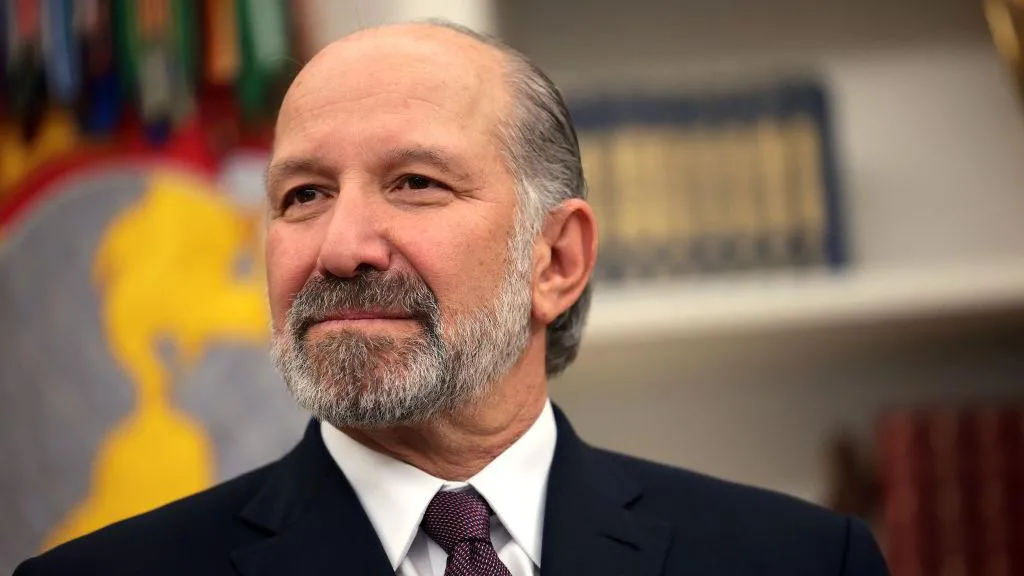
Emails Reveal US Commerce Secretary Lutnick Planned Visit to Jeffrey Epstein’s Private Island
Emails from newly released U.S. Justice Department documents show that U.S. Commerce Secretary Howard Lutnick planned a visit to convicted sex offender Jeffrey Epstein’s private Caribbean island, contradicting his past claims of cutting ties long ago. The archive — part of millions of pages disclosed under the Epstein Files Transparency Act — also includes exchanges involving Elon Musk and other influential figures.
For years, the Epstein case has simmered in public consciousness, but the massive release of emails and internal records in early 2026 has forced renewed scrutiny of powerful individuals and their associations with Epstein at a time when transparency in government and corporate leadership is a major public concern.
New Epstein Files Expose Former Ties and Contradictions
The Department of Justice’s document dump — totaling over 3 million pages, images, and videos — includes email correspondence that suggests U.S. Commerce Secretary Howard Lutnick, a key Trump administration official, arranged to meet Jeffrey Epstein in December 2012 on Epstein’s infamous private island, Little Saint James. In one email, Lutnick’s wife confirmed travel plans from St. Thomas with family and friends, asking where to anchor before coordinating a lunch gathering. A message from Epstein’s assistant, later relayed to Lutnick, read simply, “Nice seeing you.” This appears despite Lutnick’s past public statements that he had avoided Epstein long before.
The files also include exchanges between Elon Musk and Epstein. Emails from 2012 and 2013 show Musk asking about potential visits and parties on the island, though Musk has maintained that he declined invitations and never went. These communications add nuance and complexity to previously stated public positions and have drawn strong public reactions online.
Understanding the Epstein Files Transparency Act
The Epstein Files Transparency Act — passed overwhelmingly by the U.S. House and Senate in 2025 — required the Justice Department to publicly disclose documents connected to Epstein and his network. The January 30, 2026, release marked a significant wave of these disclosures, though some critics argue that large portions remain redacted or withheld, drawing bipartisan frustration.
These records include correspondence, memos, photos, and videos involving political figures, corporate leaders, and global influencers, offering a broad look at the social circles surrounding Epstein before his 2019 death in custody. Statements from officials indicate that some allegations contained in the release are uncorroborated or false, but the volume and breadth of material underscore ongoing public demand for accountability and clarity.
What the Lutnick Emails Revealed
A key revelation — highlighted across Reuters, The Guardian, and multiple domestic and international news outlets — centers on the role of Howard Lutnick. In late 2012, while already a public figure in finance and government circles, Lutnick appeared in email threads coordinating a planned lunch with Epstein on Little Saint James, challenging earlier claims he had severed ties with Epstein after a brief social interaction years prior. The Commerce Department maintains that Lutnick’s interactions were limited and that he has never faced accusations of wrongdoing.
The email exchanges also show a 2015 interaction where Epstein’s assistant forwarded an invitation from Lutnick to a fundraiser for then–Democratic presidential candidate Hillary Clinton, adding another layer of cross-ideological complexity to the narrative.
Elon Musk and Other High-Profile Mentions
In addition to Lutnick, the Justice Department documents contain emails involving Elon Musk, who corresponded with Epstein about potential island visits. According to the AP and People Magazine coverage, Musk’s messages reference logistical questions about helicopter travel and social gatherings. Musk publicly refutes ever attending Epstein’s island, but the documented outreach contradicts earlier public assertions and has been widely discussed in media circles.
Other high-profile individuals — including tech and business leaders like Reid Hoffman — also appear in the trove, reflecting Epstein’s extensive network before his indictment and death.
Broader Impact and Reactions
The release has sparked criticism from survivors’ groups who argue that some alleged abusers remain unidentified or protected in the documents, even as thousands of pages are made public. Lawmakers on both sides of the aisle have weighed in, demanding deeper transparency and more complete releases of records.
Public debate continues not only around the specifics of these documents but also around why such networks existed and how powerful individuals may evade scrutiny. For readers and researchers, these revelations offer new material for analysis, debate, and policy discussions.
As the Epstein files continue to be examined by media, legal experts, and historians, public demand for transparency, accountability, and truth remains high.
Subscribe to trusted news sites like USnewsSphere.com for continuous updates.