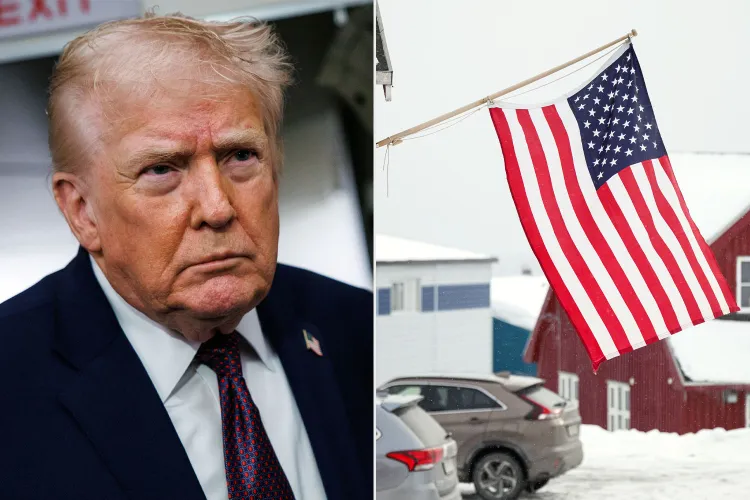
U.S. President Donald Trump says the United States must “own” Greenland because it is psychologically important for him — a statement that has ignited global controversy, alarmed allies, and triggered intense geopolitical debate. Trump insists that ownership, not just military presence, is critical for U.S. national security amid rising competition with Russia and China.
The Strategic Importance of Greenland Beyond Psychology
Greenland is far more than a frozen landmass in the Arctic — it is a geostrategic pivot point. Its location guards the gateway between the Arctic and the North Atlantic and offers a commanding view of the GIUK (Greenland-Iceland-UK) gap, a key maritime and aerial route in global defense planning.
The island is also rich in critical minerals essential for modern technology and clean energy — including rare earth elements, lithium, nickel, and cobalt — resources that major powers are racing to secure. Experts warn that Greenland’s mineral wealth could help the U.S. reduce dependence on Chinese supply chains for high-tech industries.
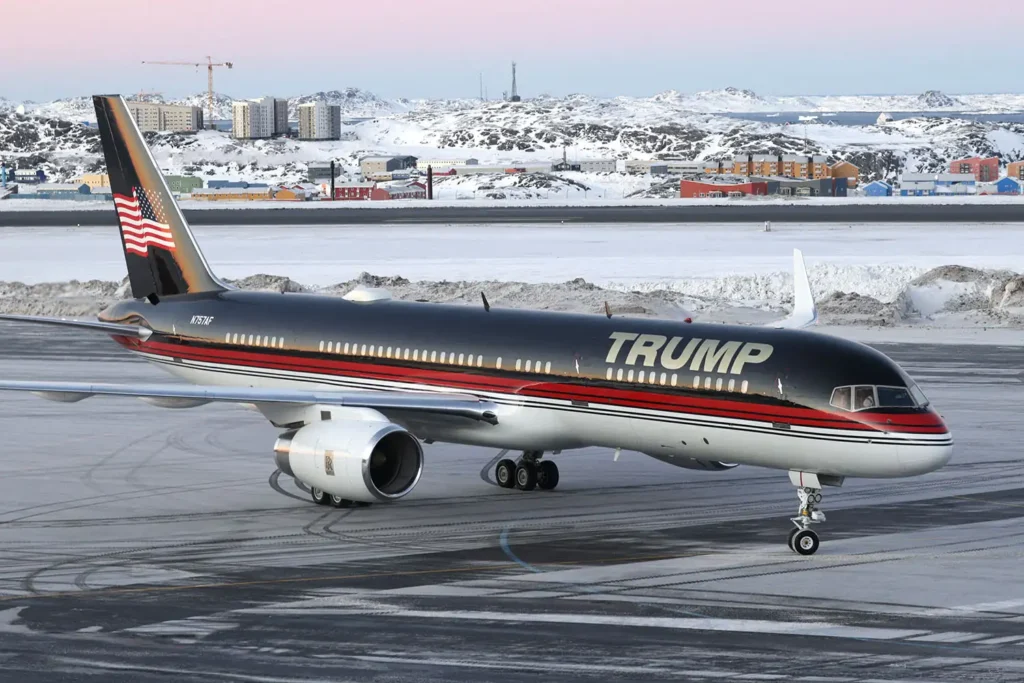
For decades, the United States has maintained a military presence on the island — especially at Pituffik Space Base — under a 1951 treaty with Denmark that allows broad operational rights without territorial ownership. This makes Trump’s claims even more unusual in the context of traditional defense partnerships.
Intense International Pushback and Risks to NATO
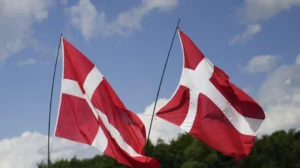
Dramatic as Trump’s statements are, they haven’t been welcomed internationally. Greenland’s own government, backed by Denmark and European partners, has firmly rejected any U.S. attempt to take control of the territory. Leaders emphasize the island’s sovereignty and express a strong preference for continued defense cooperation through NATO, not unilateral takeover.
European leaders and NATO officials have warned that any effort to seize Greenland — even rhetorically — could strike at the very core of the alliance. Some have gone as far as to say such an action could end NATO, undermining decades of collective defense cooperation.
Even within the United States, senior lawmakers from both parties have pushed back, underscoring that military action to take Greenland would be unacceptable and counterproductive.
Why Trump Frames Greenland as a Zero-Sum Game
Trump’s rhetoric reflects a worldview that international strategy is a zero-sum contest between global powers — particularly the United States, Russia, and China. From his perspective, relinquishing influence in Greenland could allow rival nations to gain ground in a region rich in security and economic potential.
However, military and diplomatic analysts challenge this logic. They point out that the United States already has extensive military use rights under existing treaties and does not need formal ownership to secure Greenland’s strategic value. Bilateral agreements and alliances have long ensured U.S. military effectiveness without raising sovereignty questions.
Furthermore, Greenland’s population and political leadership have voiced skepticism about U.S. motives — seeing the move as external pressure rather than a mutual partnership. Polls suggest that Greenland’s citizens overwhelmingly favor autonomy and self-determination over becoming a U.S. territory.
The Debate Around Military Force and Legal Reality
Trump’s comments have not ruled out the use of U.S. military force to acquire Greenland, prompting widespread alarm. The White House has stated that military options are “always on the table,” even as many experts regard actual force as both legally dubious and strategically reckless.
International law today strongly protects the sovereignty and self-determination of nations and territories. Any attempt to forcibly annex or take control of another democratic region would violate these norms and isolate the United States diplomatically.
Denmark, for its part, is strengthening its defense posture in Greenland and working closely with its NATO partners to ensure the territory’s security is managed multilaterally rather than under unilateral U.S. control.
Economic and Climate Dimensions of the Arctic Tilt
Beyond geopolitics, Greenland’s natural resources are reshaping global economic opportunities. Rare earth elements and mineral deposits underlie the future of electric vehicles, renewable energy technologies, and military hardware — making the island attractive not just for defense planners but also for industrial strategists.
Climate change has amplified Greenland’s importance. Retreating ice has opened new maritime corridors, revealed previously inaccessible resources, and ignited fresh interest from global powers seeking influence in the Arctic.
This mix of economic potential and shifting climate realities places Greenland at the center of a broader global contest — not just between superpowers but between economic models and environmental priorities.
An Unprecedented Foreign Policy Flashpoint
Donald Trump’s insistence that the United States must “own” Greenland has elevated a remote Arctic territory into a flashpoint of modern geopolitics. It has rallied critics, alarmed allies, and raised urgent questions about the future of international alliances, Arctic strategy, and U.S. foreign policy norms.
Whatever happens next, the push for control of Greenland — whether by purchase, treaty, influence, or negotiation — will continue to shape diplomatic discussions, defense strategies, and global power relations well into the future.
Subscribe to trusted news sites like USnewsSphere.com for continuous updates.