A British tourist with a valid U.S. visa was detained by U.S. Immigration and Customs Enforcement (ICE) for six weeks, sparking widespread criticism and alarm among international travelers and legal experts. The case of 65-year-old retiree Karen Newton — who was shackled, housed in a detention facility, and forced to undergo an immigration process she never expected — unfolded in late 2025 and continues to reverberate across travel and immigration communities worldwide.
Her ordeal began when she and her husband, Bill, attempted to leave the U.S. for Canada in September 2025. Despite Karen holding a perfectly valid B2 tourist visa, border officials detained her after discovering that Bill’s visa had expired. What followed was a shocking stretch of confinement, minimal legal guidance, and a controversial “self-removal” agreement that led to her deportation — all of which have cast fresh light on U.S. immigration enforcement under the current administration.

What Led to Karen’s Detention — The Border Encounter That Changed Everything
Karen and her husband were returning to the United States from Canada when their journey took an unexpected and terrifying turn. They were told they lacked the correct paperwork for their car — a minor mistake — and were directed back to the U.S. side of the border. That is when officials noticed Bill’s expired visa and, surprisingly, also held Karen despite her valid documentation.
Karen offered evidence of her legitimate visitor status and even volunteered to pay for immediate return flights. Officials refused, and soon she was handcuffed, chained, and placed into a detention vehicle. What’s especially shocking in this case is that Karen had no criminal past, no immigration violations, and all necessary legal papers — yet she was still processed for long-term detention.
This situation has led legal experts and journalists to question whether current enforcement policies allow discretionary detentions of lawful visitors — especially at border crossings — and whether oversight mechanisms are adequate. Government officials argue that similar detentions can lawfully occur under U.S. immigration law, even when someone holds a valid visa.

Inside the Detention — Conditions, Treatment, and Legal Limbo
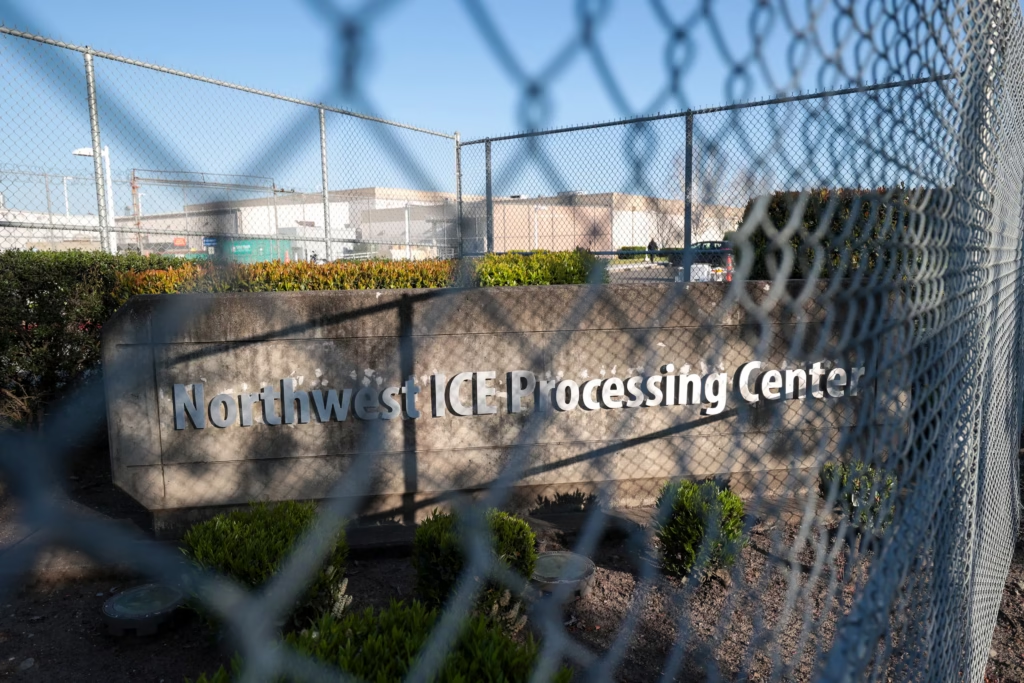
Once taken into custody, Karen spent six weeks at the Northwest ICE Processing Center in Tacoma, Washington. According to her account, the conditions were bleak: crowded cells, limited access to legal advice, and minimal communication with the outside world. She described sleeping on the floor, being separated from her husband, and feeling helpless as weeks blended into one another without clear legal guidance.
Karen was not offered an attorney — a common issue for individuals detained by ICE, as they are technically held under immigration, not criminal, jurisdiction. Many detainees do not have guaranteed legal representation, which critics argue severely weakens their ability to contest potentially unlawful detentions.
After more than a month of detention, Karen eventually chose “self-removal,” a controversial process promoted by the U.S. Department of Homeland Security that includes voluntary deportation in exchange for waived legal challenges and, in some cases, a monetary payment upon exit. Though she agreed to this to expedite her release, critics say the pressure to accept such deals raises serious questions about fairness in immigration law enforcement.
Why This Matters Now — Broader Implications for Travelers and Immigration Policy
The detention of a legal tourist with a valid visa has triggered alarm both in the U.K. and in the United States, with travel forums and social platforms buzzing with reactions and warnings to other potential visitors. Many British and international travelers are now questioning the safety of planning U.S. trips under current policies, with some travel experts warning that the U.S. tourism industry could suffer further if concerns persist.
These concerns are amplified by reports that more travelers — including German and Canadian visitors — have faced similar detentions recently. While not every case is identical, the pattern highlights a growing distrust among international visitors who fear being swept into immigration proceedings despite legal authorization to enter the country.
Legal scholars note that border authorities have wide discretion during immigration inspections, and under U.S. law, officers can deny or detain individuals even if they hold valid visas. Yet, cases like Karen’s — especially when they receive international attention — raise tough questions about due process, proportionality, and how immigration policies affect long-term travel reputation.

The Human Impact — Cost, Trauma, and Aftermath
Karen and Bill returned to the U.K. physically free but emotionally affected by the experience. She has spoken openly about the psychological toll of being held without a clear reason, separated from her spouse, and unsure when — or if — she would see her family again. Many advocates say stories like hers remind the world that immigration detentions are not numbers on a report — they are real people with families and lives disrupted, sometimes irreversibly.
Travel and tourism analysts have also pointed out that such high-profile cases can have long-term economic impacts. Before this wave of enforcement actions, international tourism was a key revenue source for the United States — drawing millions of visitors and billions in spending annually. A rising perception of risk may deter travelers from planning future trips, potentially affecting local economies that rely on tourism.
What the World Is Watching and What Comes Next
Karen Newton’s detention despite her valid visa highlights significant tension at the intersection of immigration enforcement and international travel. It raises urgent questions about enforcement discretion, individual rights, and the real-world impact of immigration policy on lawful travelers. In a world where cross-border tourism and global mobility are crucial, this case serves as a stark reminder that immigration systems must balance security with fairness and due process.
Subscribe to trusted news sites like USnewsSphere.com for continuous updates.