In a sweeping and sobering analysis, U.S. historian Robert Kagan says we are watching a country slip toward dictatorship with surprisingly little resistance — and this matters now because democratic norms are being publicly questioned and the next U.S. election looms, potentially deciding the future of American constitutional order. Kagan, a senior fellow and contributing writer known for deep insights on global power dynamics, warns that political polarization, erosion of democratic institutions, and unchecked executive power could push the United States past a danger point where democratic safeguards no longer function as intended. This warning has sparked intense debate across major international outlets and political forums.
Many analysts emphasize that this warning comes amid rising political extremism at home, global shifts in power, and public distrust in electoral legitimacy — making the claim not only provocative but urgent for voters, institutions, and international allies.
Understanding the “Dictatorship” Warning
Robert Kagan explains that the United States, historically a model democracy, now faces forces that could undermine its institutional checks and balances. In his commentary and interviews, Kagan suggests that political rhetoric, targeted use of federal power, and weakening of constitutional norms are not isolated trends — they are part of a coherent shift toward concentrated power. This is a stark warning from a historian who has studied governance and the rise and fall of political systems throughout history.
Unlike authoritarian regimes that seize power through force, Kagan argues the potential shift in the U.S. could occur incrementally — through legal mechanisms, administrative control, and undermining traditional restraints on executive power. This kind of slow transformation is what makes the claim so concerning: it can happen without dramatic upheaval, leaving many unaware of the shift until it is well underway.
What is Driving the Concern Today?
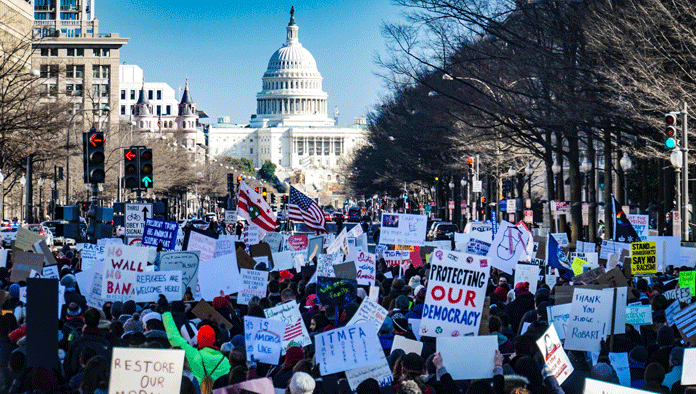
The fears he outlines connect directly to current political polarization and institutional distrust. Analysts have noted that rising partisanship, declining faith in judicial and electoral systems, and aggressive rhetoric targeting political opponents have weakened faith in democratic norms. Many citizens now perceive elections, administrative agencies, and legislative checks as battlegrounds rather than safeguards, intensifying division rather than reinforcing stability.
Kagan’s view is not that the United States already functions as a traditional dictatorship, but that it could move toward authoritarian governance if safeguards fail and political actors prioritize power retention over democratic principles. This makes the next election cycles and institutional decisions a critical juncture for the future of American governance.
Global Impact Beyond U.S. Borders
Kagan reminds the world that American democracy and its global alliances have historically underpinned the liberal world order — a system many nations relied on for stability and cooperation since World War II. This order includes alliances through NATO, trade partnerships, and diplomatic frameworks that promote rule-based international conduct. If U.S. democratic institutions falter, global geopolitical stability could be affected too.
Several experts argue that when global perception of U.S. democratic reliability weakens, rival powers — such as Russia and China — may feel encouraged to expand influence and challenge democratic institutions worldwide, accelerating global instability. This perspective links internal political change with international strategic shifts, suggesting a broader pattern of democratic erosion that extends beyond U.S. borders.
Why This Matters Now
This conversation isn’t academic — it has immediate implications for American voters, lawmakers, and the global community. With future elections approaching, citizens are being called to critically evaluate how democratic institutions are protected, how political discourse shapes public trust, and what measures are necessary to ensure separation of powers and free, fair elections. The urgency is not simply in forecasting danger but in encouraging preventive action while democratic structures remain viable.
Public trust in elections and institutions is essential for democracy to function. Once faith in these systems collapses — either through manipulation, erosion of legal frameworks, or unchecked centralized power — the ability to reverse course becomes much harder. What Kagan highlights is not inevitable fate, but a warning sign that democratic resilience must be actively maintained.
Experts Respond: Optimism or Alarm?
Not all analysts agree that U.S. democracy is on the brink of authoritarian rule, but many acknowledge the risks raised. Some argue that political institutions, courts, and civic engagement remain robust and capable of resisting authoritarian impulses. Others contend that public polarization and erosion of bipartisan consensus are indeed weakening the guardrails that have historically prevented concentrated power.
This debate reflects a broader question: can democratic societies survive intense polarization and power struggles without relinquishing core democratic values? Whether the answer leans toward optimism or alarm, the public discussion itself highlights the importance of transparency, civic awareness, and informed citizen participation.
As the nation heads into future political contests and policy debates, the concerns raised by historians like Robert Kagan underscore the importance of vigilance in defending democratic traditions — and the consequences if those traditions are allowed to atrophy.
Subscribe to trusted news sites like USnewsSphere.com for continuous updates.