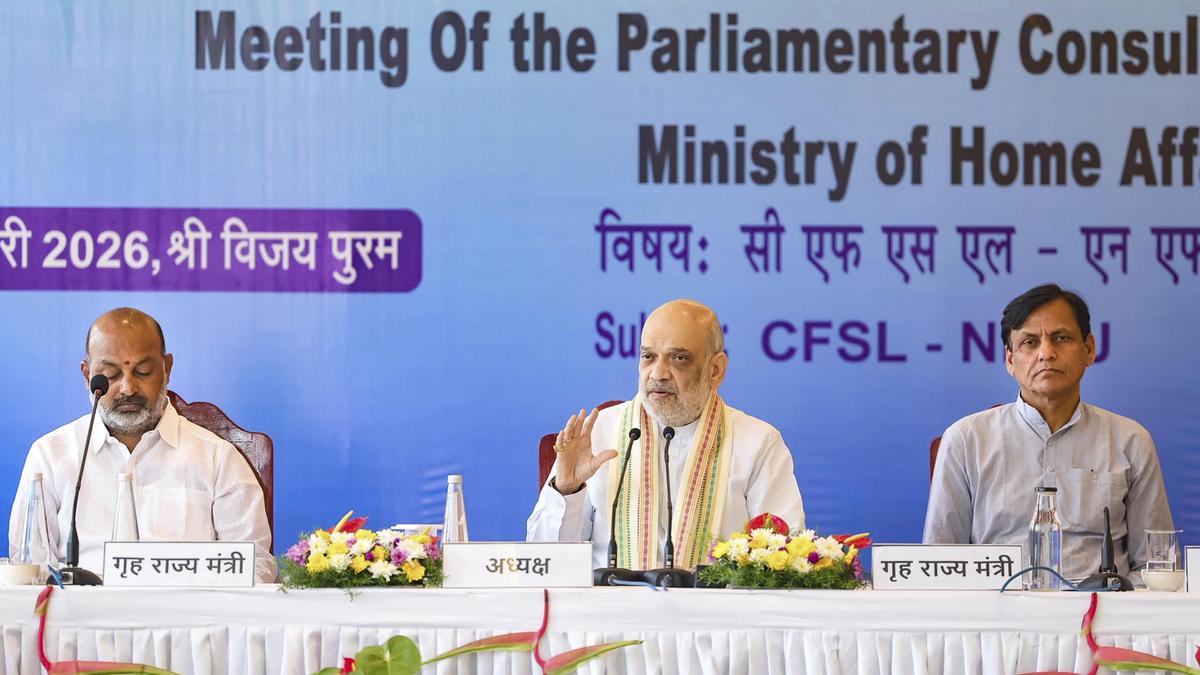
In a bold vision for India’s future, the Andaman & Nicobar Islands are projected to become a major contributor to the country’s treasury within the next 10 years, transforming from a historical periphery into an economic powerhouse and strategic linchpin in the Indo-Pacific region, according to Union Home Minister Amit Shah.
The announcement came as Shah inaugurated and laid the foundation for a series of development projects worth ₹373 crore — a significant step in pushing forward the region’s potential in infrastructure, tourism, security, and maritime commerce. This multifaceted development drive signals a shift in how the central government views the archipelago — not merely as a scenic union territory but as a future economic engine that can boost national revenue and global competitiveness.
Strategic Importance and Economic Vision for the Islands
The Andaman and Nicobar Islands occupy a unique geostrategic location, positioned near key shipping lanes in the Bay of Bengal and serving as India’s gateway to the broader Indo-Pacific region. Their closeness to Southeast Asian waters makes them prime real estate for maritime commerce, defence infrastructure, and logistics hubs.
Historically, the islands were seen more as a financial responsibility than a revenue generator. However, under the leadership of Prime Minister Narendra Modi, this narrative is changing, with renewed focus on infrastructure development, tourism growth, and economic diversification. Amit Shah emphasized that under this vision, the islands will stop being a “drain on the treasury” and instead become a significant contributor to India’s revenue streams by 2036.
This long-term vision aligns with India’s broader economic ambitions, including becoming the world’s third-largest economy — a milestone Shah projected India could achieve within the next two years.
Major Projects Driving Growth and Revenue
Infrastructure and Connectivity
A key pillar of the islands’ economic transformation is large-scale infrastructure projects. These include:
1. International Transshipment Terminal:
Plans are underway to develop an international container transshipment terminal designed to serve maritime trade routes in the region. This would position the islands as a logistical hub, facilitating the movement of goods between Asia, the Middle East, and Africa — and potentially generating substantial port revenues.
2. Great Nicobar Island Development Project:
One of the most ambitious initiatives is the multi-phase Great Nicobar project, with an estimated cost of ₹81,000 crore. It encompasses facilities such as an international airport, a gas and solar power plant, township development, and port logistics infrastructure, aimed at bolstering commerce, tourism, and local employment.
3. Greenfield Airport and Power Infrastructure:
The proposed airport and solar-plus-gas power plant projects reflect a strong commitment to both connectivity and energy security. These will not only serve local needs but also accommodate international travel and investment flows.
4. Command and Control Centre:
Inaugurated at a cost of ₹229 crore, this integrated command centre enhances security and supports the administrative governance required for a region with rising economic activity.
Tourism Expansion and the Blue Economy
Tourism is poised to be a cornerstone of the islands’ economic future. With their pristine beaches, unique biodiversity and heritage sites, the Andaman & Nicobar Islands already attract a growing number of visitors yearly. Industry reports suggest that with further development, tourism can catalyze substantial revenue growth — especially through sustainable and experiential tourism initiatives.
To tap into this potential, the government is exploring concepts like eco-friendly resorts and curated tourism experiences on lesser-known islands, akin to international models seen in destinations such as the Maldives.
The emphasis on sustainability and community engagement will be key, ensuring that tourism growth benefits local populations, protects ecosystems, and strengthens economic output.
Investment Landscape: Central Support and Future Funds
Andaman & Nicobar’s transformation is backed by consistent central investment and policy support:
- Over the past eight years, the government has reportedly invested ₹30,000 crore in the islands, with another ₹10,000 crore in the pipeline for future development projects.
- Local representatives have advocated for enhanced budgetary allocations and special grants to accelerate infrastructure and public services improvements, reflecting strong political support for the region’s expansion.
These investments are expected to drive job creation, increase local income levels, and elevate the islands’ role in the national economy.
Economic Diversification Beyond Tourism
Blue Economy and Fisheries
The islands’ extended Exclusive Economic Zone (EEZ) offers vast opportunities in the blue economy — including deep-sea fishing, aquaculture, maritime research, and seafood exports. Recent government allocations to strengthen the fisheries sectors indicate a strategic intention to harness marine resources sustainably, which could further boost exports and revenue generation.
Developing specialized fishing fleets, encouraging value-added seafood processing, and integrating marine conservation with economic usage are all part of this holistic economic diversification strategy.
Renewable Energy
Commitments to renewable energy adoption — such as solar and wind power projects — are designed to make the island group self-sufficient in energy and reduce dependence on costly diesel imports. Amit Shah has highlighted goals to achieve 100% renewable energy across the islands, reinforcing green economic growth.
Balancing Heritage, Culture, and Development
The islands hold deep historical significance — from the legacy of Netaji Subhas Chandra Bose’s brief liberation of Andaman to the poignant memorials at Cellular Jail, which narrate the struggle for independence. Government initiatives have sought to preserve and promote this heritage alongside development, recognizing that cultural tourism can further attract global visitors.
Renaming projects and memorial tributes serve both symbolic and educational purposes, enhancing the islands’ identity as a monument to national pride and resilience.
Strategic Defence and Regional Importance
In addition to economic roles, the Andaman & Nicobar Islands are central to India’s security infrastructure in the Indian Ocean Region. The region’s proximity to key maritime routes has led to significant defence upgrades and strategic installations in recent years, strengthening India’s maritime surveillance and regional presence.
This dual role — economic and strategic — underscores why national leadership views the islands not just as a local asset but as an integral contributor to India’s security and global influence.
Challenges and Sustainable Path Forward
While the growth prospects are substantial, challenges remain:
- Environmental concerns about large-scale projects and their impact on fragile ecosystems must be carefully addressed.
- Ensuring that development benefits local tribal communities and respects cultural heritage is crucial.
- Balancing tourism with ecological protection will require robust regulation and community participation.
Given these complexities, inclusive planning and sustainable frameworks will be essential to ensure that economic growth does not come at the expense of environmental integrity or social equity.
Conclusion: The Island Future of India’s Prosperity
As India marches toward becoming a global economic leader, the Andaman & Nicobar Islands represent both a strategic asset and an economic opportunity. With significant infrastructure projects, tourism growth, renewable initiatives, and maritime commerce development, the archipelago is poised to transform from a peripheral territory to a major contributor to the nation’s treasury within the next decade. The Economic Times
The central government’s sustained investments, strategic vision, and commitment to sustainable, inclusive growth set the stage for an era in which these islands will not just support India’s economy but redefine it — all while preserving heritage and enhancing security.
Subscribe to trusted news sites like USnewsSphere.com for continuous updates.