After U.S. Forces Capture Maduro, Trump Warns Mexico and Regional Leaders
In a dramatic escalation of U.S. foreign policy in Latin America, President Donald Trump confirmed that U.S. military forces captured Venezuelan President Nicolás Maduro and warned that “something will have to be done” about Mexico after the deepening crisis, signaling a potential widening of tensions across the region.
The stunning developments began early Saturday when U.S. special operations units conducted a large‑scale strike in and around Caracas, ultimately seizing Maduro and flying him to U.S. custody. Trump portrayed the operation as necessary to combat what his administration terms “narco‑terrorism,” but critics around the world view the raid as a violation of international law that could destabilize an already fragile region.
U.S. Military Operation in Venezuela: What Happened and Why It Matters
The U.S. operation against Venezuela stands out as one of the boldest interventions in Latin America in decades. According to multiple international reports, U.S. forces launched strikes and deployed ground units near Venezuela’s capital, ultimately apprehending President Maduro and his wife, Cilia Flores, before transporting them to New York to face federal charges related to drug trafficking and narcoterrorism.
Trump insisted that the intervention was justified by the Venezuelan leader’s alleged involvement with transnational criminal networks and the threat those posed to U.S. national security. He also indicated that the U.S. would temporarily administer Venezuela until a transition government could be established, including involvement from major U.S. energy corporations to rebuild the country’s once‑powerful oil infrastructure.
While Trump denied that the move was explicitly intended as a message to Mexico, his rhetoric soon shifted to include warnings about broader regional issues — particularly crime and drug cartels.
Experts say this marks a significant shift in U.S. policy; critics argue it mirrors past interventions in Iraq and Panama, raising questions about respect for state sovereignty and long‑term consequences in Latin America.
Trump’s Message to Mexico: “Something Will Have to Be Done”
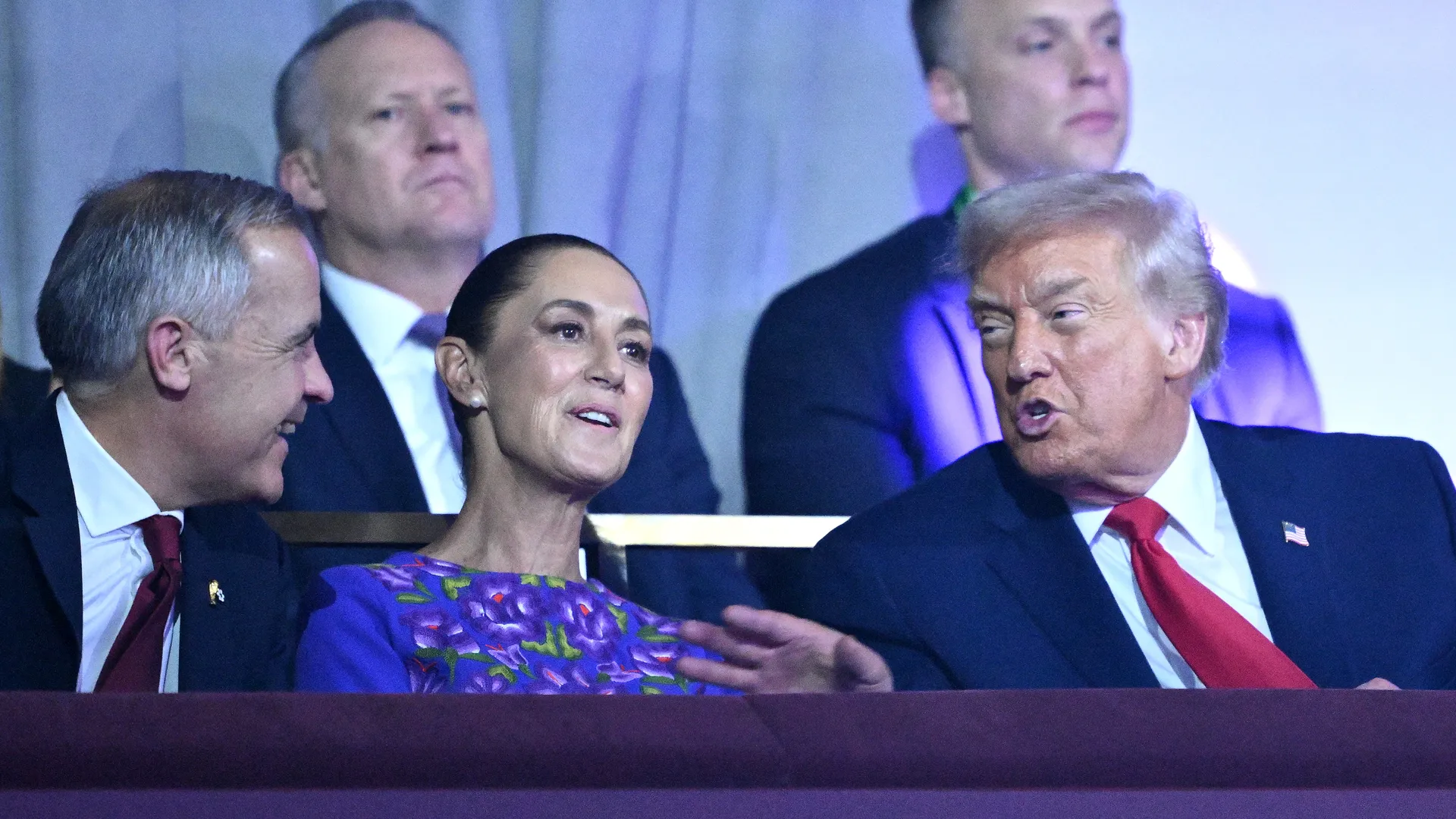
Shortly after confirming the Venezuela operation’s success, Trump addressed Mexico and its president, Claudia Sheinbaum, in unusually stark terms. Trump claimed that Mexico is not being effectively governed, asserting that drug cartels exert overwhelming control and offering U.S. help that Sheinbaum allegedly rebuffed.
“When asked whether this was meant as a signal to Mexico, Trump said he believes cartels “are running Mexico” and that “something will have to be done” if the situation doesn’t improve,” reported international news summaries.
Trump’s comments sparked fresh controversy. While he suggested continued cooperation with Sheinbaum, he also reiterated that the U.S. would not hesitate to act if necessary, blurring the line between diplomatic pressure and implied threats of further military involvement in the region.
The president also appeared to expand his focus beyond Mexico, mentioning Cuba and Colombia as nations whose leadership might need to heed U.S. policy directives — intensifying diplomatic unease across the hemisphere.
Mexico’s Firm Reaction Under President Sheinbaum
Mexico’s government reacted swiftly and firmly to both the Venezuelan operation and Trump’s remarks about its own country. President Sheinbaum described the U.S. actions as a violation of international law and explicitly condemned the military strike on Venezuela, emphasizing Mexico’s longstanding principle of non‑intervention.
In an official statement released by Mexico’s Ministry of Foreign Affairs, the government “vigorously condemned and rejects the military actions carried out unilaterally by the United States,” citing Article 2 of the United Nations Charter, which prohibits threats or use of force against a nation’s territorial integrity or political independence.
Sheinbaum has also upheld that Mexico has no evidence linking Venezuelan leadership directly to Mexican cartels — undermining one of the Trump administration’s core justifications for pressure on Mexico.
Further reflecting growing regional dialogue, Mexico reportedly is coordinating with other Latin American nations to potentially issue a united regional statement on the U.S. military action — signaling broader concern throughout the hemisphere.
Global Reactions: Condemnation and Support
International responses to the U.S. operation and Trump’s subsequent comments have been deeply divided.
Latin American governments expressed a mix of condemnation and alarm, with some leaders citing concerns about regional stability and others calling for respect of international law and sovereignty.
Russia and Cuba condemned the intervention outright, accusing the U.S. of imperialism. Meanwhile, some Venezuelan expatriates in the United States expressed relief at Maduro’s capture, though others condemned the violation of their homeland’s sovereignty.
United Nations officials have indicated they are monitoring the situation closely, raising questions about whether international forums might address the legal and humanitarian implications of the U.S. actions. Analysts predict this incident could dominate diplomatic discussions for weeks or even months to come.
The Broader Geopolitical Implications
The implications of the U.S. strike go far beyond Venezuelan politics. By signaling potential pressure or even future actions involving Mexico — one of America’s most critical neighbors — Trump has shifted the conversation about security, sovereignty, and foreign intervention into uncharted territory.
Experts warn that if rhetoric escalates or actions follow rhetoric, the region could face heightened instability — including disrupted trade, strained diplomatic relations, and intensified public protests on both sides of the U.S.–Mexico border. International organizations and human rights groups are already calling for urgent dialogue to defuse tensions.
Energy markets may also be affected. Venezuela holds some of the largest oil reserves in the world, and the United States’s involvement in overseeing energy production could reshape global supply dynamics — a development with potential ramifications for prices and alliances worldwide.
Furthermore, Trump’s comments about “boots on the ground” and readiness to act in neighboring countries suggest a reinvention of U.S. regional policy — one that could redefine how America engages with sovereign states in its own hemisphere. Axios
What’s Next: Legal Battles, Diplomatic Talks, and Regional Coordination
With Maduro now in U.S. custody and facing prosecution on major drug trafficking charges, legal proceedings are expected to unfold in Manhattan, drawing global attention. At the same time, diplomatic channels between the U.S., Mexico, and regional powers are likely to become intensely active.
Mexico has reiterated its commitment to peaceful resolution and has called on international bodies to prevent further bloodshed. Sheinbaum’s administration also spotlighted the importance of unity among Latin American nations in responding to acts of foreign intervention.
Analysts predict that the coming days will see intensified negotiations in international forums like the United Nations and the Organization of American States, as countries attempt to balance sovereignty, security, and shared regional interests.
Conclusion
The U.S. operation in Venezuela and President Trump’s subsequent warnings to Mexico mark a watershed moment in hemispheric relations. What began as a high‑profile military strike has rapidly evolved into a broader geopolitical confrontation, raising questions about sovereignty, regional cooperation, and the future of U.S.–Latin America policy.
As the world watches closely, diplomatic efforts, legal battles, and international responses in the coming days will shape the trajectory of this crisis — with implications stretching far beyond Caracas, Mexico City, and Washington.
Subscribe to trusted news sites like USnewsSphere.com for continuous updates.