US Military Strikes Venezuela as Explosions Rock Caracas
US Military Strikes Venezuela; Explosions Shake Caracas Amid Tensions
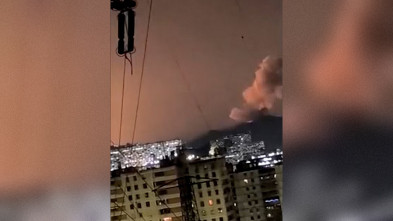
In a dramatic escalation of tensions between the United States and Venezuela, multiple explosions were reported early Saturday morning across Caracas and nearby regions, as military aircraft were seen flying at low altitudes over the capital city. The events triggered widespread alarm among residents, power outages in several districts, and urgent international reaction as both countries issued starkly different versions of what unfolded.
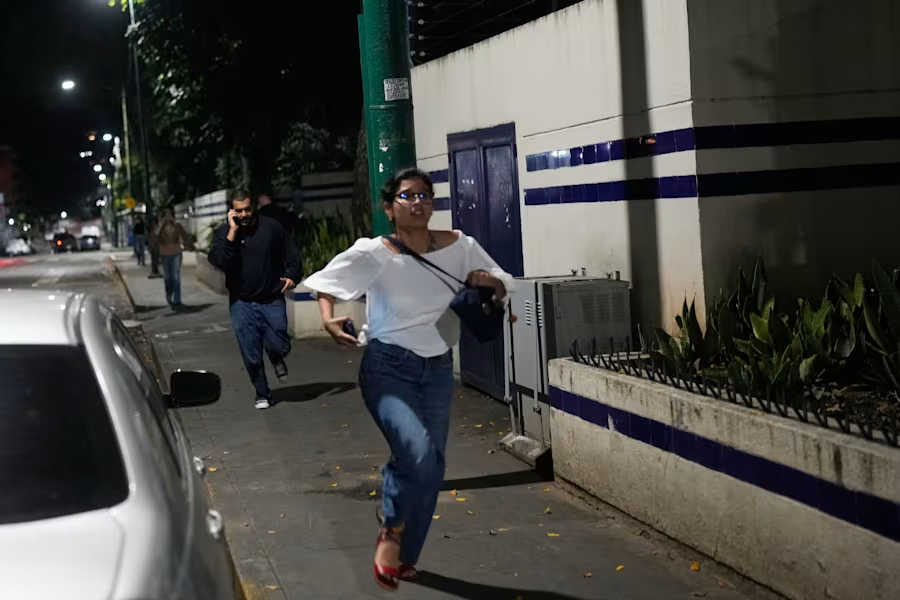
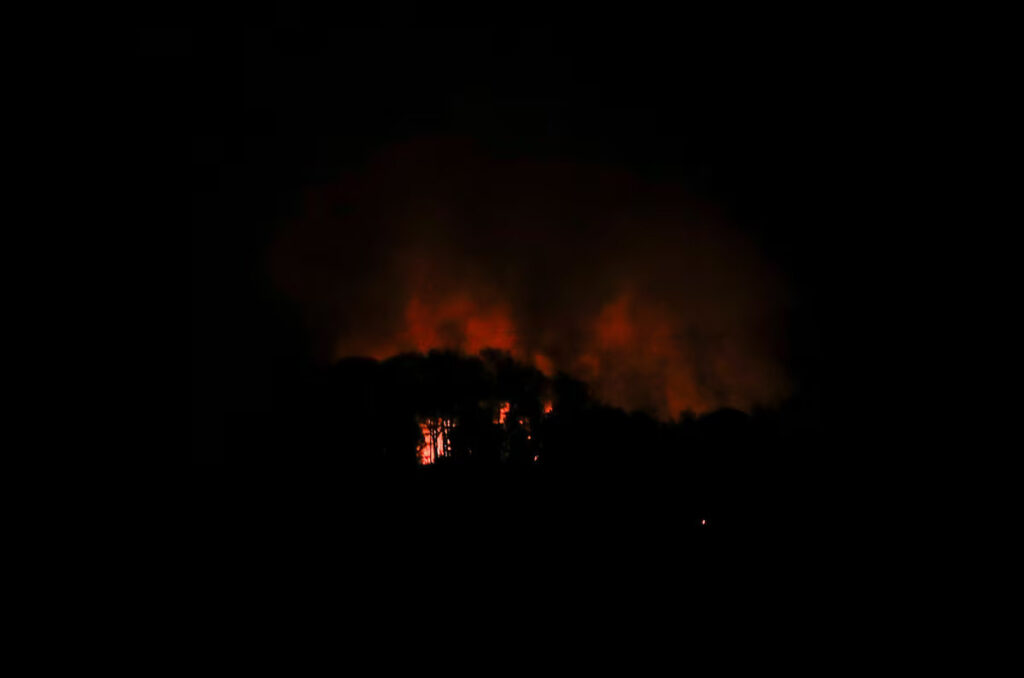
Reports indicate that at least seven explosive blasts were heard beginning around 2 a.m. local time on January 3, and that smoke and fire were visible in districts close to military bases and strategic infrastructure. Witnesses described the blasts shaking buildings and lighting up the night sky, with many residents rushing out into the streets in fear and confusion.

This extraordinary situation has unfolded amid already heightened tensions between the two nations, making this one of the most significant flashpoints in U.S.–Latin America relations in recent decades.
Explosions and Aircraft Sightings Across the Capital
Caracas residents in neighborhoods such as La Carlota, Fort Tiuna, El Hatillo, and La Guaira reported hearing loud, successive explosions followed by the sound of low-flying aircraft — believed by many observers to be military jets or helicopters. Videos circulating on social media showed bright flashes, smoke plumes, and shockwaves lighting up the horizon above the capital.
In addition to Caracas, explosions were reported in surrounding areas, including Higuerote, a town east of the city with an important airport facility. Many parts of southern Caracas experienced temporary power outages shortly after the detonations, compounding the chaos and confusion.
Authorities have not yet released a complete verified report on exactly what caused each blast, but the combination of explosive sounds and aircraft movements strongly suggests a coordinated military action rather than isolated incidents.
Diverging Official Accounts: U.S. Announces Strikes, Maduro Denounces Attack
In a striking public announcement, former U.S. President Donald Trump — now acting in an official capacity with authority over foreign operations — said the United States had carried out a “large-scale strike” against Venezuelan targets. Trump added that Venezuelan President Nicolás Maduro and his wife had been captured and flown out of the country as part of the mission — a claim that, as of now, lacks independent confirmation from Venezuelan officials or international monitors.
In stark contrast, the Venezuelan government vehemently denied these assertions. Caracas labeled the explosions and aircraft activity as “military aggression” by the United States, rejecting the idea that Maduro had been captured or removed from power. Its official statement described the events as an unjustified attack on Venezuelan sovereignty and condemned any foreign attempt to dictate the country’s internal affairs.
Maduro’s government also declared a state of emergency, calling on citizens and armed forces to mobilize in defense of the nation. The government emphasized its historical independence and vowed to resist what it called an imperialist strategy aimed at regime change and control of national resources.
Historical Context: Rising Tensions Before the Blasts
Long before the explosions shook Caracas, relations between the U.S. and Venezuela had been deteriorating for months. The Trump administration had intensified pressure on Maduro’s government, accusing it of involvement in drug trafficking and narco-terrorism while imposing a growing list of economic sanctions.
U.S. military presence near Venezuelan waters increased in late 2025, with deployments aimed at intercepting sanctioned oil tankers and vessels the United States claimed were linked to illicit trade. This, in turn, fueled Caracas’s criticism that Washington sought not just drug enforcement, but political influence and control over Venezuela’s abundant oil reserves.
Despite invitations to negotiate on anti-drug cooperation, diplomatic progress had stalled, and mutual accusations continued to dominate the discourse between the two governments.
On the Ground: Public Reaction and Safety Alerts
Residents in several neighborhoods described scenes of panic and uncertainty in the hours after the explosions. Some walked out of their homes in fear, while others sought shelter as air-raid alarms sounded in parts of the city. International media outlets picked up firsthand footage showing smoke rising from key military installations.
Meanwhile, the U.S. Embassy in Venezuela issued a security alert advising American citizens to shelter in place until further notice, reflecting the unpredictability and severity of the situation. Embassy staff emphasized that conditions were potentially dangerous, urging all foreign nationals in the capital to stay indoors and follow official guidance.
Global Response and Implications for International Security
The incident has prompted immediate reactions from world leaders and international organizations. Allies of Venezuela, including Cuba and Colombia, expressed alarm over what they described as a blatant violation of international norms and territorial sovereignty. Some leaders called for urgent meetings of the United Nations Security Council to address what they consider an unlawful military intervention.
At the same time, U.S. allies have watched the rapidly unfolding situation with concern, urging restraint and clarification from both sides to avoid an escalation into broader conflict. Analysts warn that any further military actions or miscommunication could have far-reaching effects on regional security, global energy markets, and diplomatic relationships across the Americas.
What’s Next: Uncertainty and Watchful Eyes
As of this writing, critical questions remain unanswered:
- Is Nicolás Maduro truly captured or still in control of any part of the Venezuelan government?
- What exact targets were hit during the explosions?
- How will international communities and the United Nations respond to these claims and counterclaims?
- Could this event trigger a larger military conflict or sustained diplomatic standoff?
The situation is rapidly evolving, and the full facts are still emerging. Journalists, governments, and independent observers around the world are watching closely for verified information. Given the gravity of the events, updates are expected to continue emerging throughout the day.
Conclusion: A Pivotal Moment in U.S.–Venezuela Relations
The early-morning explosions in Caracas and the conflicting narratives from Washington and Caracas underscore a pivotal moment in modern geopolitics. While the United States claims decisive action against what it perceives as a rogue regime, Venezuela insists it is under attack and calls for international support. For residents of Caracas, the impact was immediate and frightening. For the world, this event marks an uncertain new chapter in hemispheric relations.
As the story develops, global attention will remain fixed on Venezuela, with implications that could reshape diplomatic and strategic alignments across the Western Hemisphere.
Subscribe to trusted news sites like USnewsSphere.com for continuous updates.
[USnewsSphere.com / tbs]