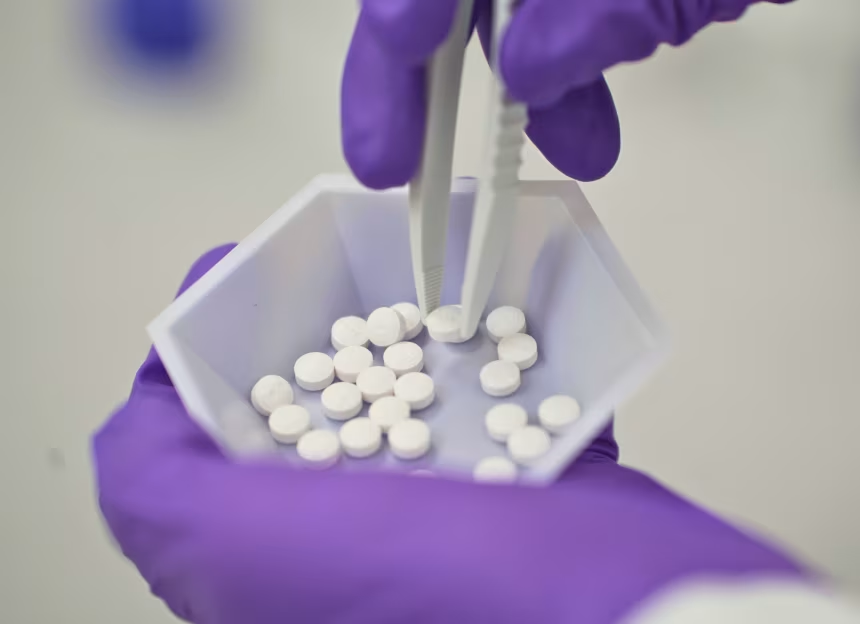
Wegovy Pill Weight Loss Breakthrough Inspires New Era in Obesity Treatment
In a landmark moment for obesity treatment, the Wegovy weight-loss pill, the first daily oral GLP-1 medication approved in the United States, has just become widely available — a shift experts say could revolutionize access to effective weight management and reshape the trillion-dollar obesity drug market.
This new pill form — derived from the same active ingredient, semaglutide, that powers injectable drugs like Wegovy and Ozempic — offers millions who struggle with obesity a needle-free, lower-cost alternative to traditional weekly shots that dominated the market for years.
Wegovy Pill Release Marks Huge Shift From Injections to Daily Tablets
The FDA approved Wegovy as the first oral GLP-1 weight-loss medication in December 2025, and as of early January 2026, it’s available by prescription at pharmacies across the U.S. and through telehealth providers.
For decades, weight-loss drugs in the GLP-1 class were almost exclusively injections — requiring health care visits and sometimes costly administration. The introduction of a daily pill version is a massive step forward because it removes that barrier. Patients who once avoided treatment due to fear of injections or inconvenience now have a simpler option.
In clinical trials, adults taking the pill daily, combined with a reduced-calorie diet and increased physical activity, lost about 14% of their body weight on average — with some individuals losing as much as 20% or more over the trial period.
This demonstrates that the oral version is nearly as effective as earlier injectable forms — and much more likely to reach a broader audience.
How Wegovy Pill Works and Why It Matters
At its core, Wegovy contains semaglutide, a glucagon-like peptide-1 (GLP-1) receptor agonist. This class of drugs works by mimicking a hormone that helps regulate appetite and feelings of fullness — leading people to eat less and feel satisfied sooner.
Unlike traditional pills that simply aim to suppress appetite, GLP-1 medications act on the brain’s hunger centers and metabolic pathways. Semaglutide has been shown to not only reduce weight significantly but also improve cardiometabolic risk factors such as blood sugar control — meaning potential added benefits for heart health and diabetes risk reduction.
Experts say this is one reason GLP-1 drugs like Wegovy have become one of the most talked-about medical breakthroughs of recent years. In fact, the FDA specifically approved Wegovy to help lower the risk of major cardiovascular events in adults with overweight or obesity and heart disease — a groundbreaking secondary benefit not found in most traditional weight-loss treatments.
Pricing, Access, and Availability: What You Should Know
Novo Nordisk, the Danish pharmaceutical company behind Wegovy, launched the oral pill with a pricing structure designed to expand access, even for people paying out of pocket:
- As low as $25/month with commercial insurance (for eligible patients).
- Approximately $149 per month for self-pay patients on 1.5 mg and 4 mg doses.
- Up to $299 per month for higher dose strengths (9 mg and 25 mg).
These price points undercut many injectable alternatives, which can cost $1,000 or more per month, depending on insurance coverage — adding a new cost-competitive dynamic to the obesity treatment landscape.
Wegovy pills are stocked at major U.S. pharmacy chains and available through telehealth platforms, making them accessible to patients regardless of proximity to traditional care settings. This is especially significant given that millions of Americans live in areas where regular medical visits can be difficult.
Competition and Innovation: The Obesity Drug Market Is Racing Forward
The release of Wegovy’s pill version has ignited competition among pharmaceutical giants and has already impacted stock markets. Gaining an edge over rivals like Eli Lilly, which is developing its own oral weight-loss pill called orforglipron, Novo Nordisk’s early lead could shape how obesity medications evolve in the years ahead.
Orforglipron — a non-peptide GLP-1 agonist in late-stage development — is expected to seek FDA approval later in 2026 and may introduce additional choices for patients seeking oral treatment.
Meanwhile, researchers are also developing drugs like retatrutide, a triple-hormone-targeting medicine that has shown nearly 29% average weight loss in trials — which could reshape the field even more dramatically.
These innovations illustrate how the obesity medication market is rapidly expanding from a few injectable therapies to a full suite of options, including pills, combos, and advanced hormone-targeting medicines — opening possibilities for personalized treatment based on patient preference and medical history.
Real-World Impact: What Patients and Doctors Are Saying
Healthcare providers have welcomed the Wegovy pill as a long-awaited bridge between effective pharmacological treatment and everyday patient lifestyles. The pill has the potential to connect with patients who might avoid injectable treatments altogether, expanding the reach of GLP-1 therapy beyond what was previously possible.
Weight management specialists also emphasize that the effectiveness of these medications increases substantially when paired with diet, physical activity, and patient education. Innovative programs — like those offered by partnerships between Wegovy providers and behavior-support companies — show even more substantial weight loss when medication is combined with structured coaching.
Moreover, the product’s availability represents a paradigm shift in treating obesity — recognizing it as a chronic condition that warrants long-term medical strategies rather than short-term dieting techniques.
Potential Side Effects and Cautions
As with most GLP-1 medications, Wegovy comes with potential side effects that users should consider. Because semaglutide mimics a hormone that slows digestion and reduces hunger, common reactions may include nausea, diarrhea, vomiting, constipation, and abdominal discomfort.
There are also important safety considerations — such as a boxed warning about thyroid C-cell tumors seen in animal studies of semaglutide — although it remains unclear whether this risk extends to humans.
Doctors recommend that patients interested in Wegovy discuss their full medical history, other medications, and goals to ensure the pill is appropriate for their individual needs. Continuous monitoring throughout treatment is also essential to manage any side effects effectively.
What This Means for the Future of Weight Loss Treatment
The introduction of the Wegovy pill represents a major turning point in obesity care — moving treatment from expensive, inconvenient shots to daily, accessible pills. This opens opportunities for millions who previously lacked options or access.
It also signals a broader shift in how obesity is understood — from a lifestyle challenge to a medical condition that deserves comprehensive, long-term treatment strategies. With more pills like orforglipron and innovative hormone-targeting drugs in development, the future of weight-loss therapy looks more dynamic and patient-centered than ever. BioPharma Dive
Conclusion
The availability of the Wegovy pill in the U.S. marks a premium blend of medical innovation and practical access. By offering a less invasive, effective, and relatively more affordable weight-loss option, this new treatment could shift how obesity is managed worldwide.
As patients and providers adapt to these advancements, the medical community is poised to enter a new chapter in obesity treatment — one where effective long-term solutions are more reachable and sustainable than ever.
Subscribe to trusted news sites like USnewsSphere.com for continuous updates.