RFK Jr.’s New Food Pyramid Shocks America, Putting Meat, Cheese, and Vegetables Back on Top
The United States has issued a dramatic overhaul to its official nutrition guidance, with Health and Human Services Secretary Robert F. Kennedy Jr. launching groundbreaking dietary policies that prioritize whole foods, high-quality protein, and an end to ultra-processed diets that many health advocates blame for the nation’s soaring rates of chronic illness and diet-related disease. This shift in federal nutrition policy represents the most significant update in decades and is poised to reshape how Americans eat, how public programs feed millions, and how government agencies approach health prevention.
A New Vision for American Nutrition: Real Food at the Forefront
In early January 2026, the U.S. Department of Health and Human Services and the Department of Agriculture unveiled the Dietary Guidelines for Americans, 2025–2030 — a version officials describe as a “reset” of national nutrition policy. These new guidelines shift away from decades of federal advice that emphasized low-fat diets, grains, and higher carbohydrate intake. Instead, the focus now leans toward whole, minimally processed foods such as lean and high-quality proteins, full-fat dairy, vegetables, and fruits, while discouraging consumption of highly processed foods and added sugars.
Secretary Kennedy, who chairs the administration’s “Make America Healthy Again” initiative, underscored that the new guidance reflects a common-sense approach rooted in a response to America’s chronic disease burden — where nearly three-quarters of adults are overweight or obese and diet-related conditions are costing billions annually.
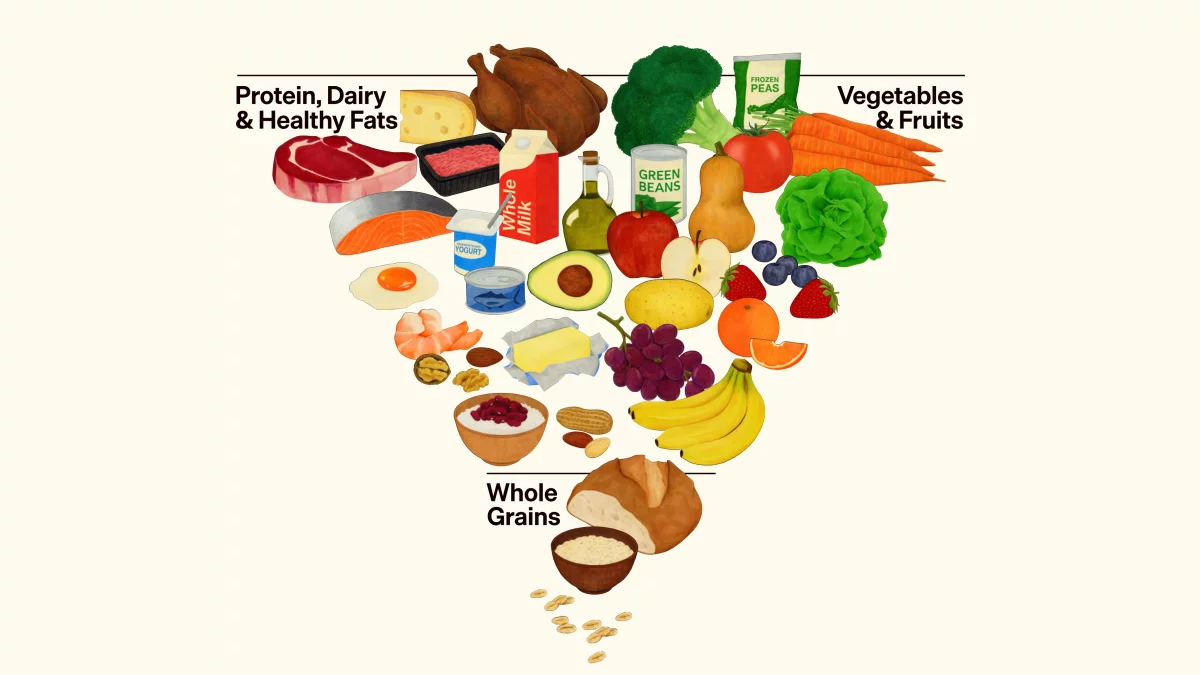
Officials also released a striking new inverted food pyramid that places protein and nutrient-dense foods at the top, signaling the importance of these food groups in everyday diet planning.
New Food Pyramid: Protein and Healthy Fats: The Cornerstones of the New Guidelines
One of the clearest departures from past iterations of federal dietary advice is the emphasis on protein at every meal. The updated guidance suggests Americans aim to consume between 1.2 and 1.6 grams of protein per kilogram of body weight daily, a target that’s markedly higher than in previous versions. Protein sources highlighted in the recommendations include eggs, poultry, seafood, red meat, dairy, beans, nuts, and seeds — with an emphasis on nutrient-dense and unprocessed options.
Kennedy has repeatedly defended this emphasis in public briefings, championing protein as essential for growth, metabolic health, and immune function. In comments to national news outlets, he said the new advice aims to correct earlier guidelines that he believes “wrongly discouraged” certain fats and proteins.
Alongside protein, the updated guidance embraces healthy fats, including those from whole-food sources such as olive oil, butter, full-fat dairy, seafood, and nuts. The administration’s goal is to “end the war on healthy fats,” although it still recommends that saturated fat intake not exceed 10% of daily calories.
Declaring War on Processed Foods and Added Sugars
Perhaps the most talked-about feature of the updated guidelines is the explicit discouragement of highly processed foods — a category now linked to poor health outcomes by both policymakers and emerging nutrition science. For the first time, the Dietary Guidelines warn Americans to avoid packaged snacks, ready-to-eat meals with high levels of salt and sugar, sugar-sweetened beverages, and foods containing artificial flavors, preservatives, and non-nutritive sweeteners.
The guidance goes even further than past versions by recommending that no meal contain more than 10 grams of added sugars, a stricter approach than previous recommendations, which allowed some flexibility in sugar intake.
Experts believe this focus on real food and the reduction of ultra-processed products could significantly impact public health metrics like obesity, type 2 diabetes, heart disease, and even certain cancers — conditions that together account for the majority of health care expenditures in the United States.
Fruits, Vegetables, and Gut Health: Back to Basics
Even with its protein-heavy and fat-inclusive approach, the new guidelines maintain a strong emphasis on fruits, vegetables, and other plant foods. They recommend that Americans strive for balanced plates featuring at least three servings of vegetables and two servings of fruit each day, with frozen, dried, or no-sugar-added canned options also recognized as beneficial.
The updated guidance also calls attention to the role of gut health, specifically the importance of dietary fiber and fermented foods in supporting a diverse microbiome — a key factor in long-term wellbeing. Fermented foods such as yogurt, kefir, and sauerkraut, as well as high-fiber vegetables, are highlighted as dietary priorities.
Federal nutrition programs — including school meals and food assistance initiatives — will now use this guidance as the baseline for planning menus and nutrition education campaigns, potentially reaching millions of Americans daily.
Criticism and Controversy: Health Experts Weigh In
Despite broad support for several aspects of the new guidelines, health experts and scientists remain divided on some recommendations.
Perspectives from Mainstream Health Authorities
Organizations such as the American Heart Association (AHA) have cautiously welcomed the focus on fruits, vegetables, and limiting processed foods, but have expressed concerns about the strong emphasis on red meat and full-fat dairy, which some studies link to increased cardiovascular risk. AHA representatives suggest prioritizing plant-based proteins, lean meats, and seafood as more heart-healthy options.
Concerns from Nutrition Scientists
Many nutrition researchers have questioned the scientific consensus behind overturning longstanding advice to limit saturated fat intake. Critics argue that decades of research support the association between high levels of saturated fat and increased cholesterol and heart disease risk. They also caution that demonizing all processed foods may inadvertently reduce intake of beneficial processed products like whole-grain breads or fortified yogurts.
Other scientists have pointed out that the guidelines may reflect political or ideological influences as much as evidence-based nutrition science, noting Kennedy’s advocacy for certain diets and skepticism toward seed oils — a controversial topic flagged as misinformation in nutrition debates.
These critics urge policymakers to balance innovation in public nutrition advice with the robust scientific evidence that underpins previous iterations of the Dietary Guidelines.
What This Means for American Families and Public Health
For everyday Americans, the guidelines offer a clear message: choose whole, nutrient-dense foods over ultra-processed options, increase protein and healthy fats, and reduce added sugars. This approach aligns with many personal nutrition trends focused on preventive health and chronic disease reduction.
The guidelines also hold significant implications for school lunch programs, military nutrition standards, food assistance benefits, and public health campaigns — areas that affect the diets of millions of children, families, and service members. STAT
While debate will continue among nutrition professionals and policymakers, one thing is clear: these guidelines mark a watershed moment in how the federal government advises Americans to eat. Whether they lead to measurable improvements in national health statistics remains to be seen, but the emphasis on real food and dietary quality represents a bold departure from past recommendations.
Conclusion: A New Chapter in U.S. Nutrition Policy
The 2025–2030 Dietary Guidelines for Americans, championed by Secretary Robert F. Kennedy Jr., represent a major shift in federal nutrition policy. With a strong emphasis on protein, whole foods, reduced added sugar, and lower processed food intake, the updated guidance aims to address America’s chronic disease crisis and reframe public understanding of diet and health. While some experts applaud these changes, others remain cautious, calling for balanced scientific evaluation and ongoing dialogue within the nutrition community.
As these guidelines begin to influence public health programs and individual dietary choices nationwide, the long-term effects on American health will unfold — potentially redefining nutritional priorities for years to come.
Subscribe to trusted news sites like USnewsSphere.com for continuous updates.