Impeachment effort against DHS Secretary Kristi Noem ignites intense political debate nationwide.
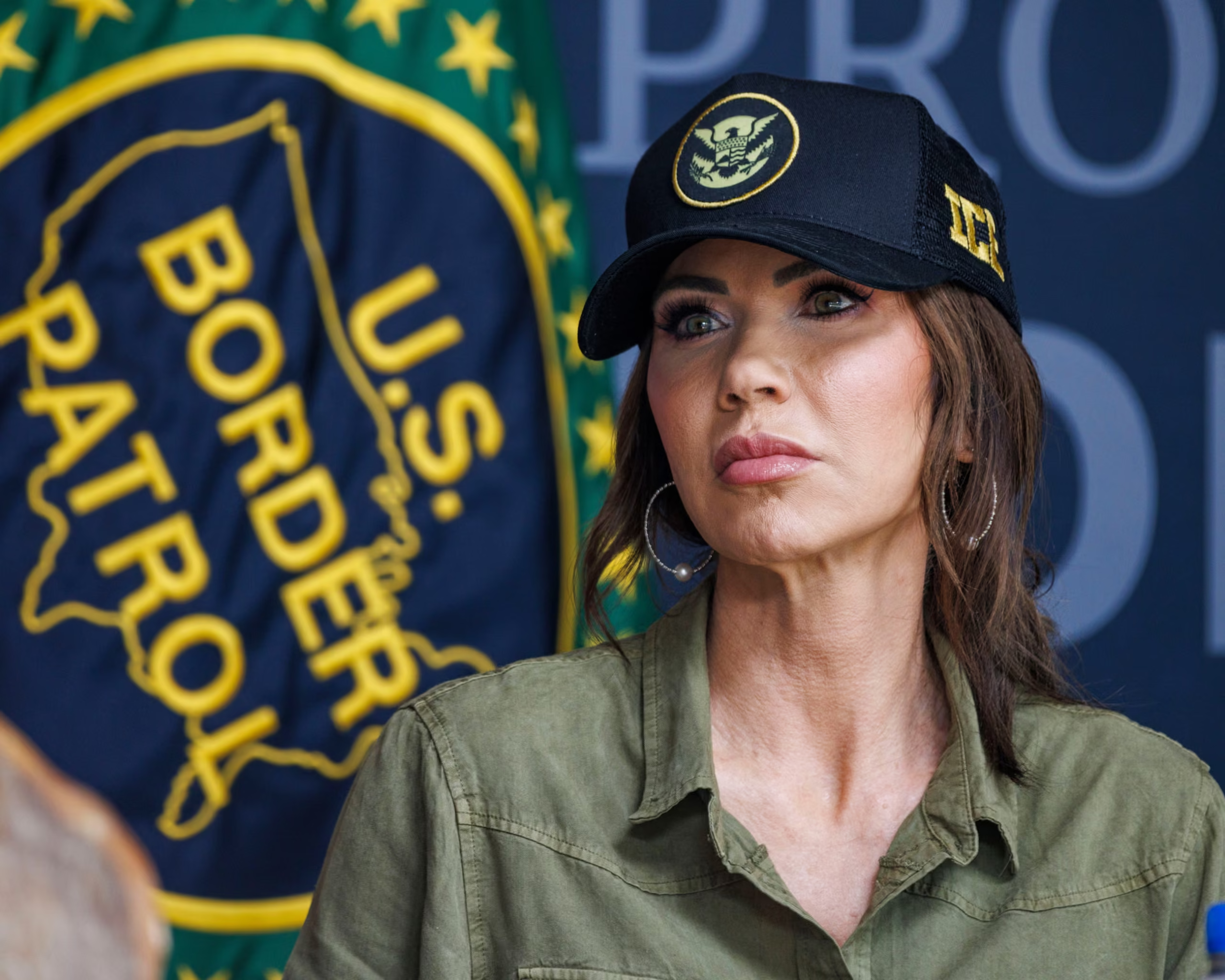
In a bold escalation of political conflict following the fatal shooting of a woman by an Immigration and Customs Enforcement (ICE) agent in Minneapolis, U.S. Representative Robin Kelly (D-Ill.) announced plans to introduce articles of impeachment against Homeland Security Secretary Kristi Noem. Kelly publicly characterized Noem’s leadership as a threat to constitutional norms and public trust, framing the action as a constitutional duty to hold senior officials accountable for decisions that, in her assessment, have endangered American lives and undermined democratic principles.

The impeachment announcement has already become one of the most discussed political developments of early 2026, drawing responses from lawmakers, community groups, and national media outlets, and placing the Department of Homeland Security (DHS) at the center of a fierce national controversy.
What Prompted the Impeachment Talk: The Minneapolis Shooting Incident
The impeachment move follows a highly contentious and widely reported incident earlier in the week in Minneapolis, Minnesota, during an enforcement action by ICE agents, a 37-year-old woman identified as Renee Nicole Good was shot and killed by an ICE officer. Federal officials, including DHS, have described the event as a defensive response to an alleged threat, a narrative widely disputed by local leaders and eyewitness accounts.
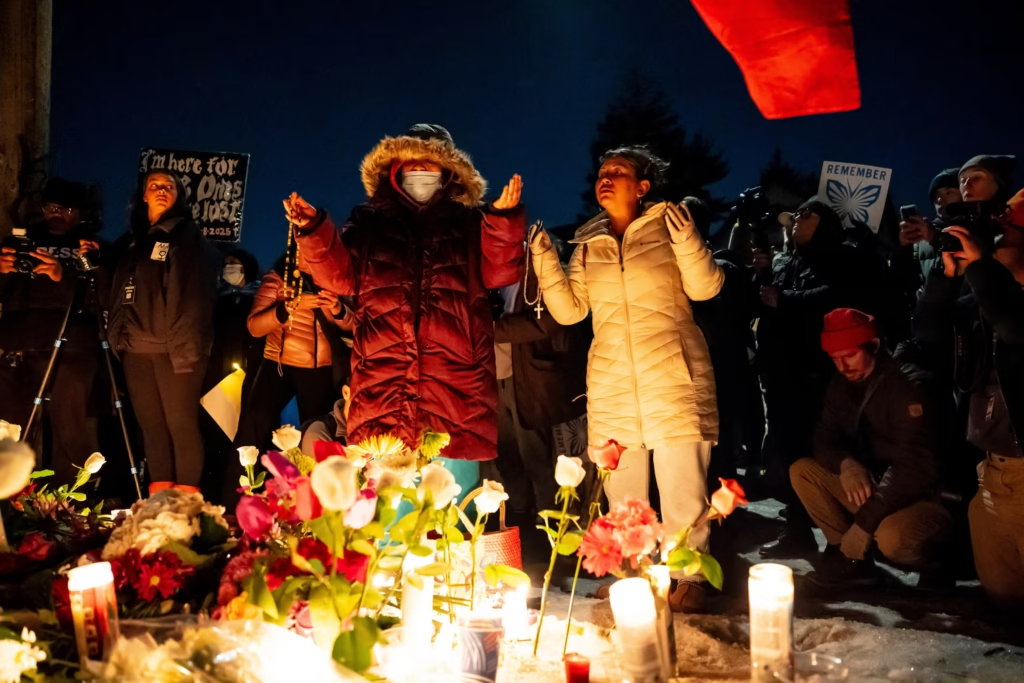
According to federal statements, ICE agents repeatedly instructed the woman to exit her vehicle during an operation when, officials claim, she attempted to use her SUV as a weapon against officers — prompting the fatal shots. DHS Secretary Noem later called the encounter an “act of domestic terrorism,” asserting that the agent was forced to fire to protect himself.
However, footage shared on social platforms and reported by local journalists shows the woman attempting to reverse and drive away rather than aggressively charging officers, fueling skepticism about the federal version of events and intensifying calls for independent scrutiny.
Representative Kelly’s Allegations Against Kristi Noem
In her official press release, Rep. Kelly made her intentions clear: she plans to file three formal articles of impeachment against Noem. These proposed articles include accusations of:

- Obstruction of Justice — withholding key information from Congress in violation of federal law and oversight responsibilities;
- Violation of Public Trust — failing to ensure the safety of the public and protect due process rights during immigration enforcement operations;
- Self-Dealing — allegedly using the powers of her office for personal and political benefit rather than serving the public interest.
Kelly, long a critic of the Trump administration’s immigration policies, said in her announcement that Noem’s leadership has made the nation less safe rather than more secure. She described her impeachment plan as a fulfillment of a pledge to challenge federal enforcement practices she sees as abusive and unconstitutional.
Political Turmoil and Public Backlash Across the Nation
News of the impeachment threat has provoked strong reactions on both sides of the political aisle. Many Democratic leaders, including representatives and state officials, have condemned the handling of the Minneapolis incident and called for accountability and transparency. Minnesota Governor Tim Walz and Minneapolis Mayor Jacob Frey publicly challenged the federal portrayal of the event, dismissing DHS claims as misleading and calling for federal agents to leave their city.
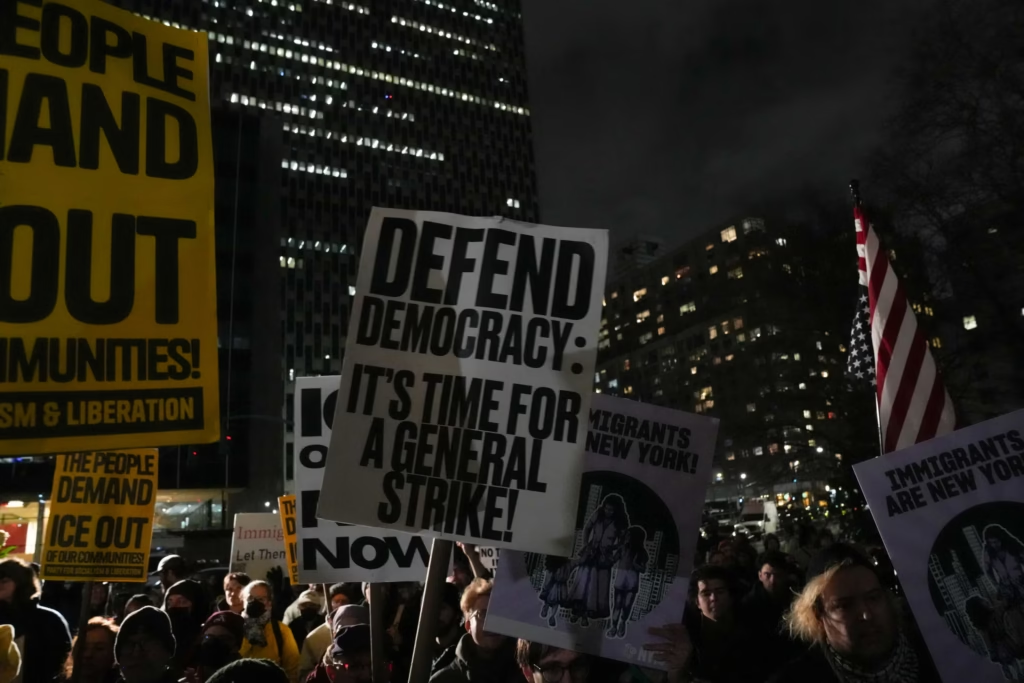
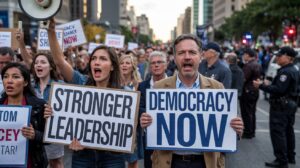
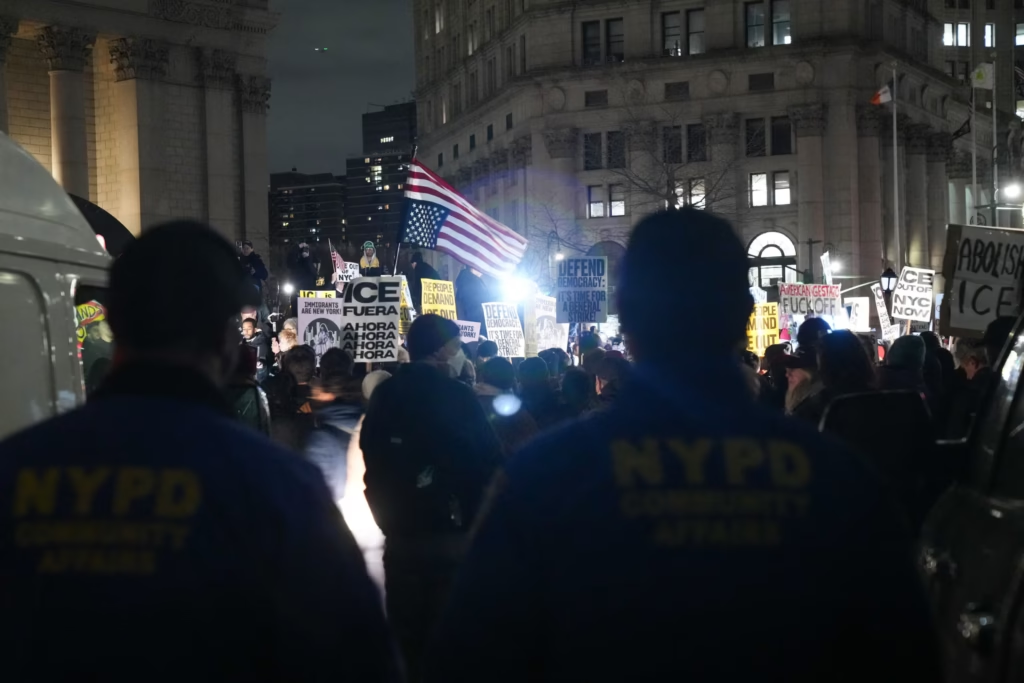
Protest activity erupted in cities, including Chicago’s Little Village neighborhood, where community organizers, faith leaders, and residents congregated in solidarity with Minneapolis and to condemn what they decry as a pattern of aggressive and racially charged enforcement tactics.
In contrast, critics of the impeachment push — including those in law enforcement and some national security defenders — argue that improper rhetoric could undermine federal operations and jeopardize officer safety. They emphasize that ICE agents operate under dangerous conditions and urge due process through investigation rather than immediate punitive political action.
National Debate on Immigration Enforcement Intensifies
This episode has reignited long-standing national debates surrounding immigration policy, the role of federal enforcement agencies, and oversight of executive branch leadership. Supporters of Kelly’s impeachment initiative argue that unchecked enforcement actions have led to unnecessary fatalities and civil rights concerns, while opponents claim that politicizing law enforcement undermines the rule of law and emboldens criminal behavior.
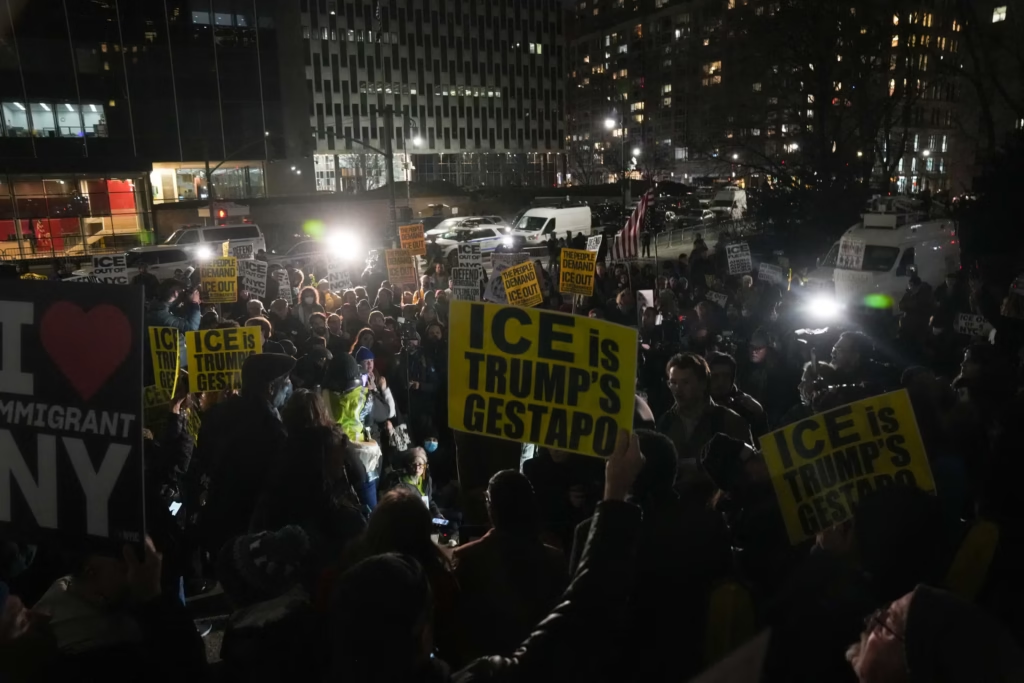
Prominent Democratic voices have echoed these divisions, with some labeling ICE actions as “murder” and others calling for the abolition or restructuring of the agency itself. The contentious nature of the clash reflects ongoing polarization over U.S. immigration policy and enforcement strategy.
At the same time, senior Republican figures and federal leadership have defended DHS and its officers, lauding the work of ICE agents and underscoring the challenges of protecting borders and enforcing immigration laws. Statements from the White House and senior national security officials affirm support for the actions taken, even as they pledge to engage with congressional oversight.
Potential Impact and What Comes Next
If Rep. Kelly proceeds with her articles of impeachment, the House Judiciary Committee and potentially the full House of Representatives would take up the matter, potentially setting the stage for hearings, testimony, and a deeply divisive political process. Such an impeachment effort — especially targeting a Cabinet-level official — would be historically significant and could set a precedent for congressional authority over executive agencies.
Legal and constitutional scholars note that impeachment is a high bar, requiring clear evidence of wrongdoing or abuse of power. Whether Kelly’s initiative garners enough support from House colleagues — even among Democrats — remains an open question given the politically charged nature of immigration enforcement. Congresswoman Robin Kelly
Meanwhile, investigations into the Minneapolis shooting by state and local authorities are expected to continue, and federal oversight bodies may also weigh in. Public pressure and community activism will likely influence the pace and transparency of these inquiries.
Conclusion: A Pivotal Moment in American Political History
The unfolding impeachment threat against DHS Secretary Kristi Noem, sparked by the deadly ICE shooting in Minneapolis, has quickly become a flashpoint in American politics — intertwining immigration enforcement, constitutional oversight, and public trust in government institutions. As national leaders and grassroots activists continue to draw battle lines, the country confronts profound questions about accountability, the use of force, and the rule of law.
This political episode is shaping up to be one of the most consequential debates in recent memory, with reverberations that could influence elections, legislative battles, and public discourse for months to come.
Subscribe to trusted news sites like USnewsSphere.com for continuous updates.