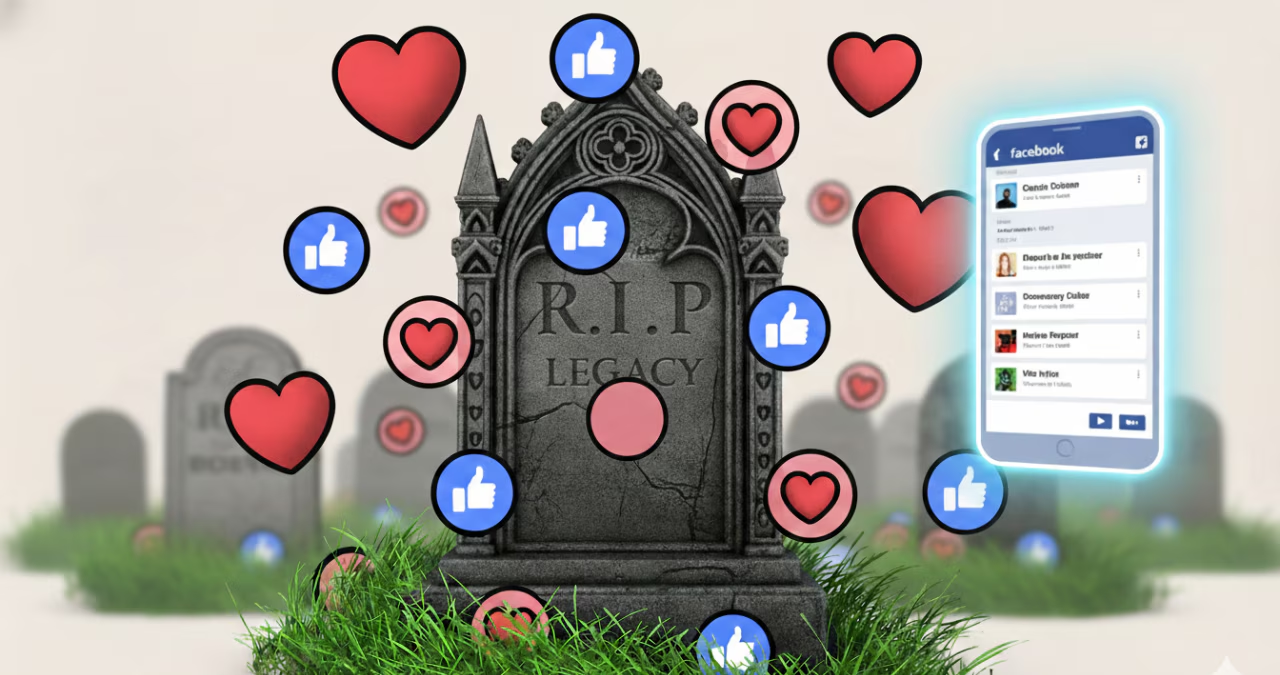
Meta patents AI that takes over a dead person’s account to keep posting and chatting, a newly granted patent by Meta Platforms, could soon redefine life, death, and our digital selves forever. This groundbreaking technology allows an artificial intelligence system to use a person’s past activity data — including posts, comments, messages, likes, and more — to create a digital version of them that could continue interacting on social media even after someone has died or stopped using their account. The real question isn’t just what this tech could do — it’s why it matters now, how it could reshape our relationships with our online identities, and what this means for billions of users worldwide.
At its core, the patent describes an AI built on advanced large language models that could mimic the way you communicate online, posting new content, replying to messages, leaving comments, and even simulating voice or video interactions based on your historical digital footprint. According to the patent — first filed in 2023 and credited to Meta CTO Andrew Bosworth — the system “may be used for simulating the user when the user is absent from the social networking system”, explicitly including scenarios where the account owner is deceased.
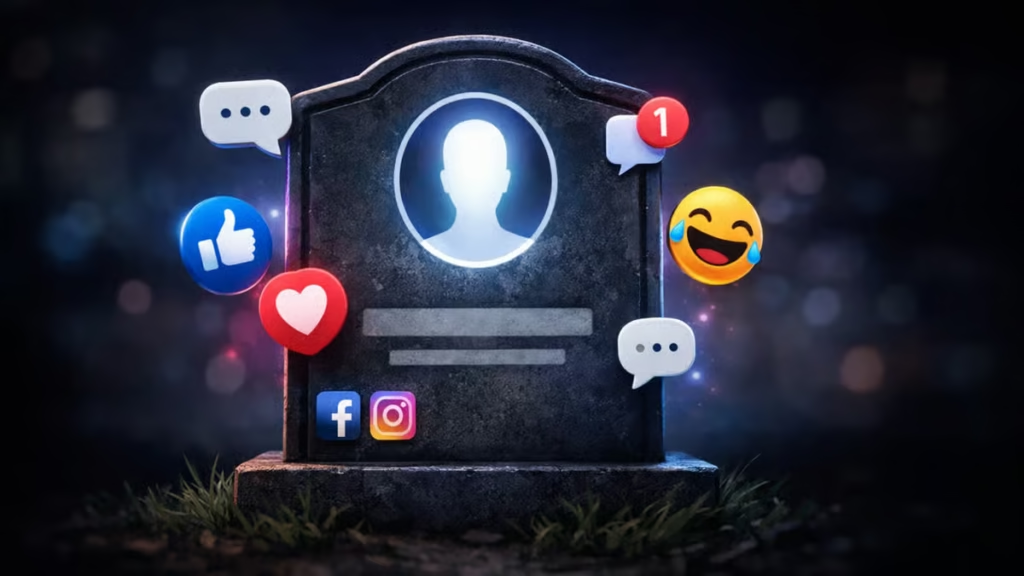
What This Patented AI Could Actually Do
This isn’t your typical auto-reply bot — it’s designed to be far more sophisticated and human-like. By analyzing a user’s entire history on platforms like Facebook and Instagram, the AI could learn patterns of behavior, tone, and interaction style to produce new content that feels authentic and consistent with the person’s past online presence. It could automatically post updates, respond to friends’ messages, leave comments on posts, react with likes or emojis, and keep an account “alive” long after the person is gone.
The patent even includes advanced capabilities such as simulated voice and video interactions, which means the AI could — in theory — be capable of holding conversations that feel eerily similar to the real person’s style. This concept places Meta at the forefront of a controversial trend in digital afterlife technology, intersecting deeply with psychology, ethics, and the way millions process grief.
Why the Business World and Users Are Paying Attention
While Meta clarified that it currently has no plans to turn this patent into a full-blown product, the concept itself has sparked worldwide discussion and concern. Experts say this idea is part of a growing field often referred to as “grief tech” or “digital afterlife AI” — technologies that try to preserve or recreate aspects of a person’s identity after they’re gone. Some startups in this space already use AI to generate chatbots based on loved ones’ messages or social media posts.
From a business perspective, the appeal is clear: more engagement, more content, and more time spent on platforms. For creators and influencers, the promise of an “always-on” account that never stops generating activity could be seen as a competitive advantage. However, that raises a critical question — is artificial presence the same as real presence? And should it be?
The Ethical and Emotional Weight
Critics argue that giving AI the power to simulate a deceased person’s behavior blurs deeply important lines between life and loss. Mental health professionals caution that interacting with AI versions of dead loved ones could hinder healthy grieving, creating confusion rather than closure. Digital privacy experts also point out serious questions about consent, post-mortem data use, and personal rights after death — especially since the AI’s behavioural model would be built from intimate user data.
There’s also a broader philosophical debate around whether digital copies of real people should ever be allowed to speak for the dead, and what that means for authenticity and trust online. As one expert put it, existing in digital spaces after death might feel comforting at first, but could fundamentally distort how we understand presence, memory, and emotional closure.

The Legal and Privacy Landscape
If Meta or other companies eventually implement similar AI technologies, lawmakers could be forced to address complex questions: Who owns or controls someone’s digital identity after death? What rights do family members have? And can a person pre-authorize an AI to represent them posthumously? These issues, still largely unresolved in many jurisdictions, show how digital rights are evolving much faster than legal frameworks can keep up.
Meta’s patent might not become a product today, but it’s a clear signal of where technology — and social media platforms — could be headed. By securing this intellectual property, the company establishes a blueprint that any future innovation would have to contend with, potentially shaping AI development across the industry.
What This Means for Users and the Future
For everyday users, this technology opens up both hopeful and unsettling possibilities. On one hand, some may see value in maintaining a digital connection with loved ones. On the other hand, the idea of interacting with an AI “stand-in” of someone who has passed raises profound emotional and ethical concerns. As generative AI becomes more embedded in daily life, society must carefully consider how we honor human experience without reducing it to algorithms and engagement metrics.
In the meantime, Meta’s patent remains a glimpse into a future where digital presence may not end with life, but the way we handle it could redefine both technology and humanity. The implications extend far beyond simple convenience — they make us ask: what does it truly mean to be remembered? And who gets to shape that memory?
Subscribe to trusted news sites like USnewsSphere.com for continuous updates.