The Instagram data leak exposing sensitive information of 17.5 million user accounts has emerged as one of the most alarming privacy breaches of the year, with stolen details now circulating among cybercriminals on the dark web, according to cybersecurity reports and real-time evidence from security analysts.
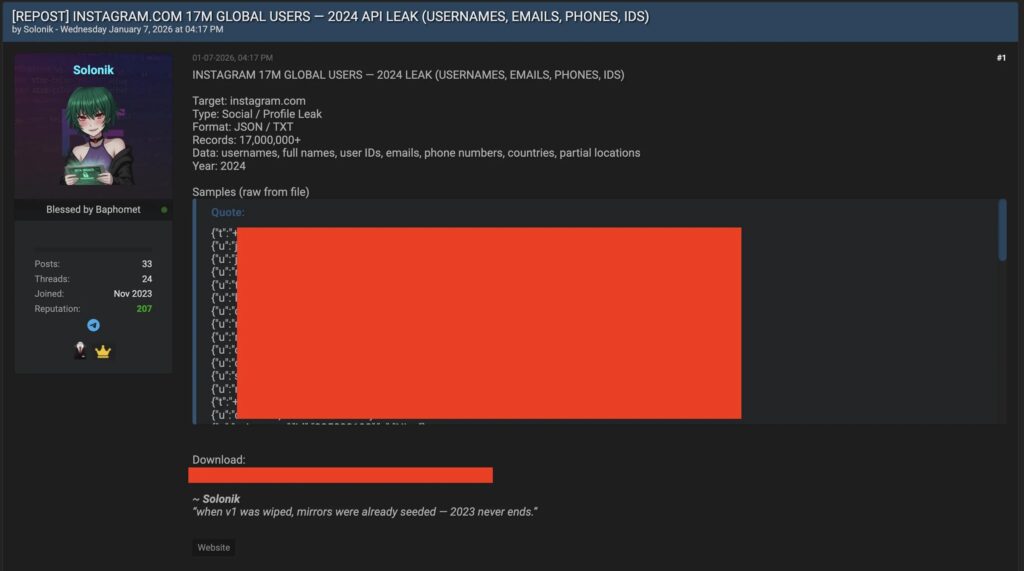
This story took off after cybersecurity company Malwarebytes alerted the public that this massive trove of personal data — including usernames, email addresses, phone numbers, and partial physical addresses — was listed for sale on hacker forums and was being actively traded among threat actors.
Because the leaked dataset includes highly personal identifiers, security experts and digital rights advocates warn that this isn’t just a technical breach — it’s a privacy catastrophe. Cyber intelligence platforms tracking the incident say the exposed information has already been used to target users with phishing emails and unauthorized password reset attempts, suggesting active exploitation.
How the Instagram Leak Happened and What Was Exposed
At the heart of this incident is a massive compilation of personal data linked to roughly 17.5 million Instagram accounts that — unlike typical leaks — contained more than usernames and public profile details.
According to multiple cybersecurity sources tracking the leak:
- Email addresses
- Phone numbers
- Usernames and account IDs
- Partial physical addresses
- Verification flags
were all present in the compromised dataset.
The data did not include passwords, but experts make clear that criminals don’t need passwords to inflict harm. With emails, phone numbers, and locations, hackers can launch phishing campaigns, attempt SIM-swap attacks, or socially engineer access through fake account reset requests.
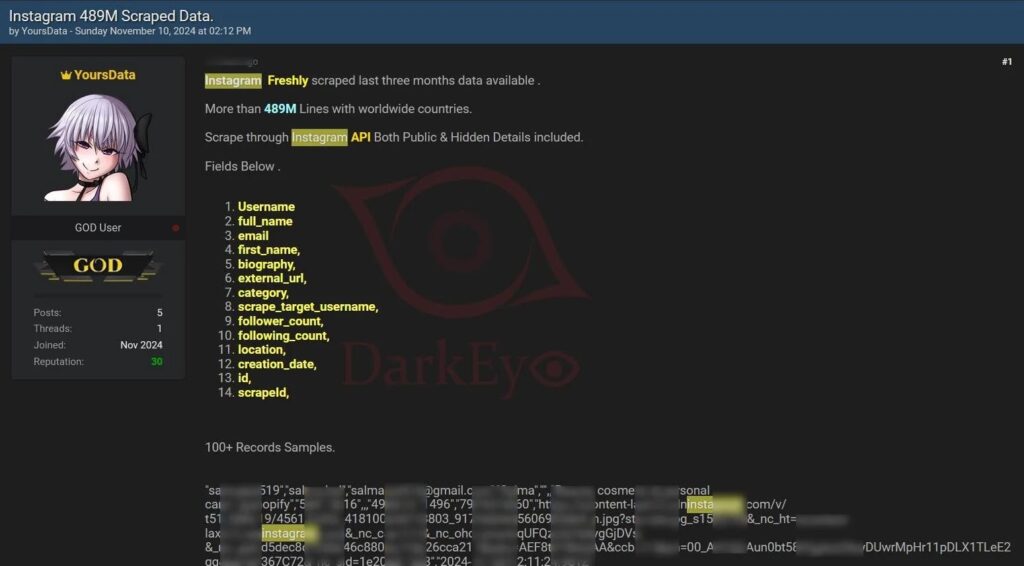
Several reports link the leak back to a 2024 API exploitation — meaning Instagram’s publicly accessible backend systems were used to scrape data over time, and this massive pool sat exposed until it was monetized by hackers curious or greedy enough to auction it off.
Unlike previous Instagram data leaks that were isolated scrapes of basic contact details, this version bundled contact and location data at scale, which raises serious concern about long-term identity exposure.
Why This Instagram Leak Matters to You and Every User
Data breaches are unfortunately common, but the Instagram leak stands out for several reasons:
1. Scale of Personal Information
The combination of phone numbers, email addresses, user IDs, and partial addresses makes the breach more than a simple contact list. The layered dataset significantly enhances the risk of identity theft and impersonation.
2. Active Exploitation in Progress
Users worldwide have reported receiving unsolicited password reset emails, indicating that threat actors are actively testing the data to hijack live accounts.
3. Dark Web Circulation
Security researchers confirm the stolen data is being traded publicly on underground marketplaces, giving malicious actors easy access to millions of users’ personal details.
4. Lack of Official Meta Response
As of this writing, Meta and Instagram have not publicly disclosed a detailed statement addressing the leak or providing remediation guidance, leaving users in a dangerous information gap.
Experts say this is more than a technical glitch — it represents a systemic issue in how APIs are governed and how user data is collected, stored, and protected.
The Security Risks You’re Facing Right Now
If your account is part of this dataset, the potential consequences are not theoretical — they are happening now:
• Phishing and Scam Campaigns
With email and phone combinations, attackers can send convincing fake messages claiming to be from Instagram or Meta to trick you into providing more confidential details.
• SIM-Swap Attacks
This technique allows attackers to take over your phone number to intercept SMS codes, reset account passwords, or access two-factor authentication (2FA) messages.
• Social Engineering Attempts
Criminals can use personal data to convince customer support or friends that they are you — a tactic that’s surprisingly effective when some identifiers are already known.
• Targeted Password Reset Triggers
Many users receiving unsolicited password reset emails aren’t seeing random spam — what they’re seeing may be an active probing effort from attackers leveraging the leaked dataset.
How to Safeguard Your Instagram Account — Step by Step
Your first priority should be to identify and secure your own digital identity before harm occurs.
Enable Two-Factor Authentication (2FA) Everywhere
Turn on 2FA, preferably using an authenticator app instead of SMS, because SMS can be intercepted via SIM swaps.
Change Your Password Immediately
Use a strong, unique password you’ve never used before. It’s a simple step, but one of the most effective.
Be Skeptical of All Password Reset Emails
If Instagram did not send you an official alert inside the app, assume reset emails are malicious. Always open the app directly to verify notifications.
Review Connected Apps and Permissions
Unauthorized apps linked to your account can also expose security gaps. Make sure only trusted apps have permissions.
Monitor Your Accounts for Unusual Activity
Look for unfamiliar login notifications or unauthorized changes — these can be early signs of compromise.
What Experts Are Saying About the Broader Cybersecurity Implications
Cybersecurity authorities believe this incident is not limited to Instagram — it reflects deeper concerns about data collection practices and API governance in major tech platforms.
Many experts argue that the leakage was not a classic “hack” but a long-undetected API data extraction that went unnoticed until months later.
This exposes weaknesses in modern platform design: companies collect vast amounts of personal identifiers, often without a clear necessity for service functionality. When APIs are overly permissive or poorly governed, the impact of misuse scales dramatically.
The situation underscores why data minimization principles and robust API security protocols must be enforced by design, not as an afterthought.
Act Now Before It’s Too Late
If your Instagram account is among the 17.5 million affected, you are at increased risk of cyberattacks right now. The leaked personal data isn’t just information — it’s ammunition for malicious actors.
This breach should serve as a wake-up call for every social media user, addressing privacy hygiene, proactive security measures, and the broader responsibility platforms have to protect the vast personal data they collect.
Staying informed and acting swiftly could make the difference between peace of mind and a compromised digital identity.
Subscribe to trusted news sites like USnewsSphere.com for continuous updates.