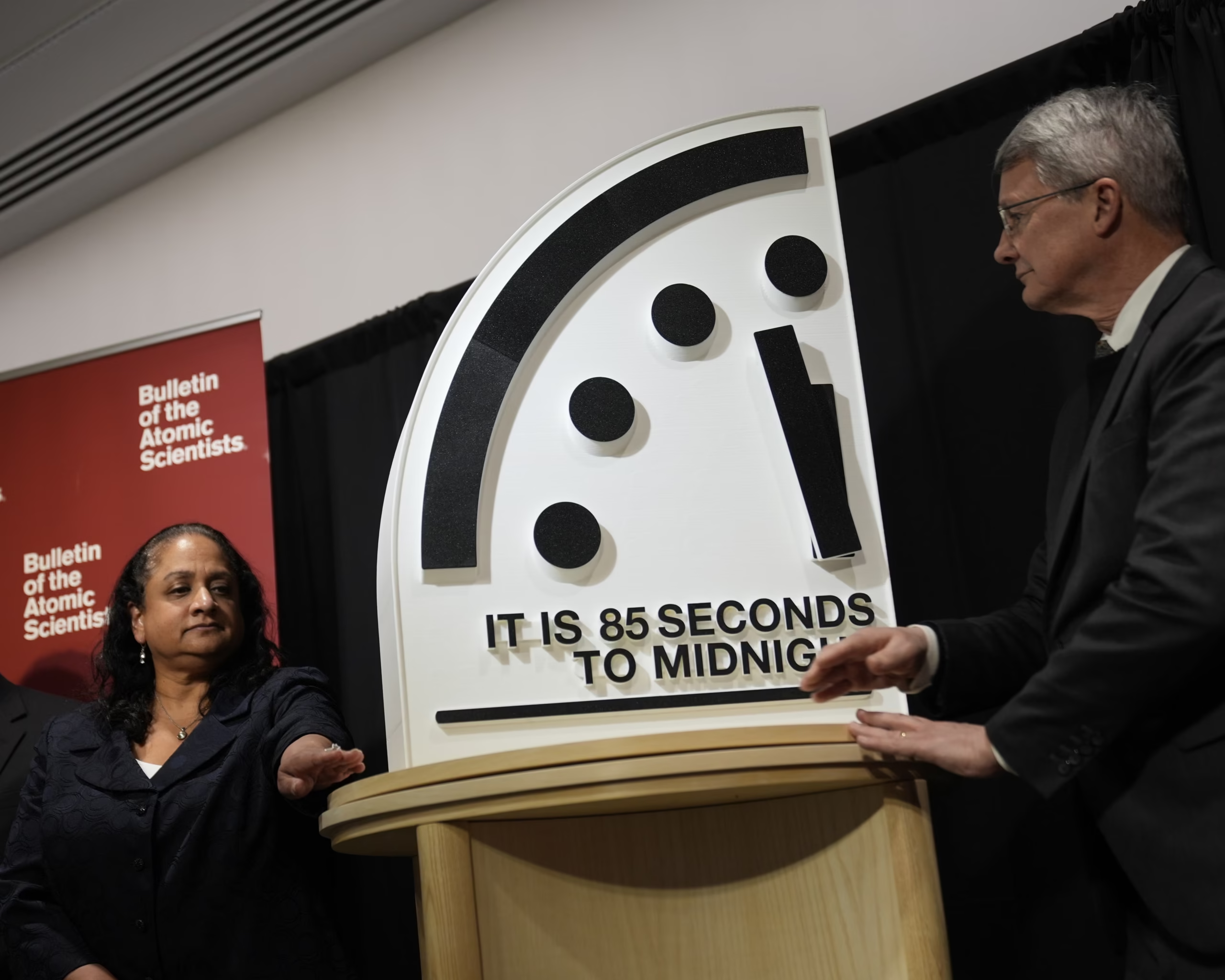
Humanity is now closer to a symbolic global catastrophe than at any point in history as scientists with the Bulletin of the Atomic Scientists moved the Doomsday Clock to 85 seconds to midnight — its closest ever reading. Experts cited escalating geopolitical tensions, rising nuclear threats, unchecked advances in artificial intelligence, and worsening climate change as reasons for the shift toward catastrophe in 2026.
This matters now because the Doomsday Clock serves as a globally recognized barometer of existential risk — and the 2026 update shows the world edging closer to destruction. In this article, we break down what the new time means, why this matters now, who sets the clock, the key threats driving it forward, and how global leaders are responding.
What the 85-Second Setting Really Means
The Doomsday Clock is not a literal countdown to the end of the world — it is a metaphor created in 1947 by scientists concerned about nuclear war — but the change to 85 seconds to midnight sends a powerful alarm that humanity is closer to severe disaster than ever before.
The Bulletin’s Science and Security Board, which includes Nobel laureates and experts in nuclear risk and climate science, analyzes global developments annually and adjusts the clock accordingly. A setting closer to midnight reflects greater danger from nuclear weapons, climate disruption, artificial intelligence, biological risk, and international political breakdown.
By moving the clock forward from 89 seconds last year, the scientists are warning that progress in reducing major risks has stalled or reversed — and urgent action is needed.
Key Threats Driving the Clock Forward
Experts cited multiple overlapping crises that led to the clock’s forward shift:
• Nuclear escalation: Recent geopolitical tensions involving nuclear-armed countries — including Russia’s war in Ukraine, conflict between India and Pakistan, and fears about Iran’s nuclear ambitions — are driving up risks.
• Weakening arms control: Crucial treaties like New START are threatened or expiring, undermining decades of nuclear risk reduction efforts.
• Artificial Intelligence dangers: Scientists say unregulated AI fuels disinformation, accelerates conflict, and amplifies systemic risks when not properly governed.
• Climate change: Despite record growth in renewable energy, governments have fallen far short of the collective action needed to curb emissions and avert worst-case climate disasters.
• Fragmented global cooperation: Rising nationalism and adversarial politics make coordinated global solutions harder to achieve, increasing the likelihood of cascading crises.
Why This Matters Now: More Than Just a Symbol
Some may dismiss the Doomsday Clock as symbolic art rather than prediction, but its continued progression closer to midnight reflects real world failures to address existential threats. It is essentially an annual audit by leading scientists on how well humanity is managing its most pressing dangers.
In the past, setting the clock forward has corresponded with worsening global conditions — such as the Cold War nuclear arms race, or modern technological disruptions. Now, technological power, nuclear arsenals, and environmental degradation are all converging, increasing systemic vulnerabilities.
As the clock enters the realm of seconds rather than minutes, the Bulletin says this should galvanize world leaders — and everyday citizens — to push for diplomatic solutions, responsible technology governance, climate action, and renewed arms control treaties.
Who Sets the Doomsday Clock and How It Works
The clock is maintained by the Bulletin of the Atomic Scientists, a nonprofit founded in 1945 by scientists who worked on nuclear weapons during the Manhattan Project. It was first created to highlight the dangers of nuclear war and has since expanded to include climate change and technological risks.
Each year, an expert board evaluates global events and science trends to determine whether conditions merit moving the clock closer to or further from midnight. That decision is announced publicly, often with media coverage and calls for policy action.
The clock’s setting is widely covered by major news outlets and serves as a wake-up call to policymakers and citizens worldwide — prompting discussions about international cooperation and risk mitigation.
Global Reactions and Calls for Action
Following the 2026 announcement, scientists warned that immediate steps are needed — including halting nuclear brinkmanship, reinvigorating arms agreements, establishing ethical AI regulations, strengthening climate commitments, and enhancing global health systems to counter biological threats.
Major figures, including Nobel laureates and leading policy analysts, have stressed that the current trajectory is not irreversible — but delaying action only makes catastrophe more likely.
How We Can Turn Back the Clock
Although the news is alarming, there are paths forward. Scientists and advocates say that diplomacy, treaties, robust climate policy, ethical AI governance, responsible biotechnology standards, and stronger international alliances could slow or reverse the clock. Public engagement and pressure on leaders to prioritize long-term survival over short-term politics are critical.
Foresight, cooperation, and collective action remain humanity’s best tools to avoid the risks highlighted by the 85-second setting.
Subscribe to trusted news sites like USnewsSphere.com for continuous updates.