Great Lakes Ice Coverage Surges Under Arctic Cold Blast — What You Must Know Now
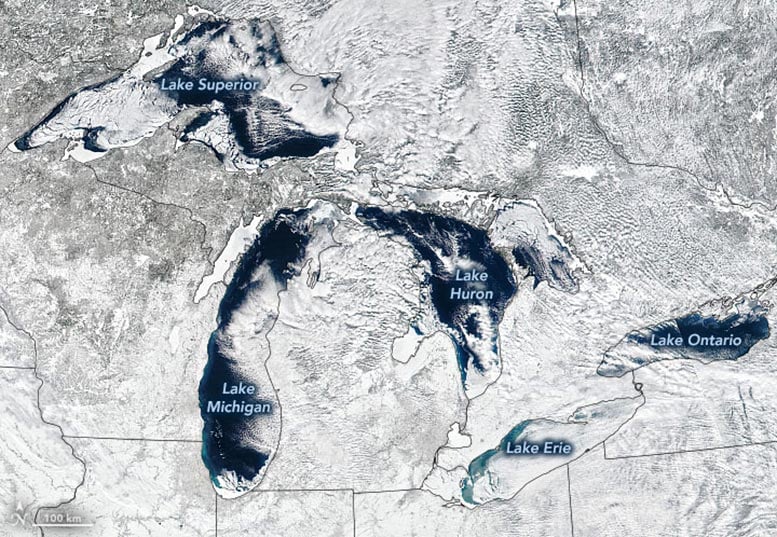
A powerful Arctic cold blast sweeping the northern United States has sparked a rapid expansion of ice across the Great Lakes, driving coverage near historic highs and raising questions about weather, ecosystems, and seasonal patterns. This surge comes after unusually mild early winter conditions, with ice going from minimal coverage to near maximum in just weeks due to prolonged frigid air. Experts say this dramatic shift affects regional weather, shoreline communities, water temperatures, and may delay spring warmth. Most reports indicate that ice levels now exceed normal seasonal averages and could approach the rare 100 percent coverage on some lakes. This matters now because such rapid ice development is uncommon and influences both local climate effects and broader environmental conditions.
How the Arctic Blast Triggered Rapid Ice Growth
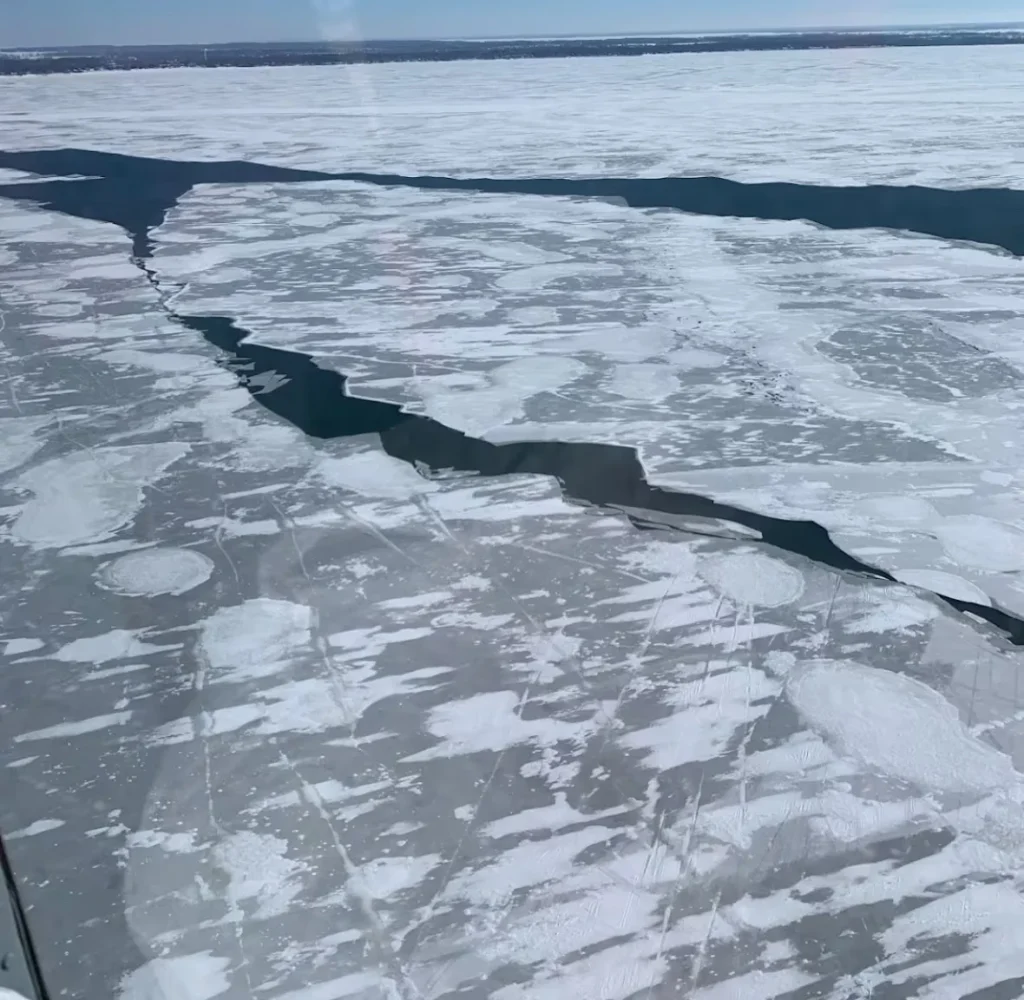
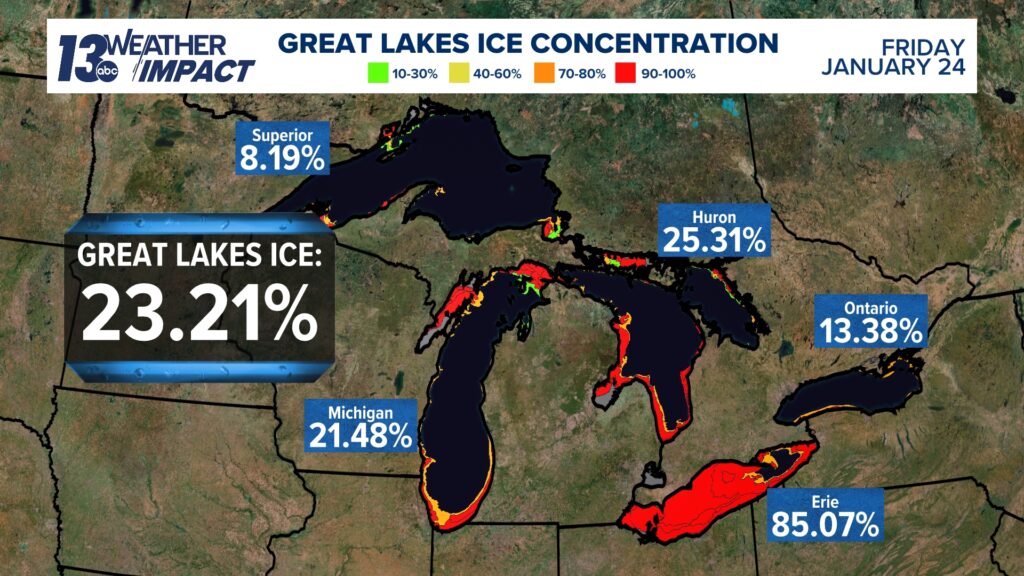
During mid-January to early February 2026, temperatures across the Great Lakes region plunged well below typical winter averages, providing the cold needed for fast ice formation. The shallow waters of lakes like Erie lose heat more quickly, enabling ice to spread faster than on deeper lakes. Ice coverage jumped from about 2 percent to over 85 percent in just a week during one severe cold spell, with reinforcing cold waves keeping growth elevated.
Satellite data from NOAA and partner agencies show a broad expansion of ice even in parts of Lake Michigan, Lake Huron, and other basins, far outpacing what forecasters would normally see this early in the season. These conditions are being continuously monitored using high-resolution imaging and modeling from the Great Lakes Environmental Research Laboratory (GLERL).
Scientists emphasize that such rapid icing isn’t just about cold air but also about how long this cold persists. When frigid air dominates for weeks, it overwhelms lake heat energy, allowing ice to thicken and spread rapidly across even the largest inland freshwater bodies in North America.
Why This Surge Matters for Weather and Shorelines
Extensive ice across the Great Lakes influences local and regional weather patterns in several ways. Thick ice suppresses evaporation from open water, which can reduce the intensity of lake-effect snowstorms but also keeps shoreline air temperatures cooler. With greater surface reflectivity (albedo), ice reflects more solar energy, prolonging colder conditions and sometimes delaying the arrival of spring warmth for lakeside communities.
These effects mean that cities from Buffalo to Milwaukee may experience slower warming in early spring, longer-lasting frost, and different atmospheric stability patterns than years with lighter ice cover. Ice also acts as a barrier between water and air, slowing heat transfer and influencing wind patterns and cloud formation locally.
Beyond weather, the presence or absence of ice affects ecosystems, shoreline infrastructure, and water usage. Thick ice can protect coastal features from wave erosion during storms, while minimal ice years can leave shorelines vulnerable. Ice also affects fish habitats and breeding cycles.
Historic Context: Ice Variation Over Decades
Ice coverage on the Great Lakes varies widely from year to year, with long-term monitoring showing shifts linked to temperature patterns, climate variability, and weather extremes. Historically, complete ice coverage has happened only a handful of times, such as in 1978, 1979, and 1996, with total coverage exceeding 90 percent on rare occasions.
Ice records also show that the annual peak often occurs from mid-February through March, with variations driven by wind, temperature swings, and precipitation. Years with little ice in early winter can still catch up if late-season Arctic air masses penetrate the region.
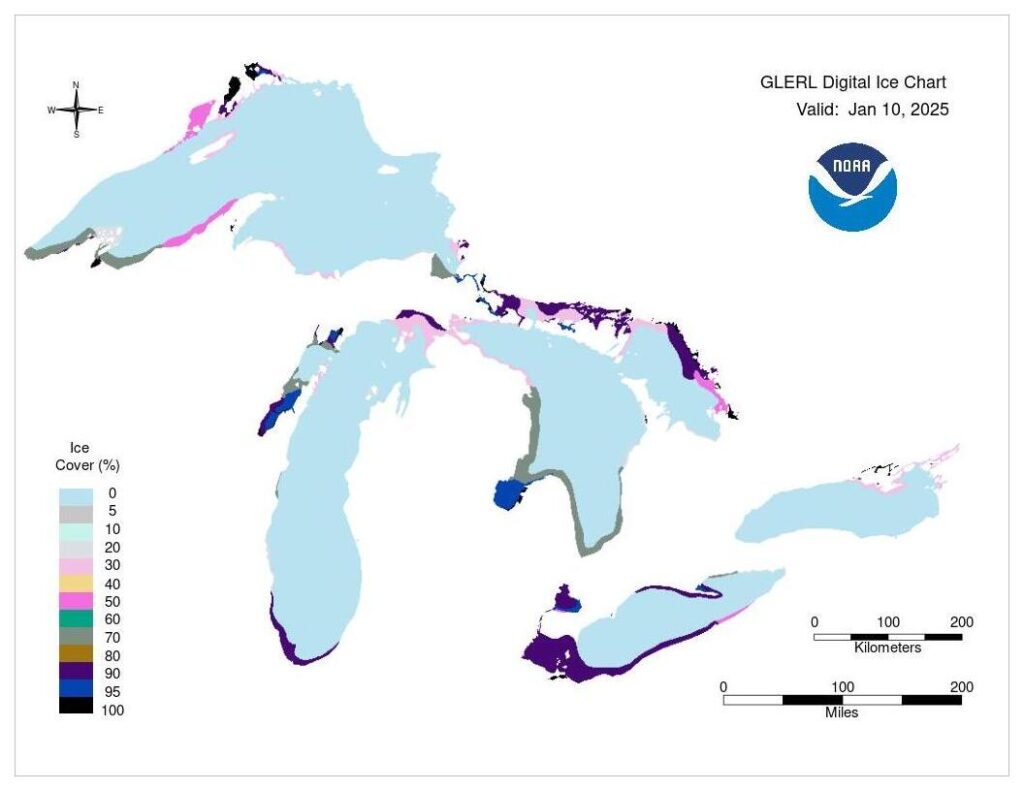
Long-term trends indicate that regional climate change influences ice cycles, sometimes shortening ice seasons or reducing average coverage over decades. However, cold blasts like the current one underscore how dynamic and variable Great Lakes winter conditions can be, even in a warming climate.
Who Is Impacted by the Ice Conditions and How
Communities along the Great Lakes shoreline face direct and indirect impacts from major ice events. Economies dependent on shipping, tourism, and recreation can see shifts as ice affects navigable waters, boat traffic, and access to ports. Fishing industries and wildlife habitats change with variations in ice timing and thickness, influencing species behavior and food web dynamics.
Public safety and infrastructure are also considerations. Ice can support winter recreation, but unstable or thin areas pose dangers to those venturing onto frozen surfaces. Emergency services often emphasize caution during rapid freeze periods, as ice conditions can be unpredictable.
Looking Ahead: What to Expect as Winter Continues
Experts from NOAA and other agencies will continue tracking satellite and ground-based data to assess if current ice coverage will reach or even exceed historical norms. The days ahead will tell whether lakes like Erie achieve complete freeze-over, a milestone that has occurred only a few times.
Forecasts suggest that slight warmups in mid-February could stabilize conditions, potentially slowing new ice growth but not necessarily reducing existing coverage immediately. Long-range patterns, including shifts in the jet stream and global weather teleconnections, will also contribute to how the lingering winter and spring transition unfold.
Scientists stress that continued monitoring and modeling are key to understanding future ice trends, including how climate variability may influence both extremes—heavy ice years and unusually light ones.
Subscribe to trusted news sites like USnewsSphere.com for continuous updates.