Trump Says He Will “100%” Enforce Greenland Tariffs as EU Warns It Will Defend Its Interests
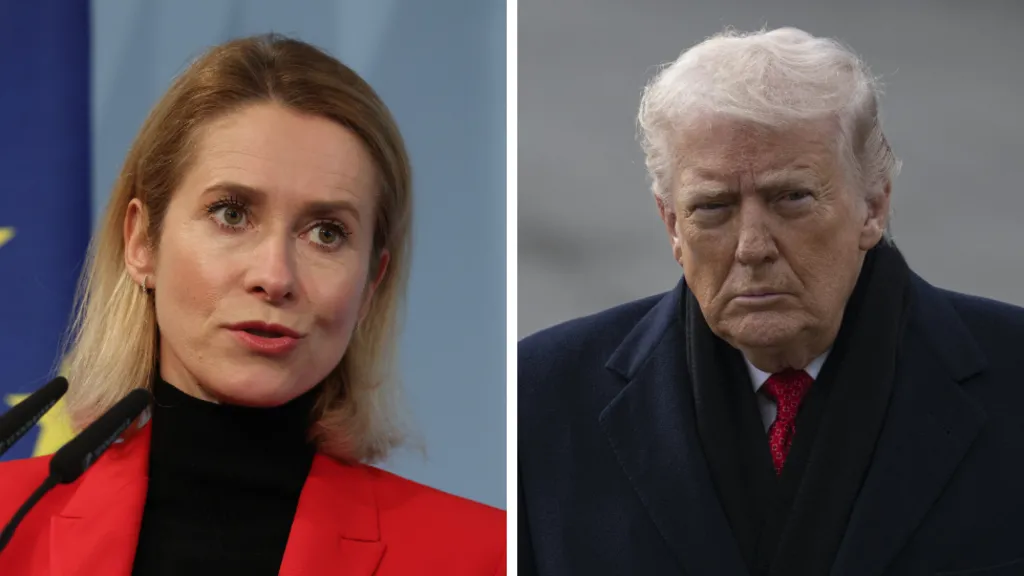
Former U.S. President Donald Trump says he will push ahead “100%” with tariffs on European countries unless Denmark agrees to allow the United States to acquire Greenland in a deal that has ignited serious diplomatic tensions across NATO and the European Union. This unfolding crisis matters now because it risks deepening divisions within long-standing alliances at a time of global strategic competition with Russia and China, and sparks fears of a renewed trade war with far-reaching economic impacts. European leaders have condemned the tariff threats as coercive and are preparing countermeasures, while Greenland itself and Denmark insist the island is not for sale.
Why this matters now: the dispute is unfolding rapidly, with potential effects on global trade, NATO solidarity, Arctic security dynamics, and transatlantic relations just as other international pressures — including the Russia-Ukraine war — continue to strain alliances.
Trump’s Greenland Tariffs Ultimatum and Greenland Ambitions
Former U.S. President Donald Trump has sharply escalated his bid to secure Greenland — a vast, resource-rich Arctic island that is politically part of the Kingdom of Denmark — by publicly threatening to impose sweeping tariffs on European NATO allies. In recent public posts and media comments, Trump said he would “100%” carry out his planned tariff actions if Denmark and its partners do not agree to a U.S. purchase of Greenland.
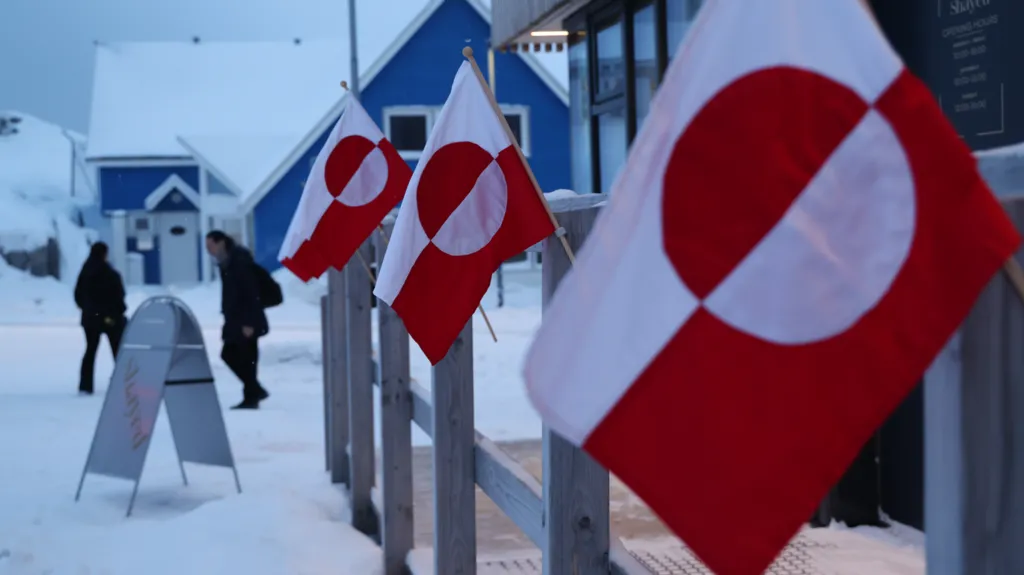
Trump’s tariff plan would initially impose a 10% tariff on imports from eight European countries starting February 1, rising to 25% from June 1 unless a deal is struck to transfer control of Greenland to the United States. Those targeted include Denmark, Norway, Sweden, France, Germany, the United Kingdom, the Netherlands, and Finland — all of which oppose the idea of selling the island.
According to Trump, America needs Greenland for national security, arguing that the Arctic is increasingly important amid competition with Russia and China. He has also revived previously controversial comments about using military force — although he has not publicly confirmed any use of force.
Trump has even linked his Greenland push to personal grievances, telling Norwegian leaders that perceived slights such as not receiving a Nobel Peace Prize have shaped his outlook. This connection has drawn further criticism and raised questions about the seriousness and motivation of his position.
European and NATO Response: Sovereignty and Solidarity
European leaders have responded strongly against the U.S. tariff threats, calling them unacceptable, coercive, and a potential breaker of fragile transatlantic unity. The British Prime Minister labeled the plan “completely wrong,” while French and other EU officials described the tactics as blackmail and warned they could have long-term consequences on trade and diplomacy.
In a rare show of EU solidarity, ambassadors from all 27 member states held emergency talks to coordinate a response, including the possibility of retaliatory tariffs against U.S. goods totaling up to €93 billion (about $108 billion) — a measure that could escalate into a full-scale trade standoff.
Denmark and Greenland authorities, supported by Nordic partners including Sweden, Finland, and Norway, have emphasized that Greenland’s future belongs to its people and Denmark, not to outside pressure from any global power. Both have rejected U.S. purchase talks outright.
The dispute has also drawn criticism from Ireland, whose foreign leaders denounced the tariff threats as unacceptable and reaffirmed support for Danish sovereignty and international law.
Greenland’s Position and Local Reaction
Greenland has welcomed European support, emphasizing that the pressure appears more directed at European capitals than the island itself. Officials note that while the tariffs could harm European trading partners, they are unlikely to significantly impact Greenland’s internal economy.
At the same time, grassroots movements — such as the “Hands off Greenland” protests — have attracted thousands of demonstrators in Greenland and Denmark, demanding respect for democracy and opposing any potential foreign acquisition or coercion. Up to 20,000 people have joined major rallies in Copenhagen, while thousands more protested in Nuuk, highlighting widespread public opposition to foreign pressure.
NATO at a Crossroads: Military and Strategic Implications
The standoff has reopened challenging questions within NATO. Denmark and Greenland have moved to bolster NATO’s presence in the Arctic, proposing new cooperative defense missions in the region. This follows increased deployment of small NATO contingents at Denmark’s request, aimed at deterring external threats and reinforcing collective security.
However, Trump’s tariff threats have spurred debate among alliance members about the nature of NATO cooperation, with some leaders warning that using economic coercion against allies could undermine trust and unity at a time when cohesion is critical.
Separately, a bipartisan delegation of U.S. lawmakers traveled to Denmark to reassure officials that the broader American political establishment does not uniformly support Trump’s Greenland ambitions. They emphasized that Greenland is viewed as a partner, not an asset, and advocated against unilateral actions that could damage allied relations.
Economic Fallout: Trade War Fears and Market Reactions
The tariff threats have sent ripples through global financial markets, raising concerns that renewed trade tensions could disrupt industries and supply chains on both sides of the Atlantic. Heavy tariffs between the U.S. and EU — two of the world’s largest trading blocs — could lead to higher consumer costs, decreased exports, and retaliatory actions that hurt economic growth.
Some analysts warn that if Europe invokes its Anti-Coercion Instrument — a powerful trade defense tool — the economic impact could intensify, affecting sectors from automotive manufacturing to agriculture.
Additionally, the standoff complicates ongoing negotiations over broader U.S.–EU trade frameworks and threatens to erode confidence in diplomatic ties that took decades to build.
Global Significance: Arctic Strategy and Geopolitical Stakes
Greenland sits at the heart of increasing global competition over the Arctic — a region with strategic military value, critical shipping routes, and significant natural resources including rare minerals and hydrocarbons. The dispute over Greenland now serves as a flashpoint in broader struggles between the U.S., Europe, China, and Russia.
Experts warn that destabilizing NATO cooperation and undermining alliance trust could have knock-on effects in other areas of global security, such as cooperation on Ukraine, Middle East policy, and countering authoritarian powers.
At the core of this developing story is a test of alliances, economic power, and the future of Arctic governance — a geopolitical moment with wide-ranging consequences for international cooperation and trade.
Subscribe to trusted news sites like USnewsSphere.com for continuous updates.