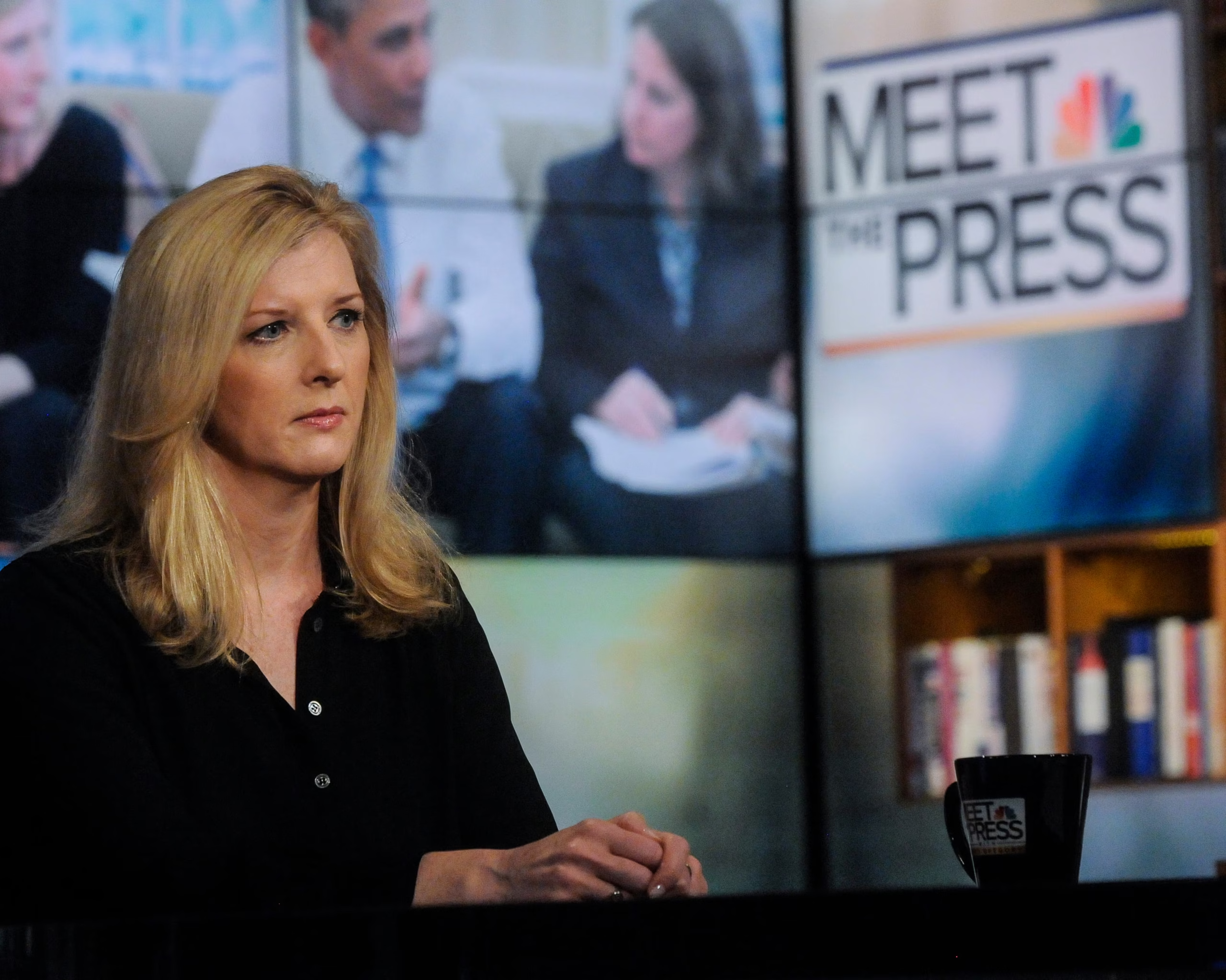
Goldman Sachs lawyer resigns after Epstein ties dominate headlines and corporate reputations are shaken. In a major development that has sent shockwaves through Wall Street and Washington alike, Kathryn Ruemmler, the Chief Legal Officer and General Counsel at Goldman Sachs, announced she will step down effective June 30, 2026, after newly disclosed Department of Justice documents revealed her extensive past relationship with convicted sex offender Jeffrey Epstein. This break in leadership comes amid intense scrutiny over the emails, gifts, and personal communications linking Ruemmler to one of the most controversial figures in recent history — raising questions about judgment, ethical boundaries, and corporate governance at one of the world’s most influential financial institutions.
The revelations include years of email conversations between Ruemmler and Epstein — spanning 2014 to 2019 — that paint a closer association than previously acknowledged, including affectionate language and exchanges involving high-value gifts. The disclosures were made public last month as part of millions of pages of documents released under the Epstein Files Transparency Act, aimed at shedding light on Epstein’s network of contacts and influence.
Unpacking the Emails: What Came to Light
The newly released communications show that Ruemmler’s contact with Epstein went beyond professional courtesy or isolated interactions. The emails reveal friendly exchanges, including messages in which she reportedly referred to Epstein with terms such as “Uncle Jeffrey,” responded to personal notes, and even expressed gratitude for gifts such as luxury handbags, spa treatments, plane tickets, and other items. In a 2018 email, she wrote, “So lovely and thoughtful! Thank you to Uncle Jeffrey!!!” suggesting a level of familiarity that drew immediate public attention once disclosed.
Some messages also included discussions of personal life topics, media strategies, and even a potential visit to Epstein’s private island. While Ruemmler later characterized her interactions with Epstein as professional, the tone and content of some exchanges blurred the lines between personal and legal correspondence — particularly in the court of public opinion.

Who is Kathryn Ruemmler?
Before joining Goldman Sachs in 2020, Kathryn Ruemmler served as White House Counsel under President Barack Obama and was a partner at the leading law firm Latham & Watkins. Her distinguished career spanned high-profile legal roles, corporate litigation, government advisory positions, and senior roles in corporate governance.
At Goldman, Ruemmler built a strong reputation for steering legal strategy on consequential matters — overseeing compliance, litigation defense, and reputational risk management. Her sudden departure is now positioned as one of the most high-profile resignations linked to the fallout from disclosures tied to Jeffrey Epstein’s communications network.
Why This Matters Now
The timing of Ruemmler’s resignation could not be more significant. With growing public demand for transparency around elites connected to Epstein, these revelations put pressure on institutions to be accountable and proactive in responding to potential conflicts of interest. Goldman Sachs, long considered a stalwart of corporate governance, now faces questions about how executives’ past associations could impact the firm’s credibility.
Beyond Goldman, this development has broader implications for Wall Street and major firms that operate in a climate sensitive to ethical conduct and public trust. Corporate boards may now reassess due diligence practices regarding employment histories and external relationships — particularly those involving controversial figures. Ruemmler’s resignation highlights how reputational risks can eclipse professional achievements, especially when transparency and accountability are demanded by public scrutiny.
Reactions from the Firm and Legal Community
Goldman Sachs CEO David Solomon publicly acknowledged Ruemmler’s contributions, describing her as an “extraordinary general counsel,” but also respected her decision to step down amid mounting media attention. Goldman maintained that her contacts with Epstein occurred before she joined the firm and asserted that appropriate policies were followed at the time.
Legal experts are weighing in, noting that Ruemmler’s acceptance of gifts — while not necessarily violating legal ethics rules — illustrates how private behavior and public expectations can collide. Wall Street firms often have strict policies around gift giving to avoid conflicts of interest, and this situation has ignited debate over whether those policies are sufficient or need tightening.
What Comes Next
As investigations into the Epstein archives continue and more documents are made public, there’s potential for additional scrutiny of high-profile individuals across sectors. Regulatory bodies, corporate boards, and the legal profession as a whole may face intensified calls for clarity and reform. For Goldman Sachs, this moment will likely shape internal policy reviews, reputational strategy, and leadership perception for months to come.
In a world increasingly driven by transparency and accountability, actions today have powerful implications for how institutions are perceived tomorrow. This episode underscores how past associations — even before a person’s tenure — can redefine the narrative of leadership and trust.
Subscribe to trusted news sites like USnewsSphere.com for continuous updates.