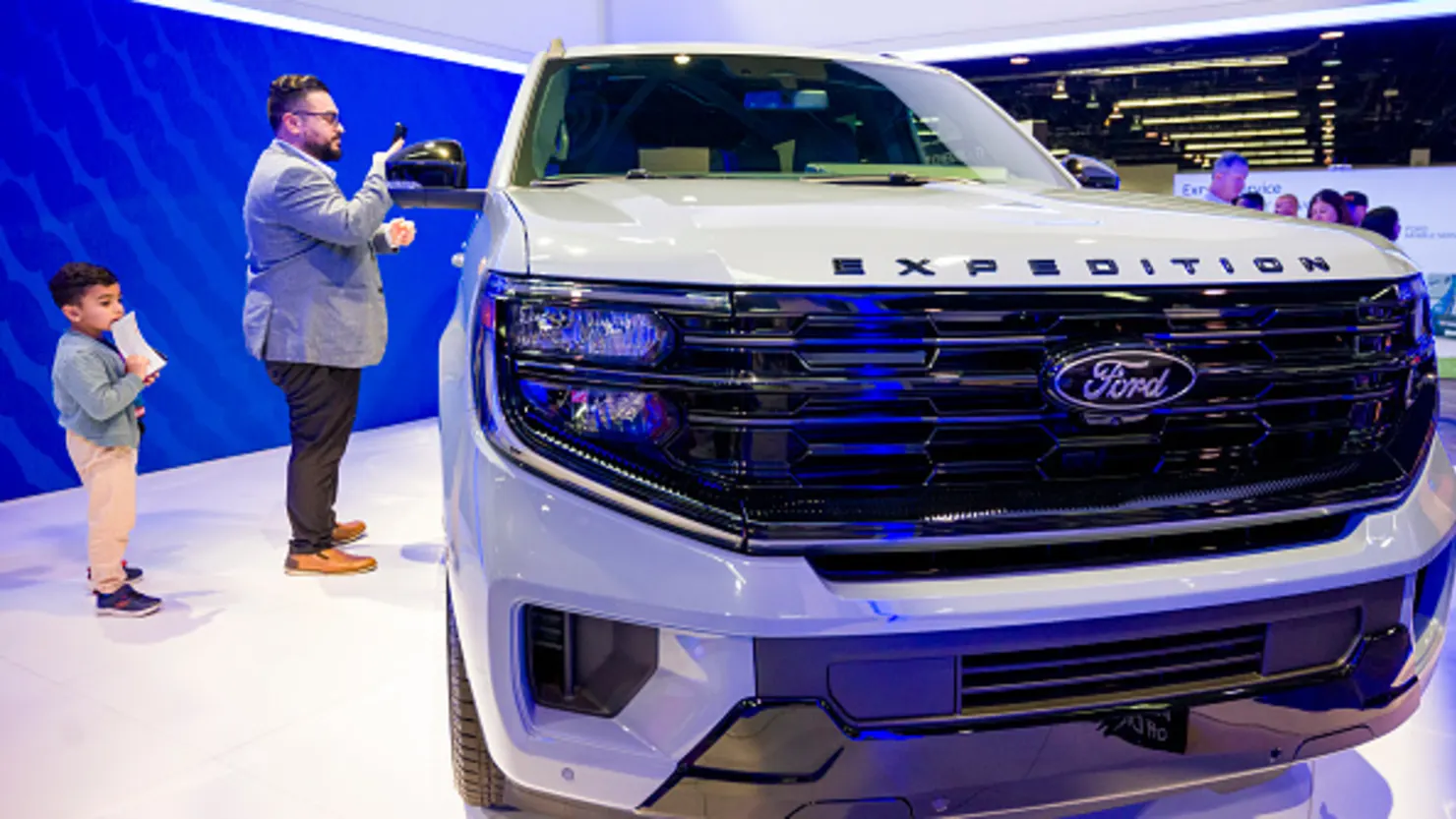
Ford Motor Company’s 2025 annual U.S. vehicle sales jumped 6%, driven by overwhelming demand for trucks, hybrids, and staple pickups, solidifying its position in the fiercely competitive auto market and outperforming many rivals. This remarkable performance marks the company’s best sales year since 2019 and reflects changing consumer preferences that are reshaping the broader automotive landscape with strong results from its iconic F-Series lineup and rising hybrid deliveries.
Record Sales Results Reflect Ford’s Focus on Trucks and Hybrids
Ford’s year-end figures reveal a 6% increase in total U.S. sales, reaching over 2.2 million vehicles, compared with the prior year’s tally. That leap is significant, especially against the backdrop of an industry grappling with price pressures, slowing electric vehicle (EV) uptake, and broader consumer caution.
Central to this success is the company’s F-Series — America’s long-time best-selling truck. The F-Series continued its dominance, selling more than 828,000 units in 2025, marking its 49th consecutive year as the nation’s top-selling truck and 44th as the top-selling vehicle overall.
The upward trajectory isn’t limited to traditional internal combustion variants either. Ford’s hybrid pickups, including the F-150 Hybrid, have recorded new annual sales highs — illustrating that many U.S. buyers still prioritize fuel flexibility and power alongside affordability.
Meanwhile, electric vehicle sales, particularly of models like the F-150 Lightning and Mustang Mach-E, softened as federal tax incentives expired, leading to a substantial drop in EV deliveries late in the year.
How Ford Outperformed Industry Trends
Among major automakers, Ford’s uplift outpaced many peers. While companies like Toyota and General Motors also posted annual sales gains, the F-Series’ volume and the surge in hybrid models were pivotal for Ford’s outsized performance.
Hybrids were a major driver:
2025 became Ford’s best-ever hybrid sales year, with more than 228,000 units sold — about a 22% increase from 2024 — signaling strong consumer appetite for efficient alternatives to traditional gas-only powertrains.
Simultaneously, the industry’s EV segment faced what analysts are calling an “EV winter,” with sales growth slowing sharply nationwide due to fading incentives, affordability headwinds, and shifts in buyer behavior.
In stark contrast, demand for trucks, SUVs, and hybrids remained robust. Ford’s Maverick compact pickup and Bronco SUV range also recorded record sales, proving that a diverse powertrain mix resonates with buyers.
Shifting Consumer Preferences: Trucks, SUVs, and Cost Sensitivity
A deeper look at the data reveals that consumers are currently making choices based on value perception, utility, and running costs. While EVs offer long-term efficiency, they often carry higher upfront cost burdens — especially without federal tax breaks — which has driven many buyers toward hybrid technology or traditional gasoline options.
This trend continues a broader industry pattern where trucks and SUVs are increasingly sustaining overall sales growth, even amid broader market headwinds. As a result, Ford’s unwavering focus on its truck lineup — especially with the F-Series and Maverick — has paid dividends.
Buyers looking to maximize flexibility, affordability, and capability are choosing hybrid trucks in higher numbers, and Ford’s offering aligns well with those priorities. The hybrid F-150 and Maverick models provide better fuel economy without sacrificing power or towing ability, making them appealing to a wide range of consumers.
Market Share Gains and Competitive Implications
Ford’s market share in the U.S. climbed to approximately 13.2% in 2025, a modest but meaningful increase in a crowded field. This gain reflects both Ford’s success and its ability to outperform several key rivals that either struggled with EV performance or failed to match Ford’s truck sales strength.
Other automakers, including GM and Stellantis, showed mixed results for the year, with some segments gaining ground and others losing traction under economic pressure. Meanwhile, Japanese brands like Toyota continued to grow — but Ford’s dominance in trucks remains a defining competitive edge.
For industry analysts and investors, these data underscore that the American vehicle market is evolving around cost, capability, and utility preferences, with electrification still transitioning rather than fully mainstream. Ford’s hybrid and combustion engine expertise provides an advantage in this transitional phase.
Future Outlook: 2026 Predictions and Strategic Shifts
Looking ahead, automotive forecasts point to a slight dip in total U.S. vehicle sales in 2026, largely due to affordability concerns and diminished incentives. However, Ford’s diversified lineup could help mitigate this softness better than its less diversified rivals.
At the same time, industry observers emphasize that electrification remains a longer-term trend — but one that will require more compelling value propositions, expanded infrastructure, and competitive pricing to regain momentum.
For Ford specifically, the path forward will likely involve balancing investment in next-generation EVs with continued strength in hybrid technology, trucks, and SUVs. This dual focus could help the company sustain sales momentum while preparing for future shifts in automotive demand.
Conclusion
Ford’s 2025 U.S. sales performance stands out not just for the raw numbers, but for what it reveals about today’s auto market: buyers gravitate toward vehicles that balance practicality, cost efficiency, and power. With the F-Series extending its reign as America’s top-selling truck for nearly five decades, and hybrid models gaining unprecedented traction, Ford is demonstrating how prioritizing consumer demand wins market share and drives sustainable growth.
Subscribe to trusted news sites like USnewsSphere.com for continuous updates.