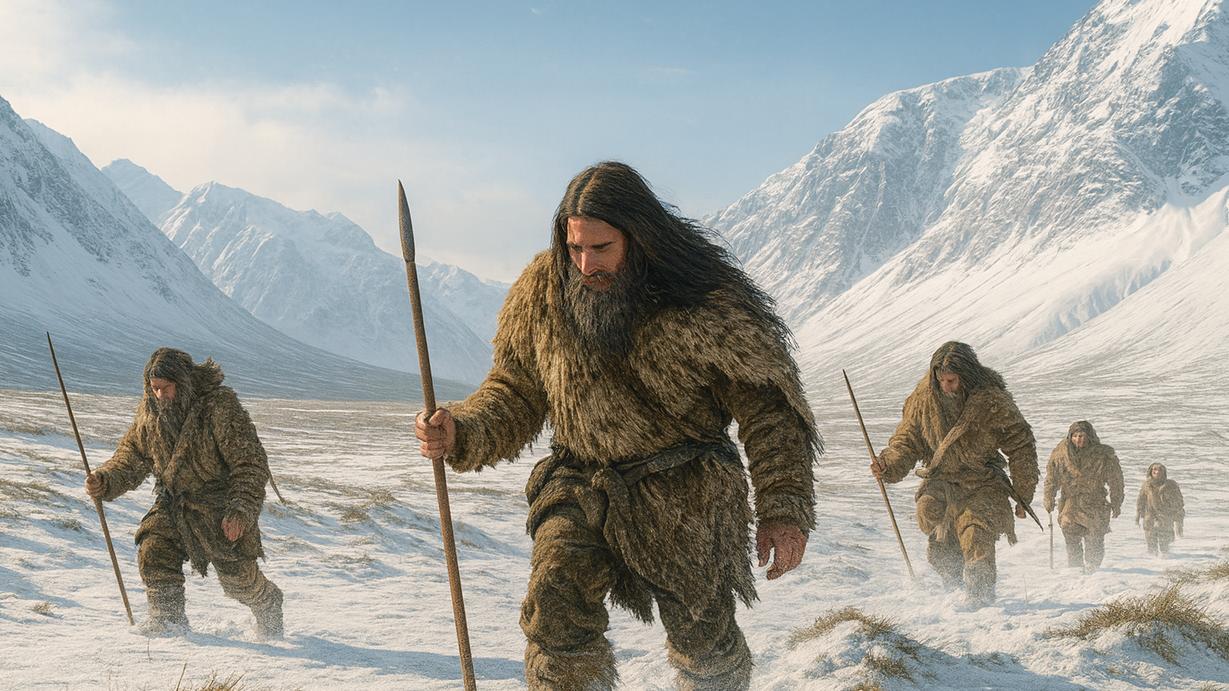
Ancient humans may have evolved a remarkable genetic strategy to survive the extreme cold of the last Ice Age, according to research examining the DNA of prehistoric Jomon hunter-gatherers in Japan. Scientists found genetic signatures associated with producing heat without shivering, along with changes linked to body mass and fat metabolism. The findings suggest that some Upper Paleolithic populations may have gradually accumulated biological adaptations that helped them function in severe cold. The research is important because it provides a closer look at how natural selection, diet and climate interacted thousands of years ago—and why studying ancient DNA can still teach scientists about human biology today.
What Scientists Discovered in Ancient Jomon DNA
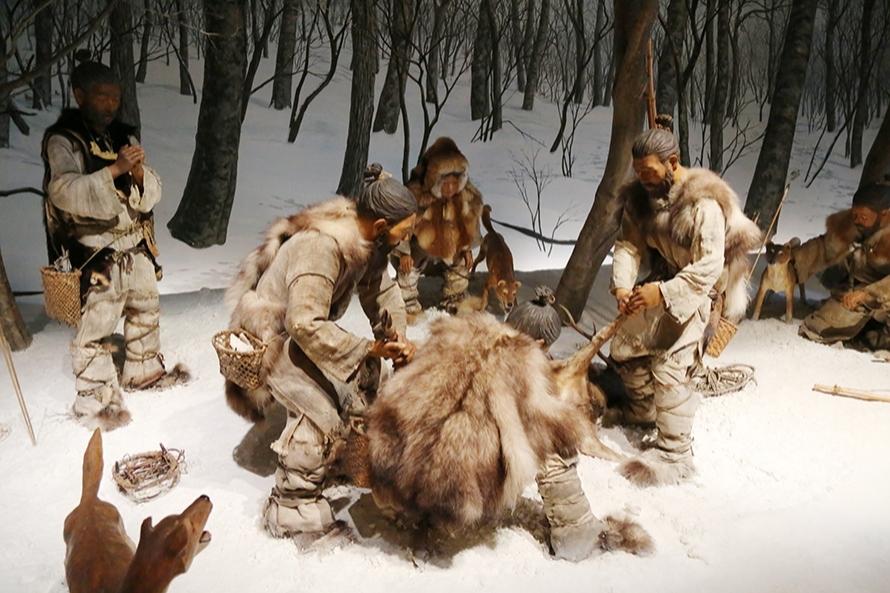
The research focused on 42 genomes from Jomon hunter-gatherers associated with prehistoric populations of the Japanese archipelago. The Jomon culture emerged around 16,000 years ago and persisted for more than 10,000 years, making its archaeological and genetic record especially valuable for understanding ancient East Eurasian populations. Researchers compared the genomes with modern and ancient populations to identify genetic patterns that may have been shaped by natural selection in colder environments.
One of the most striking signals involved non-shivering thermogenesis, a biological process in which the body generates heat without relying on muscle tremors. Brown adipose tissue, commonly called brown fat, can burn stored energy and release it as heat. The researchers identified several genetic variants associated with this process. One variant linked experimentally to brown-fat heat production appeared at roughly 73% frequency in the Jomon sample compared with about 17% in present-day East Asian reference populations. The researchers interpret this pattern as evidence consistent with selection for cold-weather survival, although it does not prove that every carrier had a particular physiological response.
How Brown Fat Could Have Helped Humans Survive Extreme Cold
Shivering is one of the body’s familiar responses to cold, but it is not the only way humans produce heat. Non-shivering thermogenesis provides another mechanism by which energy stored in the body can be converted into heat. Brown fat is particularly important in this process because it contains cellular machinery capable of dissipating energy as heat rather than storing it in the same way as ordinary white fat.
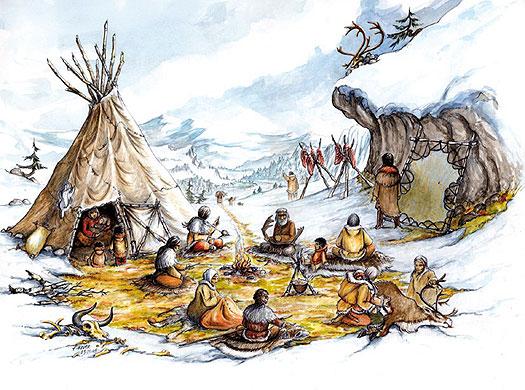
The genetic evidence also points beyond a single “cold gene.” Researchers found signals involving body mass and the way fats are processed in the bloodstream. That combination could have been useful in environments where people needed both dependable energy reserves and an efficient way to generate heat. The proposed picture is therefore more complicated than simply “ancient humans became resistant to cold”: their metabolism may have gradually shifted in ways that helped them obtain, store and use energy under harsh environmental conditions.
Why the Jomon Population Is So Important
The Jomon are particularly useful to researchers because parts of their ancestral population remained relatively isolated in the Japanese archipelago for long periods. That isolation helped preserve genetic signals from earlier populations that can be difficult to detect elsewhere after thousands of years of migration and population mixing. Researchers describe the Jomon genomes as an important window into Upper Paleolithic East Eurasian ancestry.
Other genomic research has also shown that the Jomon represent a deeply differentiated East Eurasian lineage. A major Science Advances study found that Jomon ancestry diverged deeply from other populations and that modern Japanese populations retain a measurable Jomon component alongside later ancestry. More recent mitochondrial-genome research published in Anthropological Science has continued investigating the demographic history of the Jomon, showing how modern genetic technology can reconstruct population history from ancient remains.
The Inuit Connection and Convergent Evolution
The researchers found another intriguing clue when they compared a region involved in fatty-acid processing. The Jomon showed greater similarity to Greenlandic Inuit in this region than to present-day East Asian populations. That does not mean the Jomon and Inuit were simply the same population or that one directly descended from the other. Instead, scientists propose that similar environmental pressures may have produced comparable biological solutions in populations separated by geography.
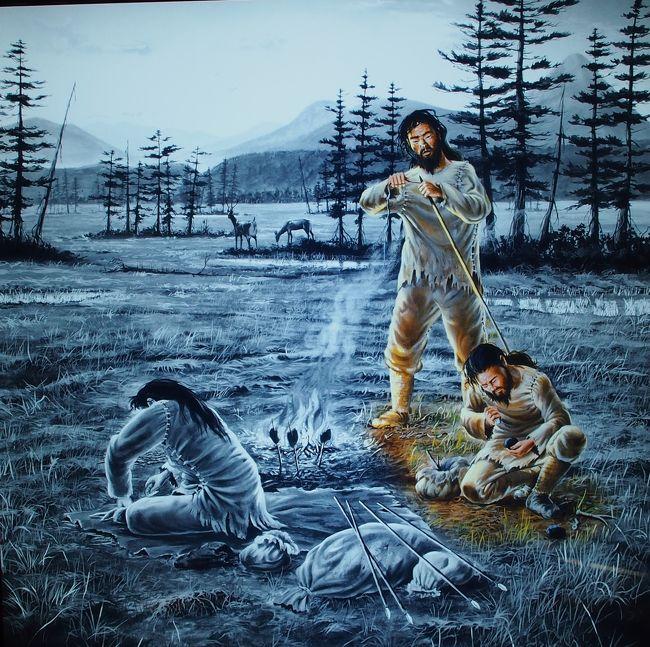
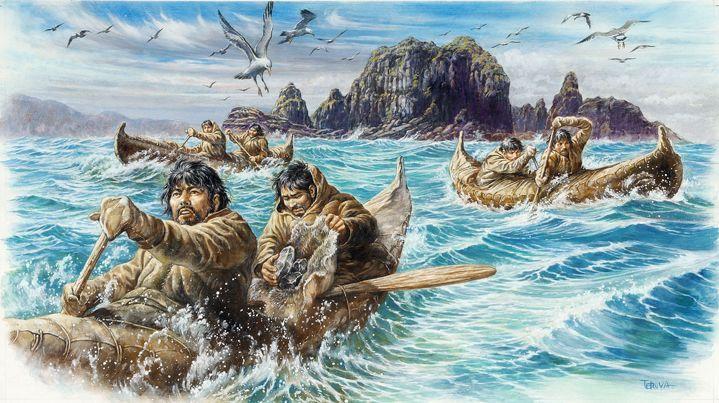
This is known as convergent evolution. In simple terms, unrelated populations can independently develop similar traits when they repeatedly face similar challenges. Cold environments create powerful evolutionary pressures because maintaining a stable internal temperature requires energy. Archaeological evidence also indicates that Jomon communities relied substantially on aquatic and animal resources, providing a potential dietary context for adaptations involving fat and protein metabolism.
What Happened During the Last Ice Age?
The Last Glacial Maximum, or LGM, was the coldest phase of the most recent Ice Age, roughly 20,000 years ago. Vast areas of the Northern Hemisphere were colder and drier than today, while enormous ice sheets covered parts of North America and Eurasia. Human populations had to cope with changing landscapes, limited resources and severe seasonal conditions. The Jomon research suggests that some ancestral East Eurasian populations may have responded not only through tools, shelter, clothing and food choices, but also through genetic adaptation.
Evidence from other parts of Europe shows that human survival during this period was not simply a story of everyone retreating into a few warm refuges. Ancient genomes have revealed major movements, population replacements and expansions associated with changing climate. Research at Ranis in Germany, for example, indicates that Homo sapiens occupied central Europe during exceptionally cold conditions around 45,000 years ago, demonstrating that early humans were capable of operating in severe environments much earlier than once assumed.
Why This Matters Now for Human Evolution
Why this matters now is that ancient DNA is changing the way scientists understand human evolution. Instead of relying only on fossils and archaeological objects, researchers can increasingly track genetic variation through time and investigate when particular variants became more common. A 2026 review in Nature Genetics highlighted how ancient genomes are allowing scientists to study human adaptation to environmental changes, diet, pathogens and mobility with much greater resolution.
The Jomon findings should nevertheless be interpreted carefully. Ancient DNA cannot directly reveal exactly how warm an individual’s body was or precisely what that person ate every day. Some of the genetic interpretations depend on statistical reconstruction, comparisons with living populations and knowledge from laboratory experiments. The researchers themselves emphasize that aspects of the physiological interpretation remain uncertain. The strongest conclusion is therefore not that scientists have discovered a single Ice Age survival gene, but that multiple genetic signals appear consistent with a gradual, polygenic response to cold conditions.
The broader lesson is that human survival during the Ice Age probably depended on a combination of biology and behavior. People could change their diets, migrate, build shelters, make clothing and develop new technologies, while natural selection operated over much longer timescales. In the Jomon case, the evidence suggests that biological adaptation may have accumulated gradually as ancestral populations encountered increasingly cold environments. That makes the discovery more significant than a simple story about surviving freezing temperatures: it offers another example of how flexible human populations have been throughout evolutionary history.
Subscribe to trusted news sites like USnewsSphere.com for continuous updates.