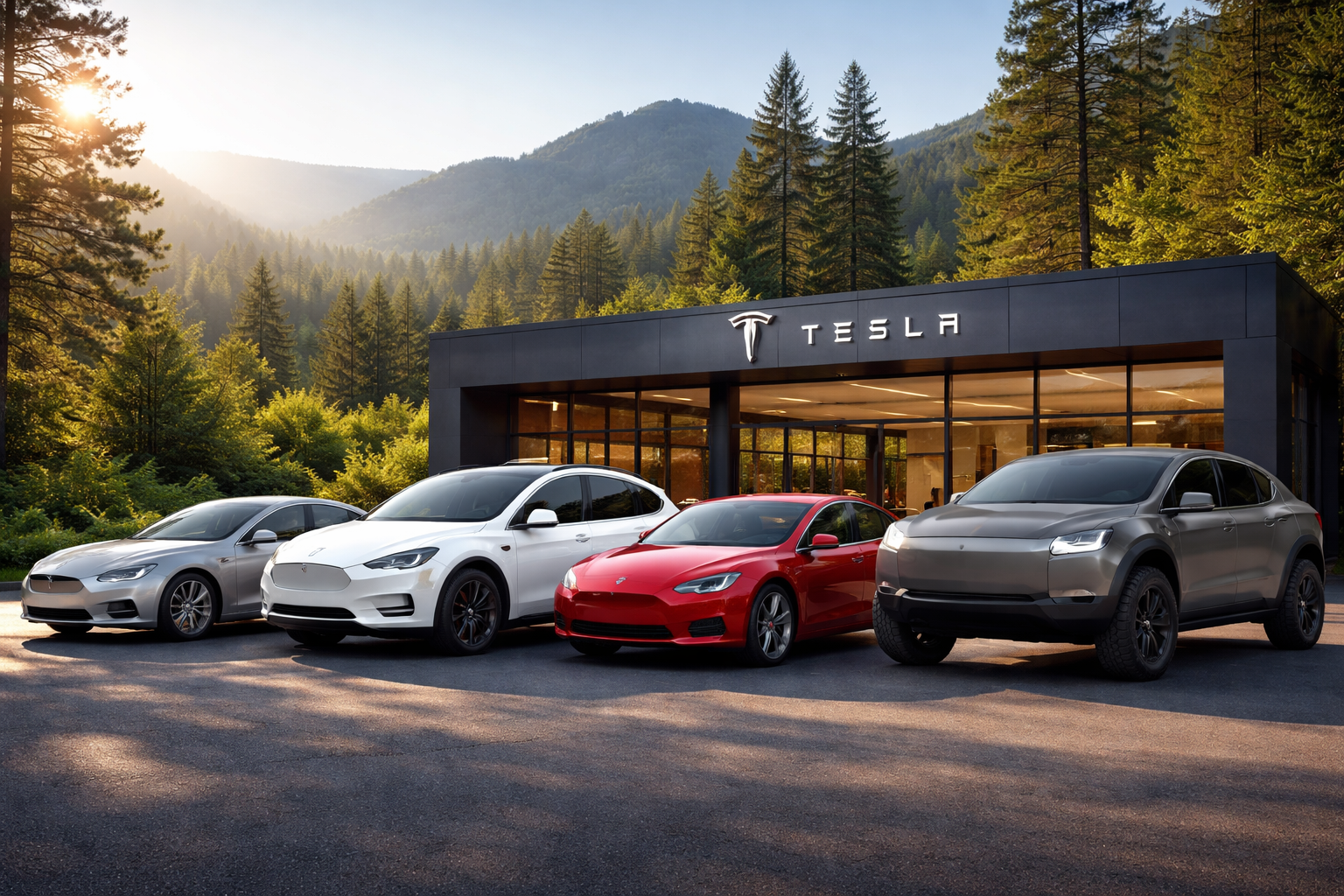
Tesla Q4 2025 Vehicle Deliveries Fall Sharply as Industry Landscape Shifts
Tesla’s final vehicle delivery figures for the fourth quarter of 2025 reveal a significant downturn in demand, marking a major inflection point for the electric‑vehicle giant as global competition intensifies and market conditions evolve. According to Tesla’s official production and delivery update, the company delivered 418,227 vehicles globally in Q4, falling roughly 15–16% from the 495,570 units delivered in the same period last year.
These numbers were also notably below many analysts’ expectations. Tesla’s own investor relations site had published a company‑compiled consensus estimate of around 422,850 deliveries in advance, an unusual pre‑release strategy likely intended to temper market reaction ahead of the results.
While Tesla continues to lead in electric vehicle production volumes relative to most competitors, this latest performance signals a meaningful shift in both company narrative and wider EV market dynamics — challenges that could shape Tesla’s near‑term growth trajectory.
What Tesla’s Q4 2025 Breakdown Actually Shows
In the fourth quarter:
- Vehicles Produced: 434,358
- Vehicles Delivered: 418,227
- Model 3/Y Accounted for the Majority: 406,585 deliveries
- Other Models (S, X, Cybertruck): 11,642 deliveries
- Energy Storage Deployments: 14.2 GWh (record)
Compared to Q4 2024’s 495,570 deliveries, Tesla’s Q4 2025 performance paints a picture of slowing automotive demand — a rare deceleration for a company notorious for year‑over‑year growth.
This isn’t just a quarterly blip. It reflects a broader trend: Tesla’s vehicle deliveries for the full year 2025 totaled about 1.64 million units, down roughly 8–9% from the prior year.
Factors Behind the Delivery Decline
Federal Incentive Expiration and Demand Pull‑Forward
A major cause of the weakened Q4 performance was the expiration of the $7,500 federal EV tax credit in the United States on September 30, 2025. Buyers accelerated purchases into earlier months to take advantage of this subsidy, leaving weaker demand in the final quarter.
This change significantly altered buying patterns — compressing some sales into Q3 and reducing incentive‑driven purchases in Q4.
Fierce Global Competition
The global EV market has become dramatically more competitive. Chinese automaker BYD overtook Tesla as the world’s top seller of battery electric vehicles in 2025, posting about 2.26 million EV sales compared with Tesla’s 1.64 million.
Companies such as BYD, Hyundai, Kia, Volkswagen, and others are aggressively expanding their EV footprints, especially in Europe and Asia, often at lower price points and with broader product portfolios.
Brand and Market Reaction
Consumer sentiment in some overseas markets also played a role. Analysts and multiple news reports have pointed to potential brand headwinds, partly tied to controversies connected to Elon Musk’s public positioning and political statements, which may have dampened demand in Europe and the U.S.
Energy Business Provides a Silver Lining
While car delivery figures slid, Tesla’s energy storage segment achieved record quarterly deployments, with 14.2 GWh of storage products deployed in Q4, contributing to a total of 46.7 GWh for 2025. Tesla Investor Relations
This growth highlights an important diversification point — Tesla’s energy business (Megapack, Powerwall, and other storage products) is gaining momentum and may become a stronger revenue contributor as vehicle sales stabilize.
Tesla Shares and Investor Sentiment
Tesla’s stock reaction showed a degree of resilience amid delivery misses. Despite the weaker automotive numbers:
- TSLA shares initially slipped modestly, but then stabilized and even climbed modestly in early 2026 trading, reflecting continued investor confidence in long‑term prospects.
Many investors are looking beyond near‑term delivery stats, instead focusing on growth prospects like Tesla’s robotaxi initiative, full self‑driving technology, and the expanding energy business.
However, some analysts warn that Tesla must reinvigorate its core automotive demand if it hopes to return to consistent delivery growth in the coming years.
What This Means for Tesla’s Future
Evolving EV Market Position
Tesla’s challenged delivery performance in Q4 2025 — and an overall weaker 2025 — signals that the company can no longer rely on first‑mover advantage alone. Competition from BYD and other global EV makers is fundamentally reshaping market leadership in electric vehicles.
For Tesla to reclaim durable growth, it will need to:
- Introduce new and updated EV models
- Expand production capacity aligned with demand
- Leverage energy business growth and autonomous technologies
Strategic Diversification Is Key
Tesla’s expanding energy storage business and future autonomy technology investments provide diversification that could offset automotive downturns, especially if demand for EVs remains soft in developed markets.
Analysts also note that broader macroeconomic conditions, including interest rates, production costs, and consumer spending trends, will continue to influence demand shifts in 2026 and beyond.
Industry Implications and Broader Reaction
Tesla’s delivery downturn and BEV crown loss illustrate a wider industry trend:
- China’s EV sector is now a dominant global force, with BYD leading in both volume and growth.
- European automakers are investing heavily in EV transitions, narrowing gaps with traditional leaders.
- U.S. EV incentives and policy landscapes continue to evolve, impacting demand patterns.
Market watchers see Tesla’s challenges not as a singular weakness but as a sign of a maturing EV market where competition, pricing, incentives, and innovation determine winners.
Conclusion
Tesla’s Q4 2025 delivery results confirm a period of transition for the company. While deliveries fell significantly and missed expectations, the firm’s energy storage business and future technology prospects still command investor and industry interest.
This latest delivery report underscores the reality of intensifying competition, shifting incentives, and evolving consumer preferences — a landscape where Tesla must adapt to secure sustainable growth.
Despite the delivery headwinds, Tesla remains a central figure in the EV revolution — with innovation, diversification, and strategic investment likely dictating its next chapter.
Subscribe to trusted news sites like USnewsSphere.com for continuous updates.