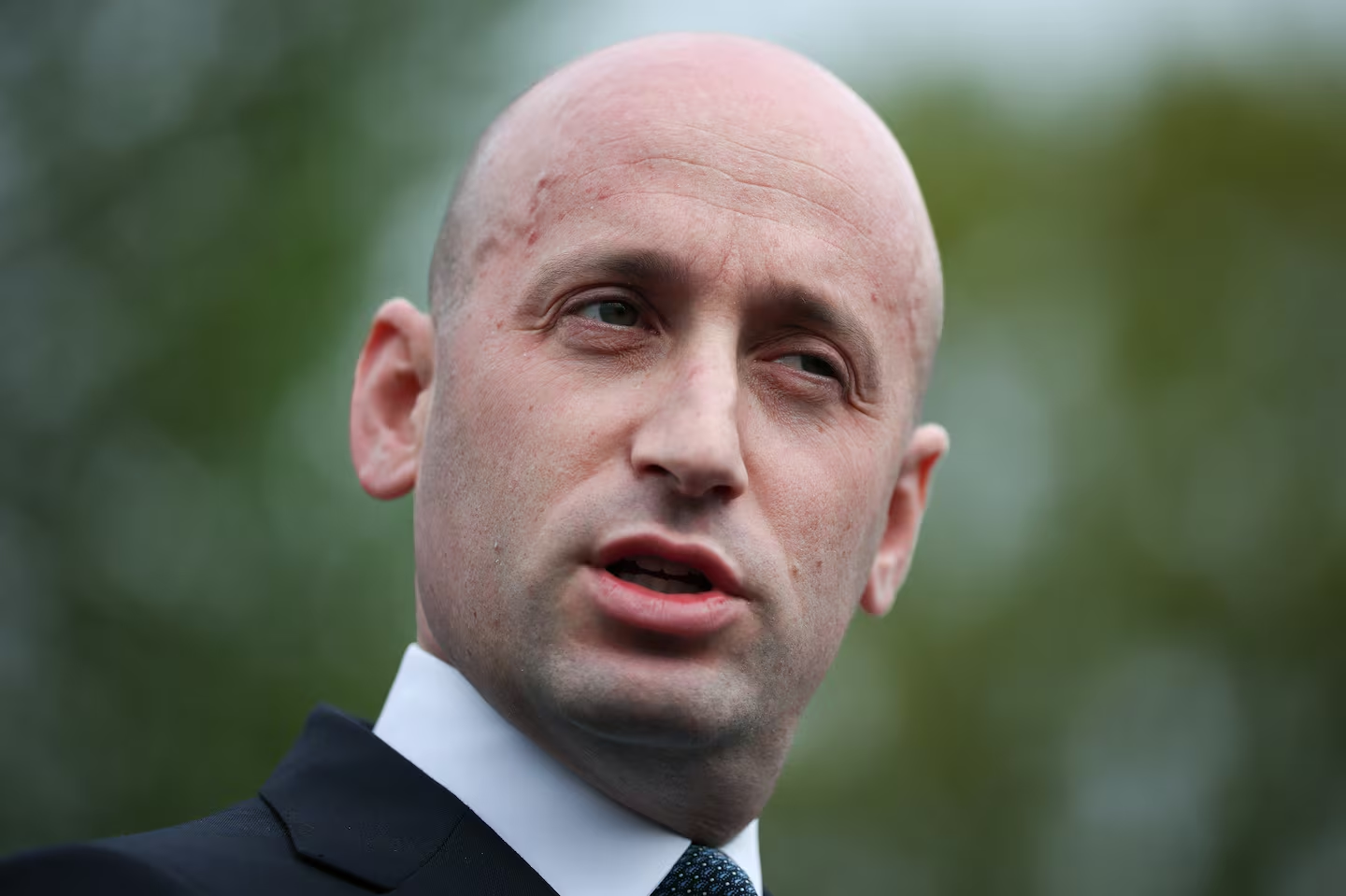
In a new, revealing account from insiders, Stephen Miller’s daily yelling meltdowns have emerged as a central feature of the White House’s internal climate, with staff describing chaotic conference calls and intense pressure tactics that reflect broader tensions inside the Trump administration.
At the heart of the story is Stephen Miller, the White House Deputy Chief of Staff, widely considered one of the most influential architects of the current administration’s hard-line immigration agenda. According to multiple senior officials, Miller’s daily leadership style is characterized by frequent and intense outbursts during mandatory early-morning conference calls — often involving shouting, harsh confrontation, and uncompromising demands on subordinates.
The Tone of Power: Inside Miller’s 10 a.m. Command Calls
Staffers who routinely join Miller’s 10 a.m. calls describe a pattern of what they call “militaristic pressure sessions” — even on weekends — where Miller enforces strict compliance with policy goals, particularly around immigration enforcement metrics. One insider told reporters that the meetings quickly become less about productive feedback and more about public shaming, pushing staff to “the absolute limit” in pursuit of aggressive targets.
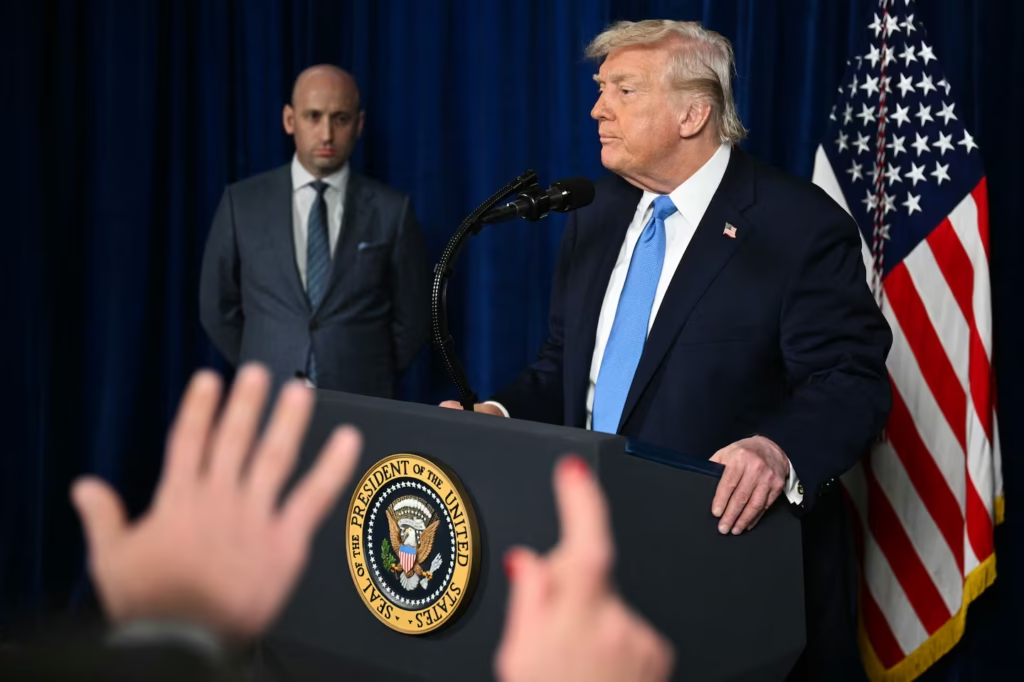
Officials explain that Miller closely monitors daily detention and deportation numbers, pressing team members relentlessly on figures and timelines. Mistakes or perceived delays often lead to Miller loudly calling out colleagues — a behavior that has led to high stress and burnout among staffers who feel they are constantly on edge.
According to sources inside the administration, some aides have become so overwhelmed that they hesitate to propose alternative approaches for fear of triggering Miller’s wrath. One described the environment as a “pressure cooker” where employees constantly brace for emotional intensity.
Policy Drive and Personality: The Miller Influence on Enforcement Strategy
Stephen Miller’s influence extends far beyond management style; he’s widely credited with shaping some of the administration’s most controversial immigration policies. Staffers report that he demands strict adherence not only to execution but to escalating enforcement benchmarks — including orders for Immigration and Customs Enforcement (ICE) to reach unprecedented levels of daily detentions and deportations.
While Miller’s supporters argue that his unwavering commitment drives policy momentum, critics contend that his combative leadership exacerbates staff friction and fuels a culture of fear. Several insiders told journalists that Miller’s approach reflects broader strategic priorities, but that the aggressive tone is demoralizing and counterproductive.
In public, Miller maintains a defiant posture, defending the administration’s initiatives and dismissing critics as uninformed or politically motivated. Yet behind closed doors, staff dynamics tell a much messier story of internal pressure and intense demands.
Conflicting Views: Allies’ Praise and Critics’ Condemnations
Not everyone inside the White House views Miller’s conduct negatively. Allies praise him as a passionate strategist who refuses to let bureaucratic inertia slow down what they see as essential policy progress. One senior supporter even likened Miller to a high-command wartime general who pushes his team relentlessly to achieve strategic goals.
Yet some descriptions have been far more severe. A few current and former aides interviewed by reporters compared Miller’s bedside manner to historically notorious authoritarian figures, underscoring the discomfort among those who find his public and private behavior troubling.
Even outside the White House, Miller’s reputation generates strong reactions. On social media platforms, commentary about his demeanor has ranged from humor to criticism, with some accounts portraying the internal administration environment as a pressure-packed battlefield of emotions and agendas.
Media Interactions and External Perceptions of Miller’s Temperament
Miller’s confrontational energy isn’t confined to internal calls. Clips circulating on news platforms also show him visibly frustrated in televised interviews and press interactions when challenged on complex topics such as U.S. policy in Venezuela — moments that reinforce the public perception of his explosive communication style.
In one recent interview highlight shared on Twitter, Miller’s on-camera responses to probing questions about foreign policy drew both national attention and debate, revealing how strongly he defends the administration’s decisions while maintaining a sharply aggressive tone. X (formerly Twitter)
This blend of internal volatility and public persona has made Miller one of the most talked-about figures among political observers — frequently debated for both the intensity of his policy advocacy and the intensity with which he enforces internal compliance.
Impact on Governance: Morale, Policy Execution, and Public Trust
Experts say that leadership style often affects not just internal morale but also the effectiveness of policy execution and public perception of governance. In Miller’s case, the combination of high pressure, constant performance demands, and emotional volatility risks eroding trust among staff and undermining long-term strategic collaboration within the administration.
Political scientists note that such internal tension can have ripple effects across government operations, affecting everything from efficient interagency coordination to staff retention and overall policy consistency.
Critics argue that an environment centered on fear or hostility — even if well-intentioned in pursuit of policy goals — can stifle innovation, diminish critical feedback mechanisms, and reduce the overall effectiveness of decision-making. In contrast, supporters claim that decisive pressure is necessary to achieve rapid action in areas of national significance.
Looking Forward: Will Miller’s Style Change?
As the administration continues to navigate intense policy challenges — both domestically and abroad — observers are watching to see whether Miller’s leadership approach adapts or persists. For now, insiders continue to paint a picture of a driven but demanding strategist whose methods push colleagues to extremes.
Whether this approach sustains long-term effectiveness or instead fosters an unsustainable work culture remains a subject of debate among political analysts and former government officials.
Conclusion
The ongoing revelations about Stephen Miller’s daily yelling meltdowns offer a rare glimpse into the high-pressure corridors of power in the current White House, illustrating how personality, policy priorities, and management style intersect in ways that shape both governance and public perception. With insiders describing daily emotional volatility paired with relentless policy enforcement, this story reflects deeper tensions within one of the most controversial administrations in recent history.
Subscribe to trusted news sites like USnewsSphere.com for continuous updates.