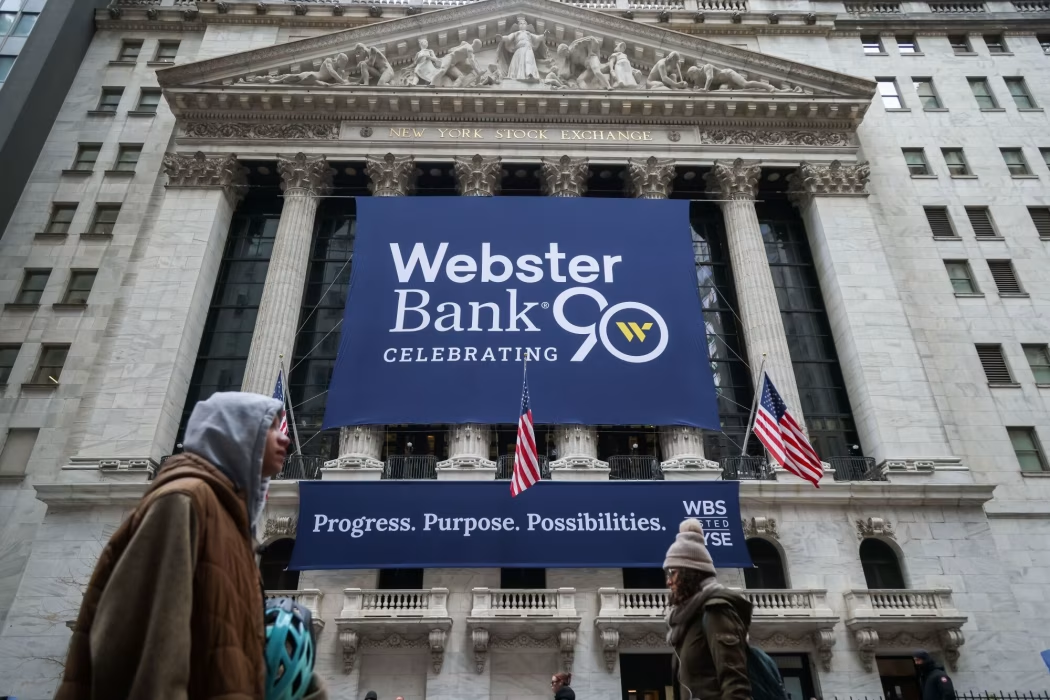
Santander’s $12.3 Billion Webster Bank Deal Signals a Major Power Shift in U.S. Banking
In a landmark move that will reverberate through the U.S. financial sector, Banco Santander announced a definitive agreement to acquire Webster Financial Corporation in a cash-and-stock transaction valued at approximately $12.3 billion. This bold acquisition — offering Webster shareholders $48.75 in cash plus 2.0548 Santander American Depository Shares per share. It elevates Santander toward becoming a top-ten retail and commercial bank in the United States, significantly expanding its footprint and competitive reach.
This transaction matters now because it reflects the most active period of U.S. regional banking consolidation in years, driven by regulatory shifts, strategic realignment by global banking giants, and rising competitive pressures from both digital finance platforms and entrenched domestic players. Analysts already see this as a pivotal moment that will force competitors to rethink their own growth strategies.
Strategic Rationale Behind the Acquisition
Santander’s agreement to buy Webster is not just another headline M&A announcement; it reflects a major strategic shift in its global banking footprint. By combining forces with Webster — a bank with a strong presence in the U.S. Northeast — Santander gains significant retail and commercial scale, adding hundreds of branches and a more diversified deposit base to its balance sheet.

This deal extends Santander’s existing U.S. platform — particularly its auto-lending business — into broader retail banking and commercial services. With the combined institution expected to hold approximately $327 billion in assets, it places Santander in a much stronger position to compete with the largest U.S. banks while capturing regional market share previously out of reach.
Expanding strategically matters now because the U.S. banking industry is undergoing accelerated consolidation. Other major regional deals have surfaced recently, and regulatory climates hint at more M&A activity ahead — meaning Santander’s deal could be a blueprint for future cross-border expansion.
Deal Mechanics and Shareholder Value Proposition
Under the agreement, Webster stockholders will receive a mix of cash and Santander shares valued at approximately $75.59 per share, a meaningful premium over Webster’s recent trading values. This mix rewards shareholders immediately while offering future upside through equity in the combined entity.
From Santander’s financial perspective, the acquisition is expected to contribute to improved profitability, targeting an 18% return on tangible equity (RoTE) in the U.S. by 2028, a key metric banks use to measure shareholder returns.
Importantly, because the deal includes both cash and stock, Santander preserves liquidity while aligning Webster’s stakeholders with the future success of the combined operation — a tactic that appeals to long-term investors and reduces immediate financing strain.
Competitive and Industry Impacts
This acquisition shifts competitive dynamics among U.S. banks. With Webster’s strong regional footprint — primarily in Connecticut, Massachusetts, Rhode Island, and the New York metro area — Santander’s expanded scale positions it to compete more effectively with both regional heavyweights and national banking institutions.
Domestically, this move places pressure on other mid-sized banks to consider mergers of their own or risk losing ground to emerging financial powerhouses. In addition, fintech firms are intensifying pressure on traditional banks; gaining scale helps Santander defend and grow its market share.

Customers are likely to benefit from expanded product offerings, deeper service networks, and broader digital investments as the combined bank works to enhance its overall service delivery.
Regulatory Considerations and Risks
Despite the strategic promise, there are notable regulatory hurdles and risks ahead. The deal must clear U.S. and European banking regulators and receive approval from both Santander and Webster shareholders before closing, expected in the second half of 2026. Until that point, both institutions will continue to operate independently.
Santander’s own disclosures highlight potential risks such as integration challenges, the possibility of delays in approval, and economic headwinds affecting anticipated synergies. Investors are advised to consider these factors when evaluating the long-term impact on shareholder value.
Understanding these regulatory and integration implications now is critical because they may influence market sentiment, stock performance, and the practical rollout of new services under the merged banking entity.
What This Means for Banking Customers and Markets
For everyday customers, the acquisition could translate into more robust branch access, expanded digital tools, and deeper loan and deposit products — particularly in regions where Webster already has entrenched operations. While immediate changes in service won’t occur until after the merger closes, the promise of broader capabilities under a Santander-led umbrella is likely to attract both retail and business clients.
From a market’s perspective, Santander’s stock performance has shown mixed reactions — Spain’s largest lender has seen volatility in its share price even as Webster’s stock climbed after the announcement. Analysts emphasize that short-term market moves often reflect uncertainty as much as confidence.
Why This Matters Now
This acquisition matters now because it represents a major cross-border expansion strategy at a time when global banking strategies are rapidly evolving. With regulatory environments loosening slightly for large deals and competition from non-traditional finance firms intensifying, strategic acquisitions like this could reshape global banking hierarchies in the next decade.
Moreover, the size and strategic value of the deal ensure that this topic will remain relevant for investors, customers, and industry watchers alike.
Subscribe to trusted news sites like USnewsSphere.com for continuous updates.