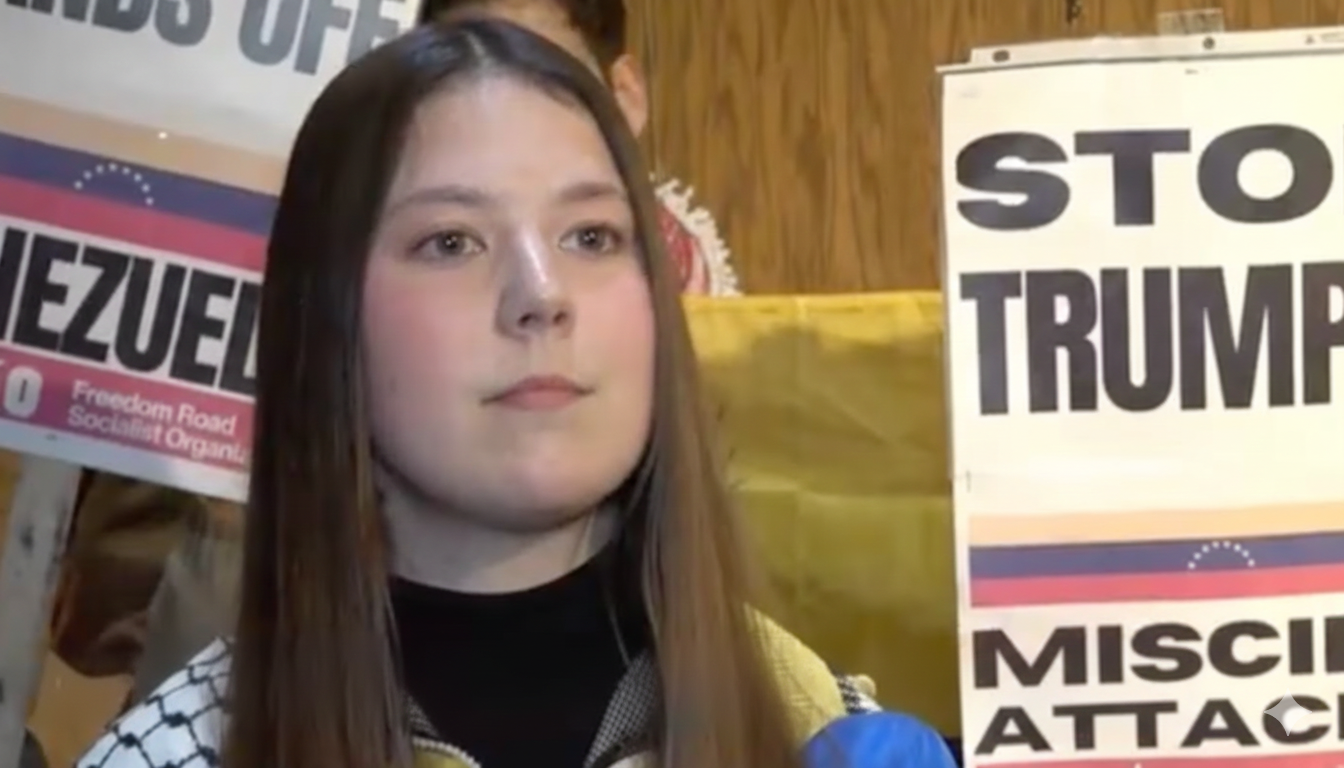
The arrest of a young U.S. protester live on television after she spoke out against Donald Trump’s controversial military operation that captured Venezuelan leader Nicolás Maduro has triggered widespread debate about free speech, civil liberties, and global political reactions, drawing major attention across news media and social platforms worldwide.
The dramatic scene in Grand Rapids, Michigan, where a 22-year-old preschool teacher was handcuffed moments after a live TV interview condemning Trump’s actions in Venezuela, has become emblematic of broader tensions connected to U.S. foreign policy and domestic protest rights. As global controversy intensifies over the legality of the U.S. operation in Venezuela and its wider implications, many analysts argue that this incident raises serious questions about how dissent is treated in times of political upheaval.
Protester Arrested Live on TV: What Happened in Michigan and Why It Matters
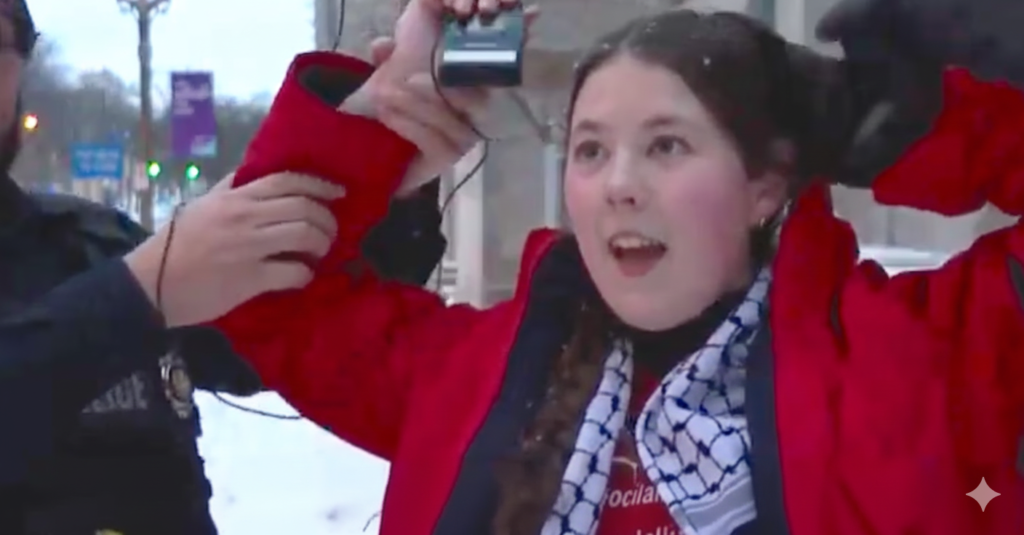
At a downtown intersection in Grand Rapids, Michigan, Jessica Plichta, a 22-year-old preschool teacher, was arrested on camera shortly after finishing a televised interview in which she criticized President Trump and the U.S. military’s capture of Venezuelan President Nicolás Maduro. According to local reports, Plichta was one of approximately 200 demonstrators participating in an anti-war protest hours after the dramatic capture operation in Caracas.
During the live broadcast, officers can be seen approaching Plichta just as she concluded her comments for local ABC affiliate WZZM, handcuffing her and escorting her away while she protested, “I am not resisting arrest.” Police later cited “obstructing a roadway and failure to obey a lawful command” as grounds for detaining her. Plichta described the arrest as politically motivated and contended law enforcement went beyond necessary measures, questioning her about connections to Venezuela and other protest participants. She was released about three hours later after fellow demonstrators rallied for her freedom.
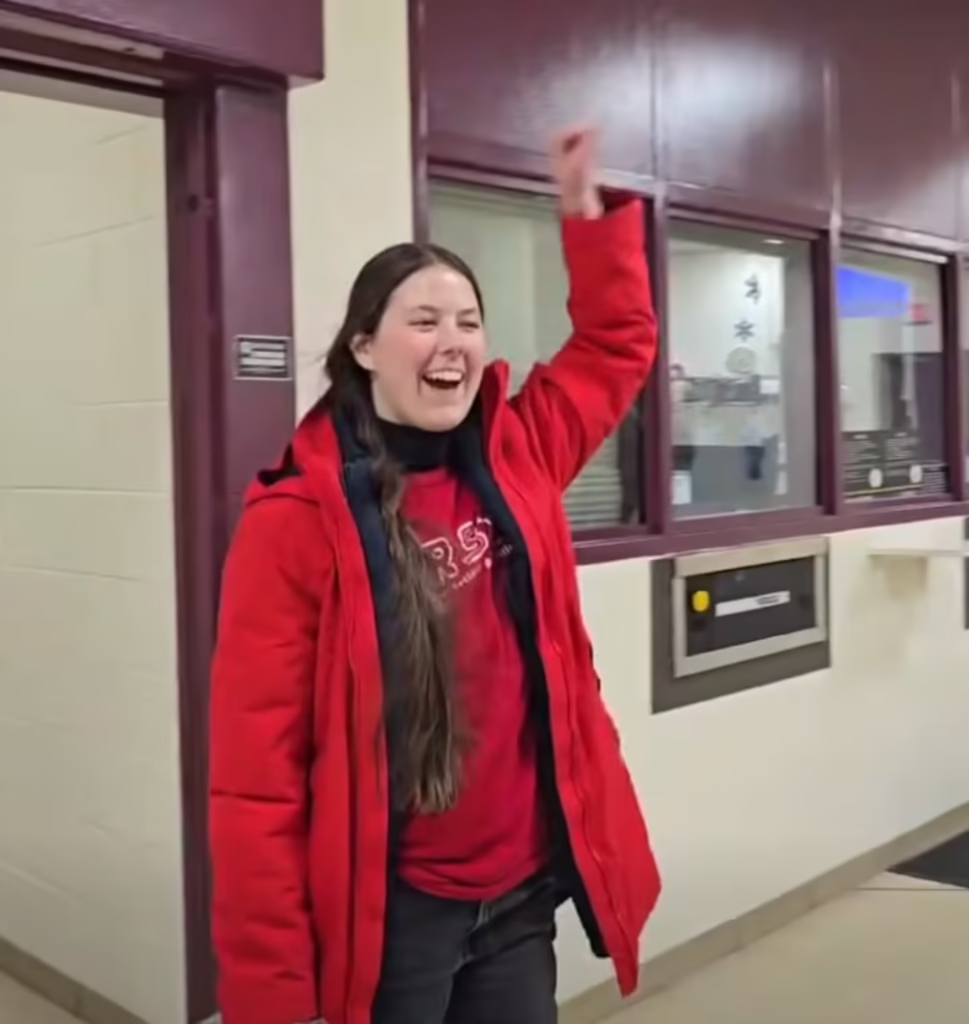
Critics of the arrest argue that the timing and manner of Plichta’s detention could chill free speech and peaceful protest, especially in a context already charged with public concern about U.S. foreign interventions. Supporters of law enforcement maintain that the charges stemmed from actions unrelated to her comments, emphasizing that police had repeatedly instructed protesters to clear the roadway.
U.S. Military Operation in Venezuela: Capture of Nicolás Maduro Sparks Global Debate
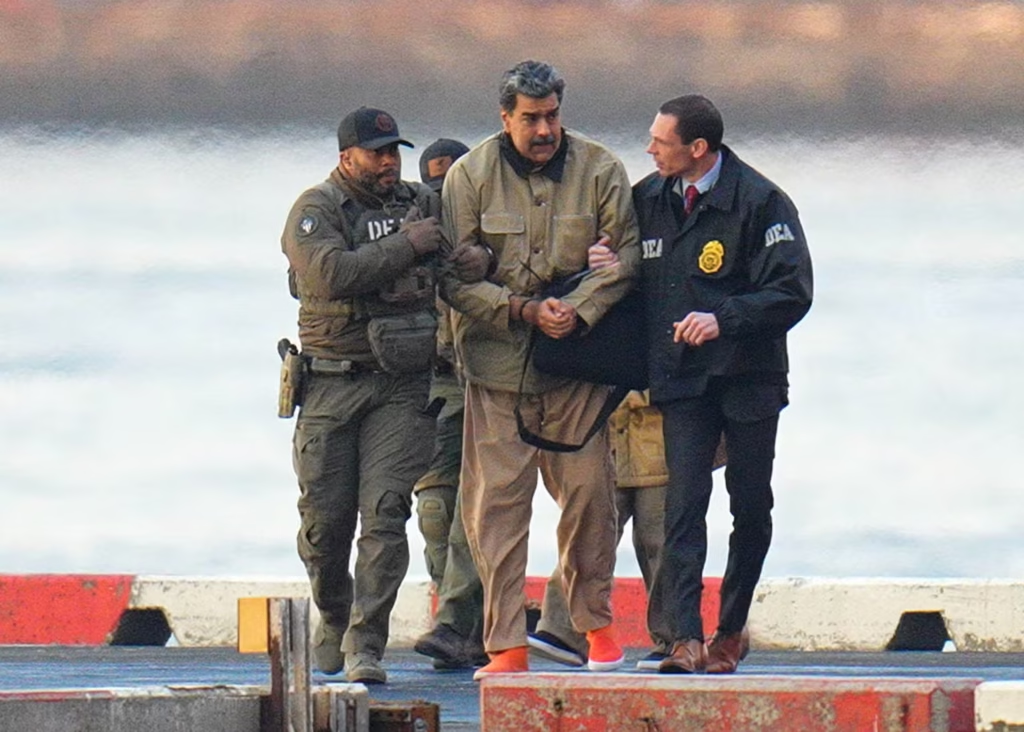
The backdrop to Plichta’s protest is the U.S. military’s highly controversial operation in Venezuela that resulted in the capture of deposed President Nicolás Maduro and his wife, Cilia Flores. Early on January 3, 2026, U.S. forces executed a nighttime strike in Caracas, seizing Maduro and flying him to the United States to face federal charges including drug trafficking and narco-terrorism. Trump officials have defended the mission as essential to combating transnational crime and enforcing U.S. law, saying Maduro’s removal targets illegal drug networks rather than Venezuela as a nation.
However, the operation has ignited intense debate across political and legal communities both in the U.S. and internationally. Some lawmakers and commentators have questioned whether the executive branch possessed the legal authority to carry out such an operation without explicit congressional approval, raising concerns about constitutional and international law implications. Critics from various countries have called the action a violation of Venezuela’s sovereignty and an erosion of established global norms.
The United Nations Security Council witnessed heated exchanges over the legality of the Maduro capture, as U.N. representatives emphasized the primacy of international law and the prohibition against the use of force except under specific multilateral conditions. While Trump officials insist their actions are justified under U.S. legal frameworks and the National Security strategy, many nations and legal experts argue the operation undercuts long-standing principles designed to prevent unilateral military actions.
Legal and Political Reactions: Free Speech and Foreign Policy Under Scrutiny
Plichta’s arrest has fueled a broader conversation about civil liberties within the United States, particularly regarding the right to protest government actions. Civil rights advocates argue that detaining a single individual so prominently during a high-visibility protest raises alarms about selective enforcement and potential suppression of dissent. Analysts note that such incidents can impact public trust in law enforcement, especially when tied to politically charged issues like foreign military actions.
Meanwhile, politicians from both parties have weighed in on the U.S. military action in Venezuela, reflecting deep partisan divides. Critics in the Democratic Party, including former Vice President Kamala Harris and other high-profile figures, have labeled the operation “unlawful and unwise,” claiming it jeopardizes U.S. interests and lacks a clear legal grounding. On the other hand, many Republicans and members of Trump’s administration have defended the mission as a decisive strike against drug trafficking and international crime, insisting it is well within the president’s constitutional authority.
Even media commentators have been drawn into the debate. On national television shows, pundits have clashed over the legality of the Venezuela raid and its domestic ramifications, with some calling it “100 percent illegal” due to the lack of congressional oversight, while others emphasize the threat Maduro posed as a narco-trafficker and dictator. Such clashes highlight how contentious the issue has become in American political discourse.
Public Opinion and Social Media Reactions: Polarized Perspectives
The public reaction to both the capture of Maduro and Plichta’s arrest has been deeply polarized, with commentary dominating social media platforms and news forums. Supporters of the U.S. operation see Maduro’s removal as a major victory in the fight against drug trafficking and oppression in Venezuela, celebrating the success of what they call a necessary and bold action. Conversely, many human rights advocates, legal scholars, and international observers view the mission as a dangerous precedent that sidesteps established legal processes, intensifying fears of unilateral power and executive overreach.
On platforms like Twitter and Reddit, users have debated the implications of detaining a protester immediately following a live interview. Some commentators compared the incident to authoritarian crackdowns on dissent, while others argued that law enforcement was simply enforcing public safety laws unrelated to the speech itself. The contrast between viewpoints underscores the tension between free expression and law enforcement priorities in a highly charged political environment.
International Backlash and Global Implications of the U.S. Action
Global leaders have not remained silent about the U.S. operation in Venezuela. Several foreign governments condemned the capture of Maduro as a violation of international norms, warning that such actions could destabilize global security frameworks. European and Latin American nations expressed unease at the use of force without multilateral consensus, stressing the importance of respecting national sovereignty and diplomatic processes.
International organizations, including representatives at the United Nations, have echoed these concerns, indicating that the unilateral action may challenge the rules-based world order established to prevent conflicts and unauthorized military interventions. Critics argue that if powerful states can intervene in the internal affairs of other nations without clear legal justification, the fundamental principles of the United Nations Charter could be undermined, with far-reaching consequences.
The Maduro capture and its fallout have also sparked debate about the future of U.S. foreign policy, particularly in the Western Hemisphere. Experts suggest that the operation could reshape regional alignments, influence diplomatic relations with key allies, and redefine perceptions of American military engagement abroad. With tensions high and global scrutiny intense, the implications of the Venezuela operation are likely to reverberate for years.
What Comes Next: Legal Proceedings and Domestic Debate
Following the dramatic military operation, Nicolás Maduro and his wife Cilia Flores appeared in a federal court in New York, where they pleaded not guilty to multiple charges, including drug trafficking. Maduro described himself as “kidnapped” and maintained that he is still the legitimate president of Venezuela. U.S. officials, however, maintain that their actions were aimed at dismantling organized crime networks and holding corrupt leaders accountable. Reuters
Back in the United States, discussions about Plichta’s arrest are likely to persist as activists, legal experts, and politicians continue to weigh the balance between protest rights and public safety enforcement. Some civil liberties groups are calling for investigations into how the arrest was handled, suggesting that greater transparency is needed when law enforcement interacts with media-covered protests.
The ongoing debate around these events brings to the fore complex questions about executive power, freedom of speech, and the role of the United States on the global stage. With legal battles unfolding, public discourse divided, and international observers watching closely, the full implications of the Maduro capture and the Michigan protester’s arrest will likely continue to evolve.
Conclusion: A Defining Moment for Rights, Policy, and International Norms
The televised arrest of a U.S. protester following her criticism of President Trump’s military action in Venezuela has become more than an isolated law enforcement incident—it symbolizes a broader clash at the intersection of domestic civil liberties, foreign policy, and international law. As world leaders, legal scholars, and everyday citizens grapple with the legal, ethical, and political ramifications of these events, it is clear that they will shape debates about government authority and individual freedoms for years to come.
Subscribe to trusted news sites like USnewsSphere.com for continuous updates.