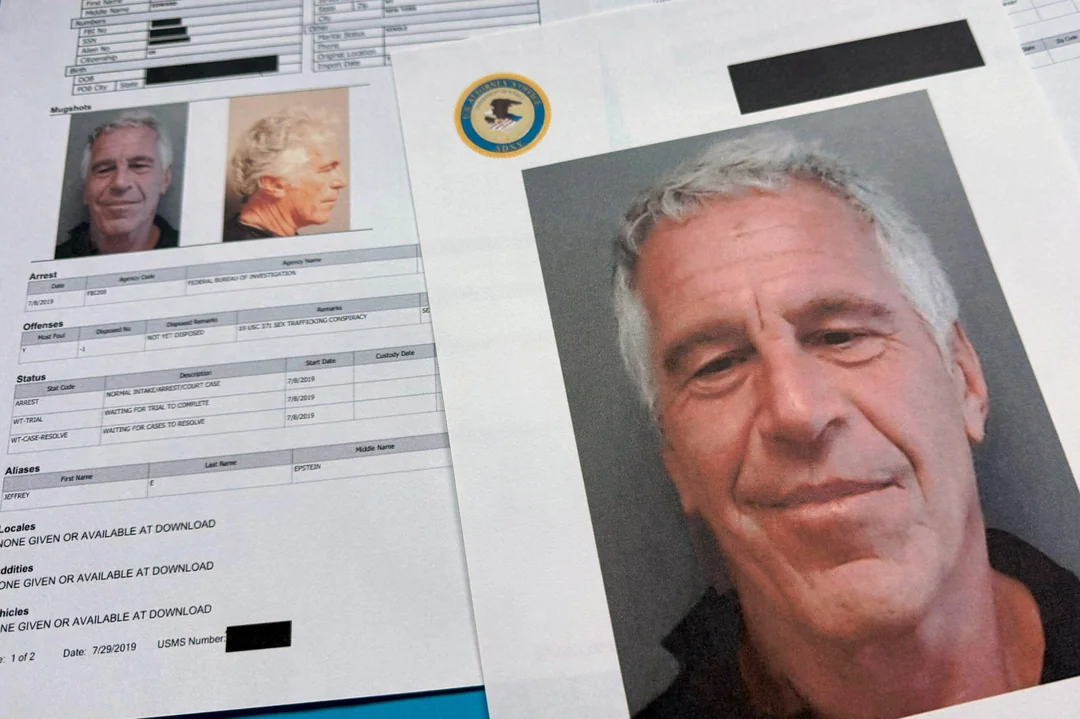
In a major development in the ongoing Epstein Files transparency fight, the U.S. Justice Department has declared that members of Congress lack the legal authority to intervene in the release of documents related to the Jeffrey Epstein and Ghislaine Maxwell investigation, igniting new controversy over accountability, transparency, and victims’ rights. This decision comes amid mounting public pressure and bipartisan calls for full disclosure, raising urgent questions about whether the government is fulfilling its legal duties.
The issue matters now because millions of pages of investigative files remain unreleased months after a federal law was passed to make them public, fueling legal conflict, political backlash, and public demand for answers.
Why the Justice Department Is Refusing Congressional Intervention
At the heart of this growing national story is a dispute over control of the Epstein Files Transparency Act, a law that requires the U.S. Attorney General to release all unclassified documents concerning the late financier Jeffrey Epstein and his circle.
U.S. Attorney Jay Clayton wrote to a federal judge in New York that a request by Representatives Ro Khanna (D-CA) and Thomas Massie (R-KY) to appoint a neutral expert or “special master” to oversee the release must be denied because the lawmakers lack standing in the underlying criminal case and therefore do not have legal authority to intervene.
Clayton argued that the judge, Paul A. Engelmayer, has no jurisdiction to grant such extraordinary oversight because Congress members are not parties to the 2019 prosecution of Ghislaine Maxwell, Epstein’s longtime associate, who is serving a 20-year sentence for sex trafficking.
What Congress Members Are Arguing
Reps. Khanna and Massie, co-sponsors of the Epstein Files Transparency Act, have repeatedly expressed “urgent and grave concerns” that the Justice Department’s release of documents is too slow and too limited. They contend that only tens of thousands of documents have been made public out of more than 2 million pages under review, far short of the legal requirement.
In legal filings, they allege the DOJ’s actions are tantamount to a violation of the law and have caused additional trauma to survivors by unnecessarily dragging out the process. The lawmakers request that an independent monitor be appointed to ensure compliance and transparency.
They also argue that a special master could independently assess whether redactions or other actions might be improperly shielding information beyond what is legally necessary to protect victims’ identities.
Why This Matters Now
This confrontation is unfolding at a moment when public trust in institutions, justice for survivors, and government transparency is under intense scrutiny. The Epstein case has always sparked controversy, with critics saying much remains hidden behind the scenes and that powerful figures may have benefited from obscured records.
The Epstein Files Transparency Act was passed with overwhelming bipartisan support — in the House by a 427-1 vote and by unanimous consent in the Senate — and signed into law to ensure the files are released in full within 30 days. As of January 2026, however, less than 1% of the material has been publicly released, prompting legal challenges and political fallout.
The stalemate highlights a deeper institutional conflict: Congress wants oversight and accountability, but the Justice Department insists it must control the release process — especially to ensure victims are protected via redactions that hide their identity.
Impact on Survivors and Public Confidence
For survivors of Epstein’s trafficking network and their advocates, the slow release and heavy redactions have been deeply frustrating. Many see the limited disclosures as a violation of both the letter and spirit of the law, further delaying justice and blocking public understanding of what happened.
Some legal experts warn that if the DOJ continues to defy deadlines, the case could set a precedent for future government transparency efforts, weakening congressional oversight powers and eroding public confidence in democratic institutions.
The struggle also sheds light on the broader challenges of balancing victim privacy with public interest in high-profile criminal cases, especially those involving allegations of abuse by powerful individuals.
What Happens Next
The judge in the case — Paul A. Engelmayer — will soon decide whether to accept the DOJ’s argument and deny congressional intervention or consider additional filings from lawmakers seeking greater oversight.
Meanwhile, the Justice Department has said it will continue to release files on a rolling basis and expects to update the court again soon about its progress, though critics contend that approach effectively undermines the statutory deadline.
The resolution of this fight could have far-reaching consequences for how federal agencies are held accountable and how transparency laws are enforced. It may also shape public perceptions of whether justice is truly being served in one of the most scrutinized criminal cases in recent U.S. history.
Subscribe to trusted news sites like USnewsSphere.com for continuous updates.