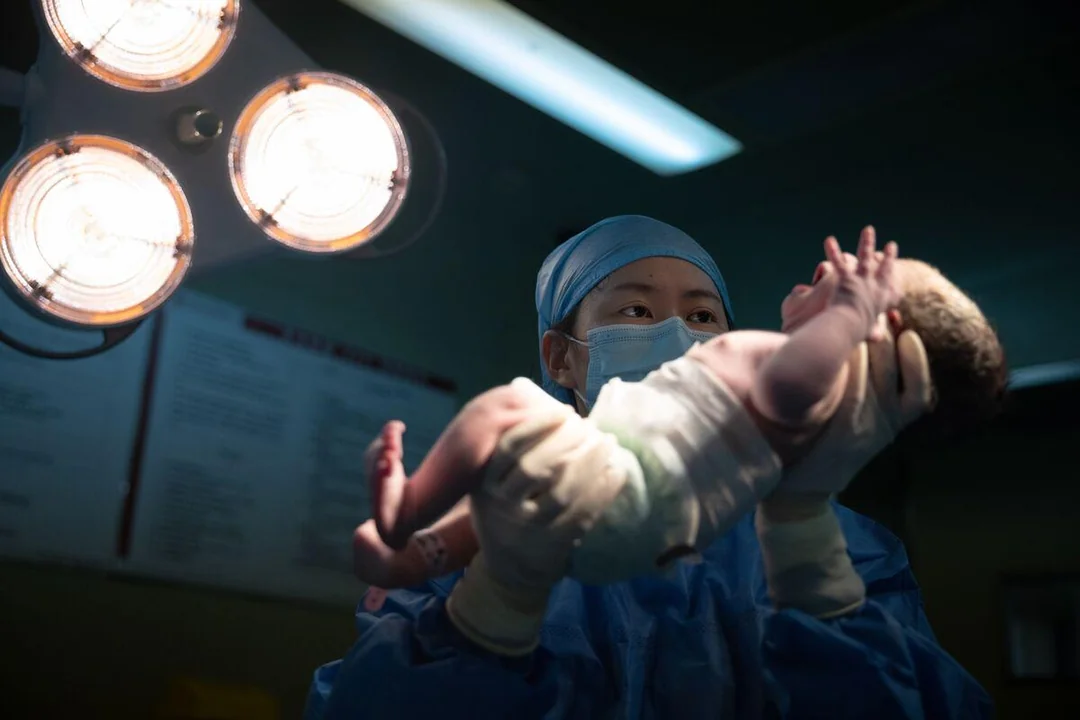
China’s birthrate plummeted in 2025 to its lowest level since the founding of the People’s Republic in 1949, underscoring a worsening demographic crisis that now threatens the nation’s economy, workforce, and social systems. Official data reveal that only 7.92 million babies were born last year — a sharp fall from the 9.54 million births recorded in 2024 — while deaths rose to 11.31 million, leaving China’s population in net decline for the fourth consecutive year.
In the first 120 words, it’s clear who this affects, what is happening, why it matters, and why this issue is urgent: China, the world’s second-largest economy and most populous country, now faces a deepening demographic collapse that experts say could reshape its future socially and economically. This trend underscores weakening family formation, mounting costs of child-rearing, and profound policy challenges that the government has struggled to reverse.
Why this matters now: China’s collapsing birthrate comes at a time when global markets are watching demographic shifts closely, and domestic policymakers are scrambling to implement drastic measures to prevent a long-term workforce shortage. The long-term demographic imbalance threatens productivity, pension systems, and national economic resilience.
Historic Drop in Births Despite Policy Push
China’s latest statistics show that the crude birthrate dipped to roughly 5.63 births per 1,000 people in 2025 — not only the lowest since records began but comparable to levels last seen in the early 1700s.
For years, Beijing has attempted to reverse declining fertility by relaxing its family planning policies. After ending the one-child policy in 2016 and transitioning to a two-child approach — and later allowing up to three children per family in 2021 — leaders expected a rebound in births. However, these changes have delivered only a limited impact.
Sociologists point out that policy shifts alone cannot counter today’s economic pressures and changing social norms. The high cost of education, housing, and healthcare, along with competitive career demands, has dissuaded many young couples from expanding their families.
Social and Economic Forces Behind the Decline
Rapid urbanization has reshaped lifestyles across China. Young adults increasingly prioritize career progression, personal freedom, and financial stability over early marriage and childbirth. This shift has been evident for years and now shows in marriage statistics, which dipped alongside birth rates.
Urban living costs also play a significant role. Studies show that the real cost of raising a child in China can be some of the highest in the world, in part due to expensive schooling, housing, and limited family support infrastructure.
Even though local governments offer incentives like childcare subsidies and housing benefits in some cities, experts warn that these reforms are insufficient to fully reverse public sentiment about starting larger families.
Aging Population and Shrinking Workforce
The demographic shift isn’t just about fewer births — it’s about a rapidly aging society. Roughly 23% of China’s population is now age 60 or older, a figure expected to grow sharply over the next decade. This demographic tilt increases pressure on pension systems and health services while shrinking the labor force available to support economic growth.
Economists warn that a smaller, older population could reduce China’s support base for innovation and global competitiveness. Some projections suggest the working-age population may contract by millions in the next decade, raising questions about future productivity.
Government Response: More Money, But Limited Hope
In response to the demographic crisis, Beijing has announced major fiscal support programs aimed at encouraging childbearing, including:
- Subsidies for pregnancy and childcare
- Free or reimbursed medical costs for pregnancy and IVF
- National allowances for young children
Beijing’s budgetary commitment to pro-natalist policies is significant — nearly 180 billion yuan (about $25.8 billion) — but analysts caution that without deeper cultural and economic shifts, these measures may yield only modest results.
Experts argue that sustainable change requires broader reforms such as lower housing costs, better work-life balance, and enhanced social benefits. Without these, family formation — and thus birth rates — are unlikely to improve dramatically.
Global Implications of China’s Demographic Shift
China’s population change doesn’t just impact the nation — it has international consequences. As the country’s workforce shrinks, global supply chains and competitive labor markets could shift, leading some industries to relocate manufacturing bases to neighboring regions.
Moreover, China’s role as a massive consumer market means fewer young consumers could change global consumption patterns, especially in sectors like technology, education, and luxury goods.
In addition, aging populations increase demand for healthcare services and long-term care infrastructure, stimulating both domestic and international markets.
Why This Matters Now — And What’s Next
China’s historic drop in birthrate is more than a statistic — it’s a turning point that could define the country’s economic and social trajectory for decades. A shrinking population may slow economic growth, compress public services, and reshape international economic relationships.
While policymakers work to adapt, demographic experts say reversing deep-rooted societal trends will take time, innovation, and structural reform far beyond short-term incentives.
The coming years are likely to see more targeted family support policies and creative reforms designed to make childbearing and rearing financially and socially viable.
Subscribe to trusted news sites like USnewsSphere.com for continuous updates.