China Slams United States for “World Judge” Behavior After U.S. Captures Venezuela’s Maduro
In a forceful diplomatic rebuke that underscores escalating global tensions, China said it “cannot accept” any country acting as the world’s judge after the United States seized Venezuelan President Nicolás Maduro in a dramatic military operation — a move that has reverberated through capitals around the world and sparked heated debate about the future of international law and global power dynamics.
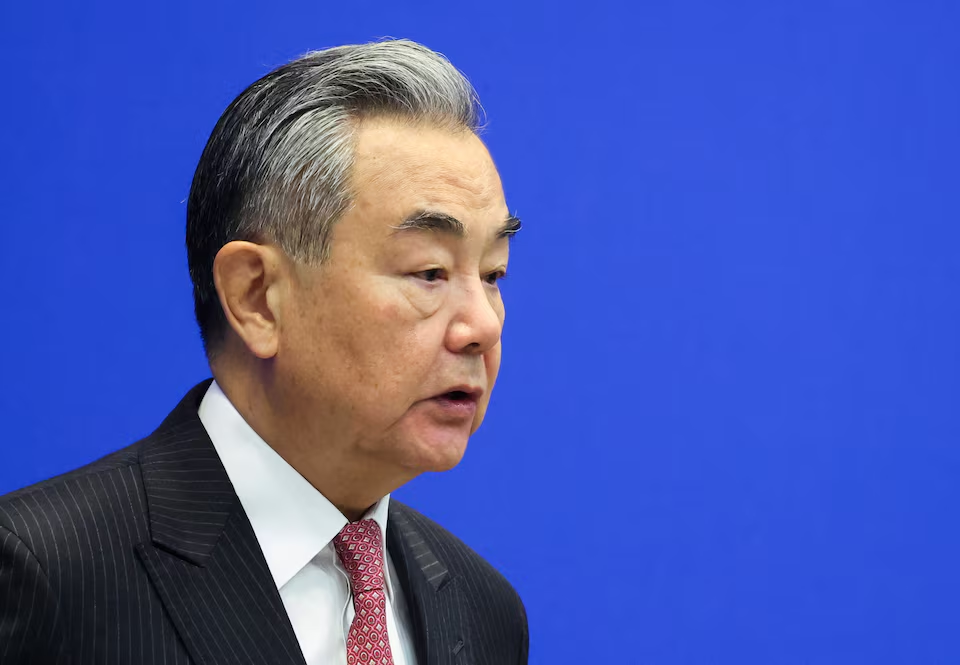
Beijing’s reaction was delivered by Chinese Foreign Minister Wang Yi during a meeting with Pakistan’s top diplomat in Beijing, signaling China’s deep discomfort not just with the U.S. action itself but with what Chinese leaders see as an unprecedented assertion of unilateral authority on the global stage.
The United States carried out military strikes in Venezuela as part of Operation Southern Spear, a campaign Washington says targeted drug trafficking and terrorism, but which critics argue amounts to a blatant violation of Venezuelan sovereignty and international norms.
China Slams United States: Beijing Rejects “World Judge” Role for Any Nation
China’s Wang Yi made it clear that Beijing will not tolerate unilateral actions in global affairs, particularly those that it believes undermine the sovereignty and security of other nations.
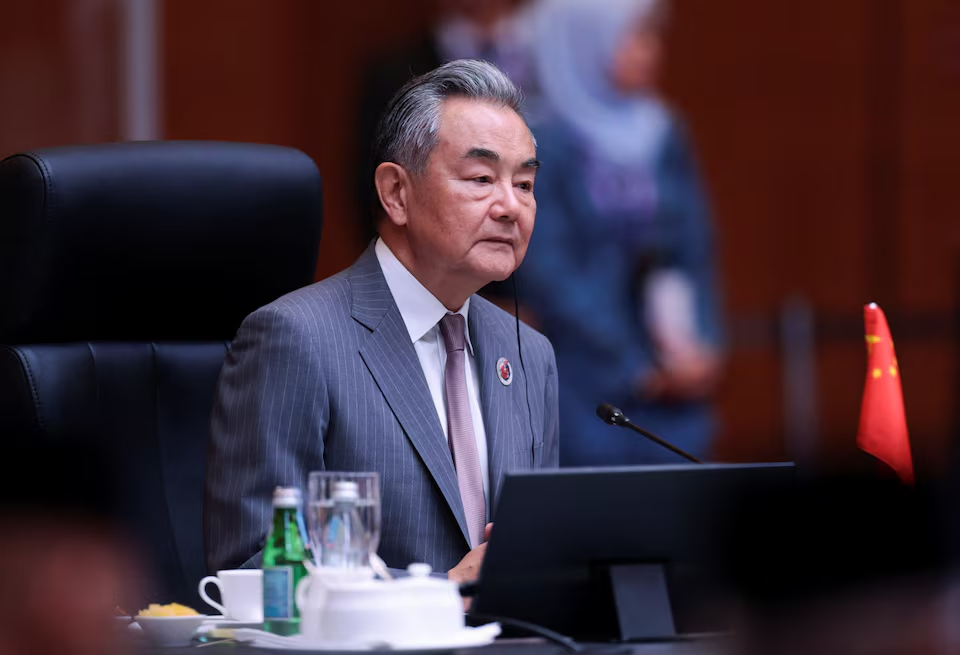
“We have never believed that any country can act as the world’s police, nor do we accept that any nation can claim to be the world’s judge,” Wang told Pakistan’s Foreign Minister Ishaq Dar, without directly naming the United States but referencing recent developments in Venezuela.
His comments came shortly after dramatic images of Maduro blindfolded and handcuffed circulated internationally, capturing global attention and alarm.
Beijing’s argument is rooted in international law and diplomatic norms, which China insists must protect the sovereignty and territorial integrity of all countries — especially when global powers are involved.
Analysts say China’s stance reflects its growing ambition to play a more assertive role on the world stage while resisting what it sees as Western dominance in global governance.
The U.S. Operation in Venezuela: What Happened and Why
In a bold and controversial military move, U.S. forces stormed Venezuelan territory, resulting in the capture of President Maduro, who was later transported to New York to face drug trafficking and narco-terrorism charges brought by U.S. prosecutors.
President Donald Trump described the action as a necessary strike against terrorism and corruption, but many international legal experts and world leaders sharply disagree.
U.S. authorities have linked Maduro and his inner circle to narco-terrorism, leveraging these charges as legal justification for the intervention. However, critics argue that such actions lack legal basis under the UN Charter, which prohibits the invasive use of force against sovereign states without clear authorization.
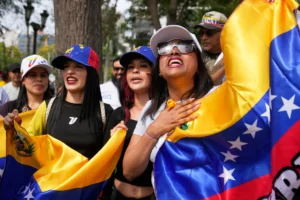
The crisis has placed the United States at odds with a range of global actors — from China and Russia to Spain, Latin American neighbors, and the United Nations.
Global Outrage and the Race to Interpret What This Means for International Order
China’s sharp rebuke follows a wave of international criticism of the U.S. operation.
• Russia described the U.S. action as unlawful and destabilizing, warning that it undermines international stability.
• Spain’s prime minister condemned the move as a violation of international law.
• North Korea labeled the military action an encroachment on sovereignty, pushing for global condemnation.
• United Nations officials and several Latin American governments called for restraint and adherence to international standards.
Many legal scholars pointed out that no clear legal basis exists under international law for an operation of this scale, framing the U.S. move instead as a breach of core principles of the United Nations Charter.
These debates are not just rhetorical — they have real implications for global norms on sovereignty, military intervention, and how great powers interact with smaller nations.
China’s Strategic Interests in Venezuela and the Broader Geopolitical Stakes
China’s reaction is informed not only by legal principle but also by substantial strategic investment in Venezuela.
Beijing has been one of Caracas’ most important economic partners for years, providing billions in loans and investments and buying large amounts of Venezuelan crude oil.
Maduro’s government has historically been a key ally of China in Latin America, a region where Beijing has sought expansion through infrastructure investment and diplomatic ties.
China’s foreign policy is often grounded in principles like non-interference and mutual respect for sovereignty, so the U.S. military action — in China’s eyes — represents a dangerous precedent that could legitimize similar interventions elsewhere.
By taking a firm stand, Beijing is signaling its willingness to challenge U.S. influence and protect its own global interests — even if that strains already tenuous U.S.-China relations.
What This Means for the Future of Global Diplomacy
The crisis over the capture of President Maduro is about far more than one nation’s leadership. It has thrust into the spotlight increasing tensions between major world powers and shifting expectations about how international conflicts should be managed.
China’s warning against countries acting as “world judge” reflects a broader push for a multipolar world where no single power sets the rules unilaterally — a vision that directly challenges traditional U.S. dominance in shaping international responses.
At the same time, the United States’ action — justified domestically as a fight against corruption and drugs — has divided global opinion and opened complex legal and ethical debates about sovereignty, intervention, and the limits of national power. The Guardian
As Venezuela prepares for court appearances by Maduro and ongoing political uncertainty, the global community now watches closely — debating whether this event will reshape diplomatic norms or become a cautionary tale about the balance of power in the 21st century.
Conclusion: A Turning Point for Global Order
China’s public rejection of unilateral international actions after the U.S. capture of Venezuela’s president sends a stark message: no nation should claim to act as the world’s judge or police.
This moment has ignited fierce debate about sovereignty, international law, and geopolitical influence — forcing nations around the world to reconsider how far the norms of diplomacy and military intervention can be stretched.
In an era defined by intense rivalry between global powers, this episode may well shape the future of international relations and diplomacy for decades.
Subscribe to trusted news sites like USnewsSphere.com for continuous updates.